West Highland Line: Glasgow to Mallaig by Train
The West Highland Line is an unforgettable train journey. It runs from Glasgow up past Loch Lomond, across the middle of Rannoch Moor, over the Glenfinnan Viaduct and onto the fishing port of Mallaig.
“The West Highland Main Line is repeatedly named as one of the most scenic railways in the world, and that is definitely true.” Doug Collins, Episode #169
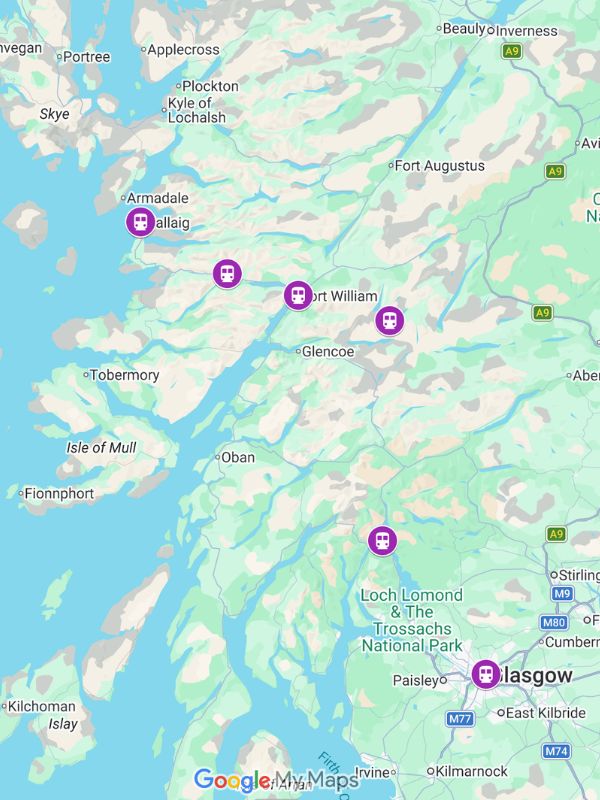
Route at a glance
- A. Glasgow
- B. Loch Lomond (Arrochar & Tarbet)
- C. Rannoch Moor and Corrour
- D. Fort William
- E. Glenfinnan
- F. Mallaig
A. Glasgow
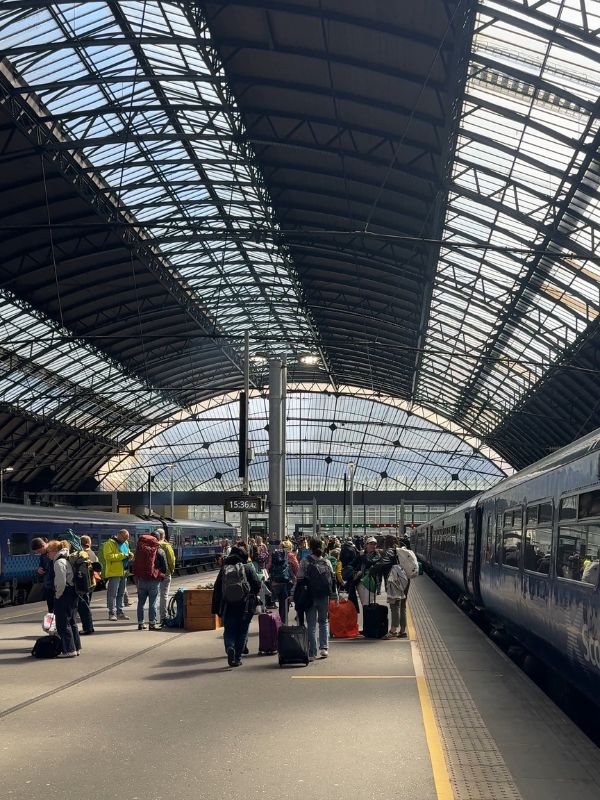
The journey begins at Glasgow Queen Street right in the centre of the city. If you can we recommend giving yourself time before your train because Glasgow is worth a night at either end of the trip rather than a blur as you dash to the platform.
What to look out for
- Queen Street station’s restored Victorian roof
- George Square, two minutes from the platforms
- The City Chambers on the square
- Tea and provisions before you board, as there is a long stretch with no trolley you can count on
- The departure board for the Mallaig service, not the Oban one, because the line splits later (from Crianlarich)
Recommended accommodation in Glasgow – Kimpton Blythswood Square Hotel
B. Loch Lomond (Arrochar & Tarbet)
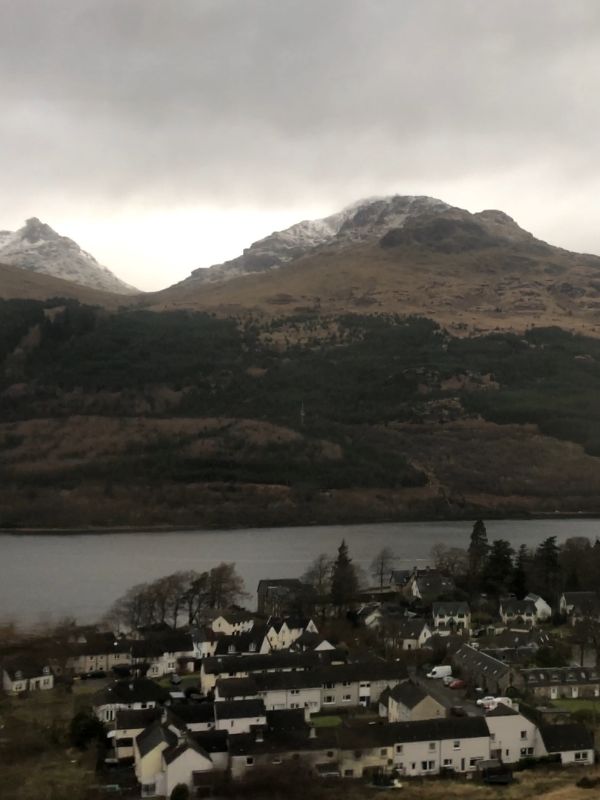
For the first hour, the train follows the Clyde before running up the side of Loch Long and Loch Lomond, and the city is behind you before you know it.
What to look out for
- Loch Long opening out on the approach to Arrochar & Tarbet
- The Arrochar Alps, including the peak known as the Cobbler
- The shoulder of Ben Lomond across the water
- Crianlarich, where the Oban branch splits from the Mallaig line. From here each branch has its own Tyndrum station (Upper Tyndrum on this line to Fort William and Mallaig, Tyndrum Lower on the Oban branch)
- The lowlands giving way to proper Highland country
Doug’s tip: Initially from leaving Glasgow QS, the best views are to be seen on the left side of the train in the direction of travel, though throughout the journey both sides offer stunning scenery at all times of the year.
C. Rannoch Moor and Corrour
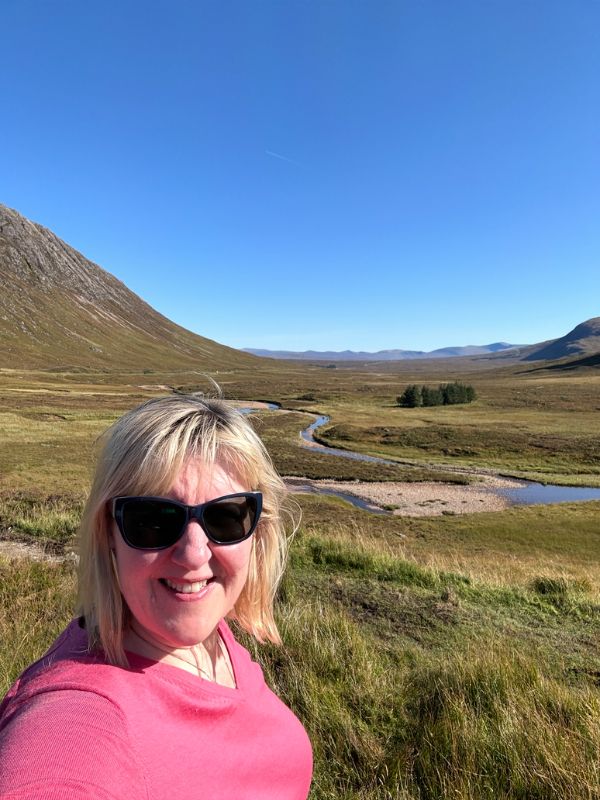
This is Tracy’s favourite stretch of the journey and is certainly memorable for all the right reasons. The line crosses Rannoch Moor on a bed laid down over the peat more than a century ago, miles from the nearest road, and then reaches Corrour, the highest mainline station in Britain, with no public road to it at all.
What to look out for
- The open expanse of Rannoch Moor, one of the largest blanket bogs in Europe
- Rannoch station and its tearoom, a welcome sight in the middle of nowhere
- Corrour, the highest and one of the remotest stations on the network
- Loch Ossian beyond Corrour, a short walk from the platform
- Red deer on the moor, often close to the line
Doug’s note: Rannoch Moor is a stunning part of this iconic railway route; you won’t be disappointed with views on either side of the train, but having to choose maybe the right side of the train, just edges it.
D. Fort William
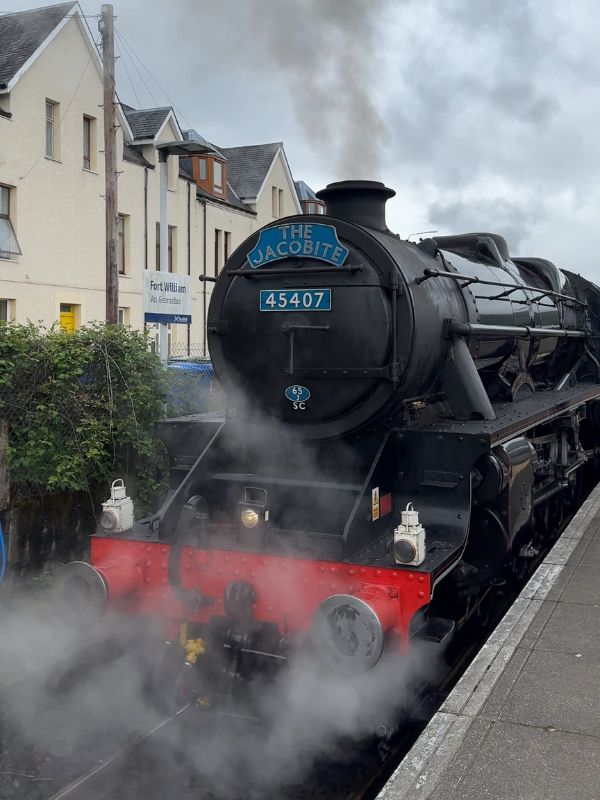
Fort William is the end of the original line and sits at the foot of Ben Nevis, the highest mountain in Britain.
For many it is also where the journey changes character, because this is where the famous Jacobite steam train picks up the final leg to Mallaig.
[PHOTO, Fort William, Ben Nevis or Loch Linnhe. Filename e.g. fort-william-west-highland-line.jpg.]
What to look out for
- Ben Nevis above the town, cloud permitting
- The High Street, a few minutes from the station
- The end of the West Highland Way long-distance path
- The platform for the Mallaig extension and the Jacobite
- Loch Linnhe, the sea loch the town sits on
Take your time: Fort William is worth a night rather than a quick change, especially if you are joining the Jacobite the next morning. Check out our article for accommodation recommendations in Fort William.
E. Glenfinnan
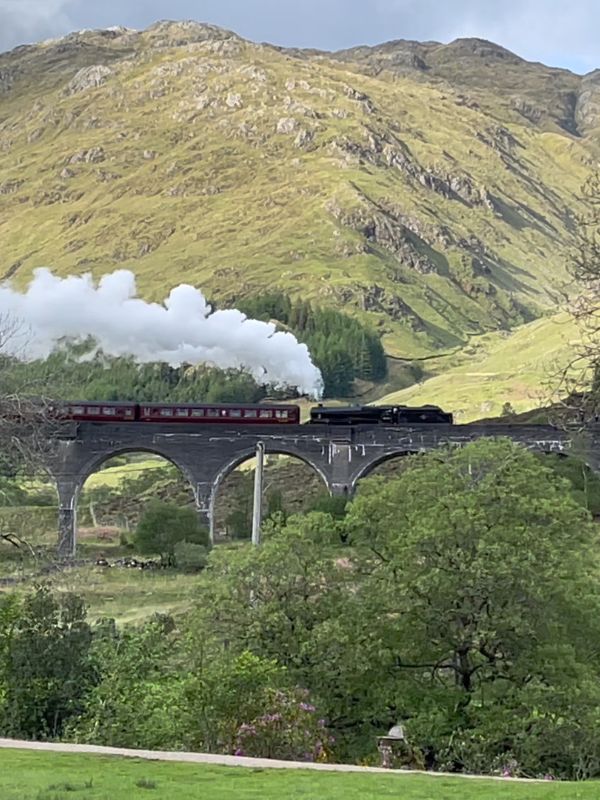
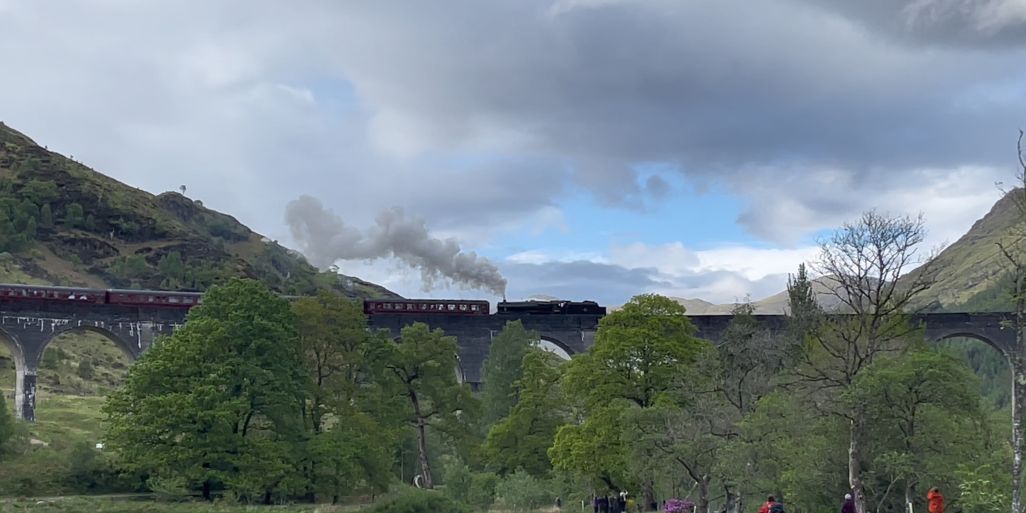
The line curves across the 21-arch Glenfinnan Viaduct above Loch Shiel, and on the steam train you can lean to the window and watch the engine take the bend ahead of you.
What to look out for
- The Glenfinnan Viaduct, all 21 arches
- The view down Loch Shiel from the top of the curve
- The Glenfinnan Monument at the head of the loch
- The Glenfinnan Station Museum, if you break the journey here
- The engine and front carriages swinging into view on the curve, on the steam service
Don’t miss: The window on the loch side as the train reaches the viaduct, because it is a short curve and it is over quickly. Travelling from Fort William, the viaduct curve is on the left-hand side of the train.
F. Mallaig
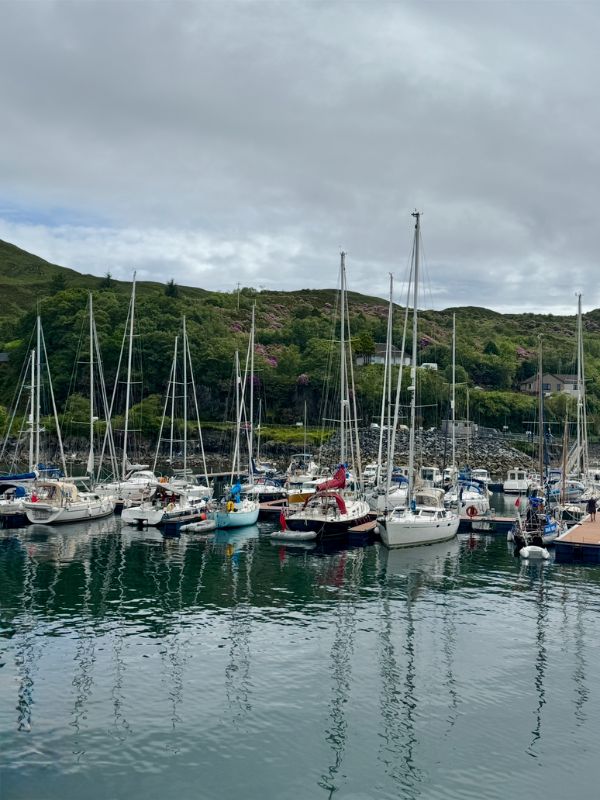
Mallaig is a working fishing port at the end of the line, with ferries out to Skye and the Small Isles. The bustle of the harbour and the smell of the sea is a fine way to arrive.
What to look out for
- The harbour and the fishing boats
- Fresh seafood at the quayside, with a real following for the langoustines and the fish and chips
- The CalMac ferry to Armadale on Skye
- The Small Isles, Rum and Eigg, across the water on a clear day
- The short walk up to the viewpoint above the town
Our pick: Seafood on the harbour before the return train or ferry. We recommend ‘The Fishmarket Deli’ on Station Road for particularly good scampi and chips
Getting there and practicalities
Two ways to ride the line
There are two quite different ways to travel it, and they can often be confused.
The scheduled service is run by ScotRail from Glasgow Queen Street all the way to Mallaig, the full length of the line, all year round. It is far cheaper than the steam train, you can break the journey, and ordinary tickets and railcards apply. A railcard or a visitor pass can bring the fare down, and for anyone doing several Scottish journeys a Spirit of Scotland pass can be worth it
End to end it takes roughly five and a quarter hours.
All services from Glasgow Queen Street run through to Mallaig, so you do not need to change at Fort William. However, be sure you are sitting in the correct carriage from Queen Street, as the train divides at Crianlarich for the Oban branch line. Make sure you are seated in the Mallaig portion, and check your specific service before you travel.
Be aware of limited daily services on the entire line, with 3 trains a day Monday to Saturday and 2 on Sundays.
The Jacobite steam train covers only the Fort William to Mallaig leg, the most scenic 84 miles, behind a steam locomotive. For the 2026 season, the morning service runs until 23 October.
Confirm the current dates before you plan a trip around them, as the running dates have shifted in recent years. It is a same-day return only, with no one-way tickets, around two hours ten minutes each way and roughly four and a half hours on board in total. A few cash-only seats are sometimes sold at the train side on the day, but do not rely on them.
Booking and seats
- Book the scheduled service through ScotRail or any rail retailer.
- Book the Jacobite directly with West Coast Railways; some allocation also appears on GetYourGuide when the WCR site is full.
- Seat reservations: not all ScotRail services on the line offer them; where they are available, reserve ahead in peak season.
Which side of the train
There is a genuine best side for the views. Travelling from Fort William, the Glenfinnan Viaduct curve is on the left.
One thing to note on the scheduled ScotRail service: the carriage windows are sealed, so you cannot take open-window photos or video the way you can on the Jacobite.
Starting from further afield
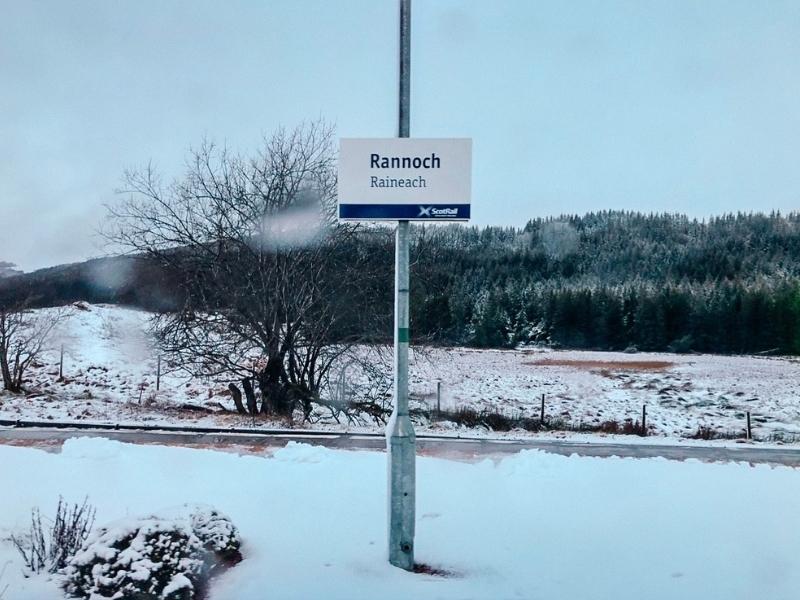
The Caledonian Sleeper runs overnight from London Euston to Fort William, which enables you to commence the Mallaig leg fresh in the morning.
The morning Jacobite leaves Fort William shortly after the sleeper arrives, from the other side of the same platform – a tight but tempting connection if the sleeper is on time, and one that lets you photograph the Jacobite as it departs, if it is running that day.
We talk the sleeper through in the podcast, in Episode 141, Caledonian Sleeper Update.
Where to stay along the route
We would break this journey rather than do it all in one day, and the obvious places to stay are Glasgow at the start, then Fort William and Mallaig.
Important to note there are only a few trains a day in each direction, so itinerary planning is essential.
- Glasgow: Kimpton Blythswood Square Hotel
- Fort William: MaClean Guest House
- Mallaig: An Bothan
Listen to the episode
Related guides and products
- UK Train Journeys: The Best Routes by Rail
- The Scottish Islands
- Fort William Guide
- East Coast Main Line: London to Edinburgh, Stop by Stop
Products and services:

![How to travel from London to Dublin [All options included]](https://uktravelplanning.com/wp-content/uploads/2024/05/London-Travel-Planning-header-2-768x384.jpg)