
Accessible Travel in the UK: The Complete Planning Guide
The most comprehensive resource for visitors with accessibility needs – covering transport, accommodation, attractions, and practical tips across England, Scotland and Wales.
⚡ Arriving Soon? Start Here
If you have limited time to plan, these are the five most important actions:
- Book train assistance in advance — use the website at passengerassistance.com, which works for international visitors planning from home. The app may not be available outside UK app stores. For airport assistance, contact your airline at the time of booking. Do not leave either until the day.
- Buy a RADAR key – many accessible toilets in the UK are locked. Order one online for around £5 before you travel.
- Download the step-free Tube map – tfl.gov.uk/maps/track/tube — if you’re visiting London.
- Check AccessAble – accessable.co.uk – for detailed access information on every venue, hotel, and attraction you plan to visit.
- Contact your accommodation directly – confirm lifts, bathroom layout, parking, and distances before you arrive.
Everything else in this guide will help you plan more thoroughly. But if you do nothing else, do those five things.
Introduction: Accessible Travel UK
The UK is one of the best-documented countries in the world for accessible travel. It has strong disability legislation (the Equality Act 2010), a large and active community of disabled travellers who publish honest reviews and guides, and detailed venue-by-venue access information that most countries simply do not offer.
It is also a country with a long history, which means accessibility can be genuinely inconsistent. A world-class modern museum may sit a few streets away from a cobbled lane that is effectively impassable in a wheelchair. Train stations range from fully step-free to requiring advance-booked ramp assistance. “Accessible room” means different things in different hotels.
None of this should put you off. It means that planning matters, and that visitors who research in advance consistently have much better experiences than those who assume.
This guide brings together every resource you need, honest practical advice, and a realistic picture of what to expect.
You can also download the full planning checklist as a free PDF to keep on your phone.
Planning by Disability Need
Different accessibility needs require different planning priorities. This section gives you a focused starting point before you dive into the full guide.
Wheelchair Users and Mobility Equipment
Your biggest planning tasks are transport and accommodation. The UK’s urban transport networks are improving but uneven – London’s Tube is only about 30% step-free, while buses are universally accessible. Train stations vary enormously. Always book Passenger Assist in advance, check the step-free Tube map, verify hotel bathroom dimensions, and research specific attraction access before arriving.
Key resources: AccessAble, Passenger Assistance app, step-free Tube map, Changing Places Toilets, Mobility Hire.
Deaf and Hard of Hearing Visitors
The UK has reasonably good provision for deaf and hard of hearing visitors, but it is rarely signposted well.
Most major train stations have induction loops at ticket offices and information points. London Underground stations have hearing loops at help points and ticket gates. Theatres and cinemas increasingly offer captioned performances – check listings in advance. The BBC’s subtitling is near-universal on TV. Major visitor attractions often have printed guides and visual information as an alternative to audio guides.
British Deaf Association: bda.org.uk — resources and signposting for deaf visitors.
SignHealth: signhealth.org.uk — health and support services accessible in BSL.
At attractions, ask whether BSL-interpreted tours or captioned audio guides are available — some provide these but do not publicise them widely.
Blind and Low Vision Visitors
The UK has strong provision for blind and partially sighted travellers, particularly in urban areas. London’s Tube uses audio announcements at stations and on trains; buses announce stops. Most major museums and galleries offer audio guides, touch tours, and tactile exhibits. Many train stations have tactile paving and staff assistance.
Royal National Institute of Blind People (RNIB): rnib.org.uk — the UK’s leading sight loss charity, with a helpline and travel advice.
Guide Dogs UK: guidedogs.org.uk — information on travelling with a guide dog in the UK, including transport and accommodation rights.
Note: Guide dogs are legally permitted in all taxis, restaurants, hotels, and transport in the UK. Any refusal is unlawful.
Chronic Illness, Fatigue Conditions and Ambulant Disabled Visitors
The UK’s accessibility infrastructure focuses heavily on wheelchair access, which does not always map to the needs of people who can walk but have limited stamina, pain conditions, or variable mobility.
Practical considerations: many London Tube stations have very long walks between platforms or exits. Even “step-free” routes can be 10–15 minutes from one platform to another. Seats on trains and buses can be requested; priority seating exists but is not always vacated. Planning rest points into your itinerary – museums have benches; cafés are plentiful – is worthwhile.
The Hidden Disabilities Sunflower (below) is particularly useful as it signals needs without requiring explanation.
Neurodivergent Visitors
Many UK attractions now offer sensory-friendly options including quiet hours, visual guides, reduced-capacity sessions, and advance access visits. These are often not widely advertised — contact venues directly and ask.
See the dedicated Neurodivergent and Sensory Needs section below.
Essential National Resources
AccessAble
The single most useful tool for planning accessible travel in the UK. AccessAble provides independently verified, measurement-based access guides for thousands of venues – attractions, hotels, restaurants, hospitals, universities, and more.
Rather than vague language like “accessible,” it gives you exact step heights, door widths, gradient percentages, toilet dimensions, and distances between areas. You decide whether it works for your needs.
Best for: Detailed pre-trip research across all disability types.
Euan’s Guide
Access reviews written by disabled visitors themselves. Operates like a TripAdvisor for accessibility, with honest first-hand accounts, photos, and practical insight that official sources sometimes miss or understate.
Best for: Real-world perspectives, especially for wheelchair users.
Hidden Disabilities Sunflower

A discreet lanyard scheme that signals to staff that you may have a non-visible disability — such as autism, chronic pain, hearing loss, anxiety, epilepsy, or many other conditions — and might need extra time, patience or assistance.
Recognised at airports, train stations, supermarkets, theme parks, and major attractions across the UK. You do not need to explain your disability to use it.
Best for: Anyone with a hidden disability who may need support without having to ask explicitly or justify their needs.
Tourism for All
A dedicated accessible tourism charity providing advice, properly assessed accommodation listings, and UK-wide planning guidance. Particularly helpful for finding accommodation that has been independently evaluated rather than self-reported.
Access Card
A wallet-sized card that communicates your specific access requirements to venues, events, and transport providers in a standardised format. Particularly useful for requesting companion tickets, adjusted services, or priority access at theatres, concerts and major attractions.
Changing Places Toilets
Standard accessible toilets do not meet the needs of everyone. Changing Places facilities provide a height-adjustable changing bench, ceiling hoist, peninsular toilet, and significantly more space — essential for many visitors. They are considerably more widespread in the UK than in most other countries.
Use the website to search for facilities along your route or near your planned venues.
Best for: Travellers who require a hoist, adult changing bench, or more space than a standard accessible toilet provides.
The RADAR Key
Many accessible public toilets in the UK are kept locked and opened with a standard key called a RADAR key. Without one, you may arrive at a locked accessible toilet with no way to access it.
Buy one before you travel — approximately £5 — from:
- Online retailers (search “RADAR key UK”)
- Larger branches of Boots the Chemist
- Tourist Information Centres
- Mobility equipment shops
A single RADAR key works at the vast majority of locked accessible toilets across the UK.
Blue Badge Parking
The Blue Badge scheme provides parking concessions for people with significant mobility difficulties or certain hidden disabilities. It allows parking on single and double yellow lines (with some time limits), in disabled bays, and free use of many pay-and-display areas.
If You Have a UK Blue Badge
Your badge is valid across England, Scotland and Wales. Rules vary slightly in Scotland — check mygov.scot for specifics. In London, a Blue Badge does not automatically exempt you from Congestion Charge or ULEZ fees — check the Transport for London website.
If You Are Visiting from the EU or EEA
The UK recognises Blue Badges and equivalent disabled parking permits from EU and EEA countries. Display your home country badge as you would at home.
If You Are Visiting from Outside the EU/EEA
The UK does not have a blanket reciprocal arrangement with all countries. Overseas visitors without a recognised badge cannot use Blue Badge bays. If you are hiring a car and have mobility needs, contact your hire company about options, or consider using accessible public transport and taxis instead.
Applying for a Blue Badge (UK Residents Only)
Apply via your local council. Eligibility has expanded in recent years to include many hidden disabilities. More information at gov.uk/apply-blue-badge.
Companion and Carer Tickets
Many UK attractions, theatres, and events offer free or discounted entry for a companion or carer accompanying a disabled visitor. This is not always prominently advertised.
Standard practice at many major venues:
- Free carer entry alongside a paying disabled visitor
- Companion seats at reduced price or free in theatres and cinemas
- Priority access or separate queuing
The Access Card (above) is designed specifically to communicate this need efficiently. Alternatively, contact venues directly before booking – most will accommodate the request even if it is not listed on their website.
Getting Around: Train Travel
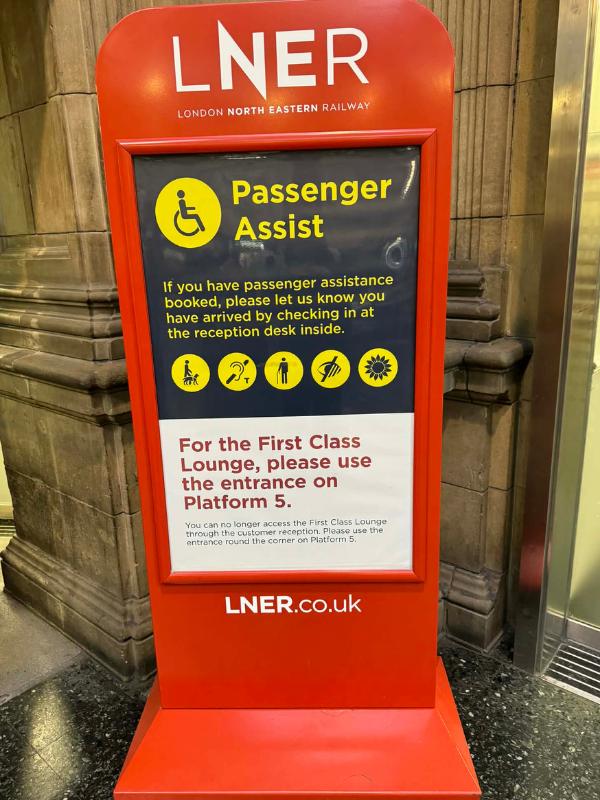
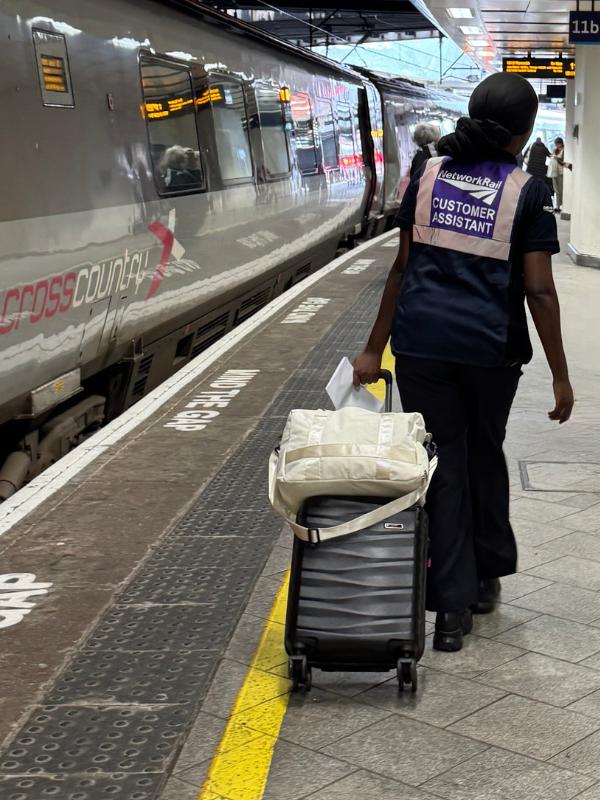
Train travel is one of the best ways to explore the UK, and the network has improved significantly for accessible travel – but it requires planning.
National Rail — Accessible Travel
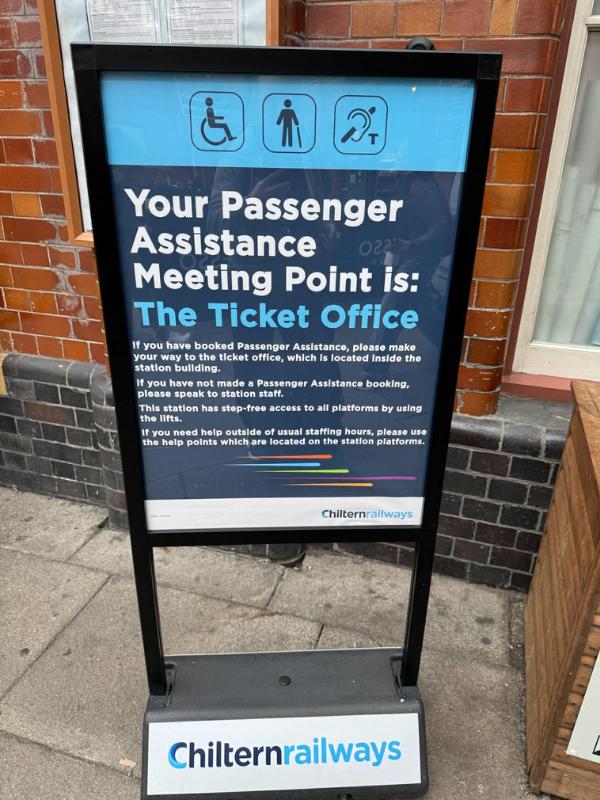
nationalrail.co.uk/accessible-travel
The starting point for accessible train travel across England, Scotland and Wales. Covers Passenger Assist, on-board wheelchair spaces, priority seating, station facilities, and what to expect from staffed and unstaffed stations.
Passenger Assistance App
Book, manage and track assistance for train journeys. Works across all UK train operators from a single booking. Book as far in advance as possible — 24 hours minimum is recommended, though earlier is better.
Disabled Persons Railcard
disabledpersons-railcard.co.uk
One-third off most rail fares for the cardholder, plus a companion discount. Costs around £20 per year. Eligibility covers a wide range of conditions.
Station Accessibility
National Rail Station Facilities
Check step-free access, lift availability, staffing hours, and other facilities at individual stations before you travel.
Important: “Step-free access” at a station does not mean you can board the train unaided. Many trains still have a gap or step between platform and carriage, and staff use a portable ramp. This is normal and not a barrier – but it means arriving with time to find a member of staff, especially at busy stations.
Unstaffed stations: Some smaller stations have no staff at certain times. If you need a ramp, you must book in advance via Passenger Assist so an alternative arrangement can be made.
Getting Around: London
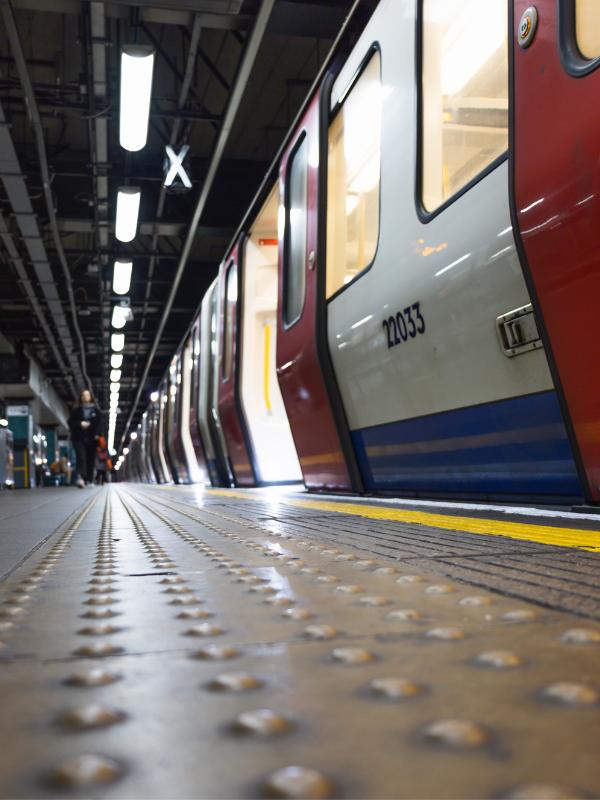
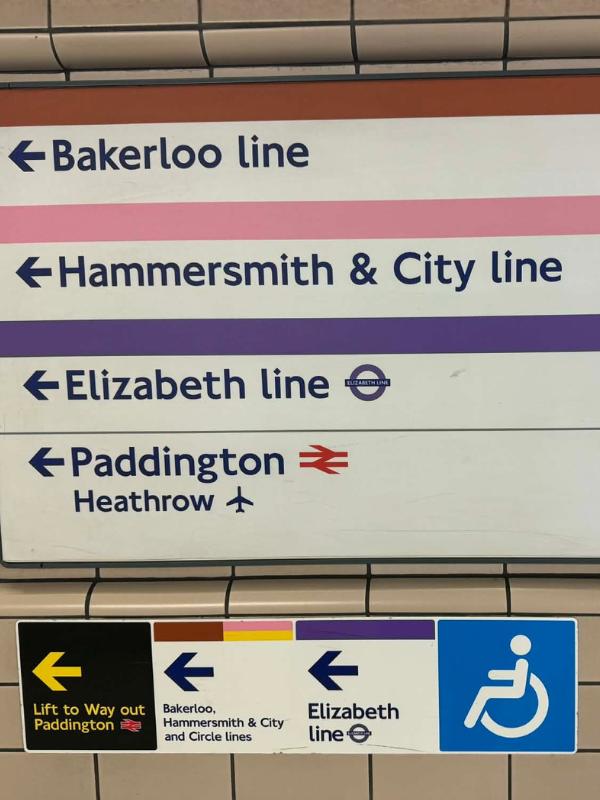
London has extensive accessible transport options, but the network requires route planning.
Transport for London
tfl.gov.uk/transport-accessibility
Comprehensive information on step-free access, assistance, and accessible travel across all TfL services: Underground, Overground, Elizabeth line, DLR, buses, and river services.
Step-Free Tube Map
Only around 30% of Underground stations are step-free. Download or screenshot this map before you travel – it is essential for planning accessible routes on the Tube.
Always check live lift status before travelling. The TfL Go app shows real-time lift outages. A single closed lift can require a significant route change.
London Buses
Every bus in the London fleet is low-floor with a ramp and a dedicated wheelchair space. Buses are often easier to navigate than the Tube, particularly if your route involves non-step-free stations. Payment is by Oyster card or contactless – cash is not accepted on London buses.
The Elizabeth Line
The Elizabeth line (opened 2022) is fully step-free at all stations within the central section and at most outer stations. It is significantly more accessible than most of the Underground and worth using where your route allows.
Taxis and Private Hire
All traditional London black cabs (hackney carriages) are wheelchair accessible by law. Uber Access provides wheelchair-accessible vehicles at no extra cost in London and some other UK cities.
Visit London — Accessible Transport
visitlondon.com/accessible-transport
An accessible transport overview specifically for visitors.
Getting Around: Airports
All major UK airports offer free special assistance services. Book at the time of purchasing your flight — or as soon as possible — to ensure availability.
You are not required to prove or justify your disability. Anyone who needs assistance can request it.
- Heathrow: heathrow.com/assistance
- Gatwick: gatwickairport.com/accessibility
- Manchester: manchesterairport.co.uk/special-assistance
- Edinburgh: edinburghairport.com/accessibility
- Birmingham: bhx.co.uk/accessibility
- Bristol: bristolairport.co.uk/accessibility
Tip: If you are travelling with a powered wheelchair or mobility scooter, notify your airline well in advance. Battery type and dimensions affect what can be carried in the hold, and airlines have strict rules. Getting this wrong at check-in can cause serious problems.
Accommodation
Finding Accessible Places to Stay
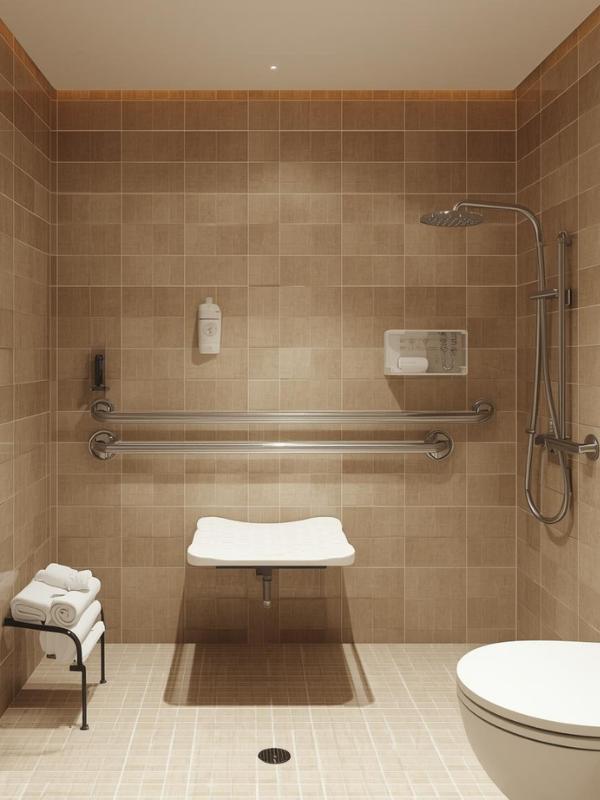
Tourism for All (above) is the most reliable starting point for accommodation that has been properly assessed rather than self-certified.
Accessible Holiday Escapes: accessibleholidayescapes.co.uk — Specialist agency for fully accessible self-catering and hotel accommodation across the UK.
Premier Inn: premierinn.com/accessible — Consistent accessibility standards across a large estate of budget hotels. Their accessible rooms are generally well-specified; check individual hotel pages for details.
Airbnb accessibility filters — available but self-reported and inconsistent in quality. Always verify directly with hosts.
Always contact accommodation directly before booking. Ask specifically: Is there a lift? What floor is the accessible room on? Is the bathroom a roll-in shower or a wet room? What are the grab rail positions? How far is accessible parking from the entrance? What is the distance from entrance to room? Do not rely on descriptions that simply say “accessible” — the word means very different things in different properties.
Equipment Hire
Mobility Hire: mobilityhire.com — Hire wheelchairs, scooters, hoists, shower chairs and other mobility equipment for your trip, delivered to your accommodation.
Attractions
Historic Sites
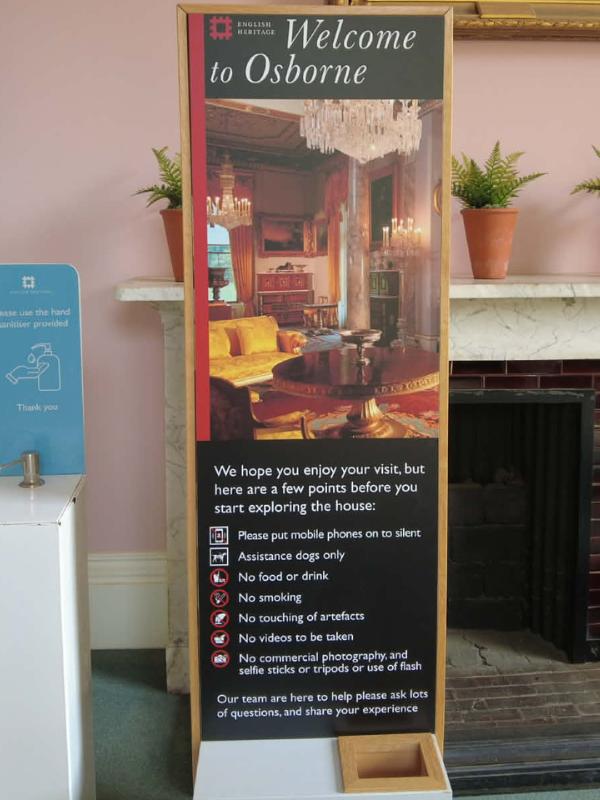
The UK’s most famous attractions, its castles, cathedrals, stately homes, and medieval sites, present the greatest accessibility variation. Many have done significant work to improve access; many still have genuine physical constraints that cannot be fully overcome in a listed building.
Check the specific access guide for each site before visiting. Do not assume a famous or well-funded site is fully accessible.
- Tower of London: toweroflondontours.com/accessibility
- Buckingham Palace (State Rooms): Accessible route available – check the Royal Collection Trust website
- Royal Observatory Greenwich: wheelchairtravel.org – Greenwich
- National Trust: nationaltrust.org.uk/accessibility – each property has its own detailed access guide
- English Heritage: english-heritage.org.uk – check individual site pages; accessibility varies hugely
Museums and Galleries
The UK’s national museums – the British Museum, Natural History Museum, Science Museum, National Gallery, Tate Modern, V&A, and many others – are among the most accessible in the world. Most offer level access, lifts, audio guides, large-print materials, touch tours, and free admission. They are a genuine highlight for accessible travel.
West End Theatres
London’s theatres have improved significantly. Many offer: audio description performances, captioned performances, BSL-interpreted performances, relaxed performances (reduced lighting and sound), induction loops, and accessible seating.
West End accessibility guide: londontheatre.co.uk/accessibility
Book accessible seats and companion tickets early – they are limited. Contact box offices directly for specific requirements.
London
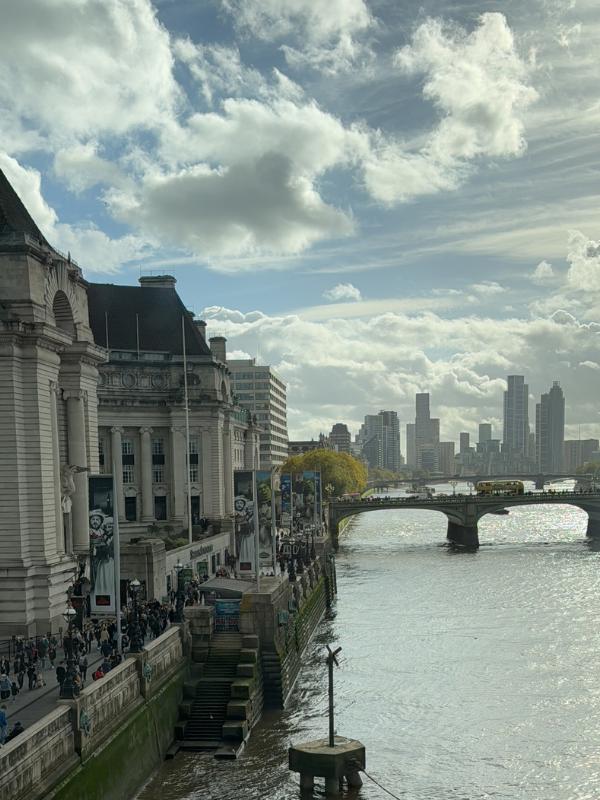
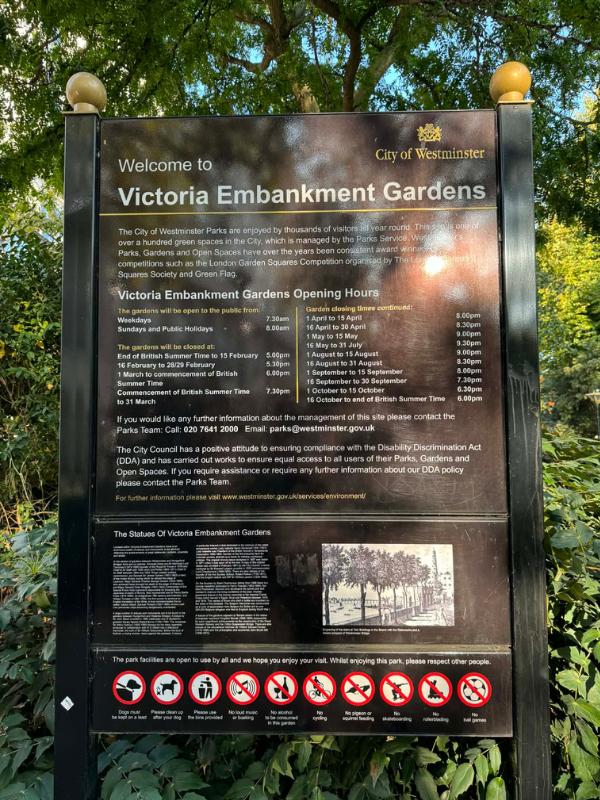
London deserves its own section because of its scale and complexity – but also because, planned well, it is one of the most rewarding accessible city destinations in the world.
The city’s national museums and galleries are a genuine highlight. The British Museum, Natural History Museum, Science Museum, V&A, National Gallery, Tate Modern, and many others are all free to enter, fully accessible, and among the best in the world. You could spend a week visiting museums alone without paying a penny in admission.
London’s parks are another accessible strength that visitors often overlook. Hyde Park, Regent’s Park, St James’s Park, and Greenwich Park all have firm, level paths through their central areas and are largely wheelchair friendly. Greenwich Park has some slopes on its outer edges but the main paths are manageable and the views from the top are exceptional.
The South Bank between Westminster Bridge and Tower Bridge is one of London’s great accessible walks — a largely level riverside path of around two miles with world-class views, free attractions, cafés, and the option to stop at Tate Modern, the Globe Theatre, Borough Market, or the Tower of London along the way. It is one of the best ways to experience London without relying on the Tube at all.
The main challenge is the Underground. Roughly 30% of stations are step-free (improving steadily). The Elizabeth line, Overground, and DLR are significantly more accessible. Buses are universally accessible. Planning your route around these networks rather than the deep-level Tube lines makes London very manageable.
Useful London-specific tools:
- TfL Go app – live transport including lift status
- tfl.gov.uk/step-free-map – step-free Tube map
- visitlondon.com/accessibility
Scotland
Scotland’s cities and landscapes are extraordinary and well worth the trip. Accessibility infrastructure in Edinburgh and Glasgow is good, though Edinburgh’s Old Town presents genuine challenges.
Scottish Disability Directory: disabilityscot.org.uk
Edinburgh

Edinburgh’s Old Town is built on volcanic rock with steep closes (alleyways), uneven cobbled streets, and significant gradients. The Royal Mile itself is cobbled. Many of the most visited areas of the Old Town are genuinely difficult for wheelchair users and those with limited mobility.
Edinburgh’s New Town (just across Princes Street) is largely flat and much more navigable.
- Edinburgh Castle: edinburghcastle.scot/access — challenging site but with a detailed access guide and staff assistance
- National Museum of Scotland: Fully accessible; excellent.
- Royal Botanic Garden Edinburgh: Largely accessible; detailed access guide available
Glasgow
Glasgow is generally considered the more accessible of Scotland’s two main cities — flatter terrain, a more modern city centre, and good accessible transport.
- Visit Glasgow accessibility: visitglasgow.org.uk/accessibility
- Kelvingrove Art Gallery: Excellent accessibility – flat, lifts throughout, free entry
Scottish Highlands and Rural Scotland
Some of the UK’s most breathtaking scenery is in rural Scotland. Accessibility varies enormously: some accessible trails exist (Forestry and Land Scotland maintains some), but many natural areas involve rough terrain.
Accessible Countryside for Everyone (ACE UK): aceuk.org has information on accessible rural routes.
England: Key Regions
Manchester and the North West
Manchester has a good accessible public transport network including Metrolink trams (all step-free), accessible buses, and a generally flat city centre.
- VisitManchester accessibility: visitmanchester.com
- Manchester Airport: manchesterairport.co.uk/special-assistance
- The Museum of Science and Industry and Manchester Art Gallery are both highly accessible
Birmingham and the Midlands
Birmingham city centre has been substantially redeveloped with good step-free access. The Grand Central shopping centre and New Street Station are accessible. The Bullring area is flat and manageable.
- Visit Birmingham: visitbirmingham.com
Bath
Bath is a beautiful but challenging destination. The city centre is largely compact, but many of the most visited areas involve slopes and some cobbled sections. The Roman Baths has accessible routes but check in advance for specific requirements.
- Visit Bath accessibility: visitbath.co.uk
The Cotswolds

The Cotswolds villages – Bourton-on-the-Water, Burford, Chipping Campden, Bibury – are exceptionally picturesque and frequently visited. They are also mostly historic, with uneven pavements, narrow streets, and stepped entrances in many buildings.
Some villages are more accessible than others. Bourton-on-the-Water, with its flat riverside path, is one of the more manageable. Research individual Cotswolds villages before visiting.
Cornwall
Cornwall’s dramatic coastline is one of England’s most spectacular destinations, and it is more accessible than its rugged reputation suggests — particularly for beach visits.
47 Cornish beaches have confirmed disabled access, and several provide sand wheelchairs for hire — all-terrain chairs with oversized inflatable wheels that roll easily across sand. Beach wheelchair availability varies by location and season, so always ring ahead to check.
Some of the most accessible beaches include:
- Perranporth — a relatively flat town and beach with a sand chair available for hire and good seafront facilities
- Mawgan Porth — accessible directly from a flat car park with no dunes or steep slipway
- Watergate Bay — fully accessible with several access paths and sand chairs available from the Watergate Bay Hotel
- Bude (Summerleaze Beach) — beach wheelchairs available during school summer holidays, a Changing Places toilet with electric hoist, and Blue Badge parking nearby
Beyond beaches, the Eden Project and the Lost Gardens of Heligan are both well set up for wheelchair access with Changing Places toilets. Trebah Garden has a step-free route and two Tramper mobility scooters available to hire free of charge — book ahead.
Having a car is strongly recommended — Cornwall’s rural landscape makes getting around difficult even for visitors without mobility challenges.
Cornwall accessibility resources:
- Visit Cornwall: visitcornwall.com/accessibility
- Access Cornwall beach guide: accesscornwall.org.uk
- Beach wheelchair hire: cornwallmobility.co.uk
The Lake District
The Lake District is one of England’s most spectacular destinations, and more accessible than many visitors expect. The Miles Without Stiles scheme offers 50 accessible walking routes for wheelchairs, pushchairs and those with limited mobility across the Lake District National Park – along lake shores and riversides, to tarns and through woods, to historic remains and fell summits with remarkable views.
Routes are graded at three levels – suitable for “all”, “many”, or “some” – based on gradients and surface conditions. This makes it easy to find a route that genuinely works for your needs rather than guessing.
You can also hire a Tramper all-terrain mobility scooter, which is safe to use on most kinds of rough ground as well as pavements and walkways.
Lake District accessible travel resources:
- Miles Without Stiles routes and map: lakedistrict.gov.uk/mileswithoutstiles
- Visit Lake District — Access for All: visitlakedistrict.com/access-for-all
Note that while these routes are carefully graded, the Lake District is naturally hilly and path conditions can change after bad weather. Always check individual route pages for current conditions before setting out.
Wales
Wales has some extraordinary landscapes and a strong commitment to accessible tourism.
Visit Wales accessibility: visitwales.com/accessibility
Cardiff city centre is largely flat and accessible. Many of the national parks offer dedicated accessible trails.
- Brecon Beacons National Park accessibility: Check their visitor information for accessible routes
- Cardiff Castle: Good accessibility — check their access guide
- National Museum Cardiff: Excellent accessibility; free entry
Neurodivergent and Sensory Needs
Accessibility is not only physical. Many UK venues now offer specific provision for neurodivergent visitors and those with sensory sensitivities.
What to look for and ask about:
- Quiet hours or low-stimulation sessions (many museums, zoos and attractions offer these)
- Visual guides and social stories (pre-visit resources showing what to expect)
- Advance visits — many venues will allow a private preview for visitors who need to prepare
- Sensory bags or kits — available at some attractions
- Relaxed performances — theatre performances with adjusted lighting and sound, where audience movement is welcome
National Autistic Society: autism.org.uk — venue guides, travel advice, and the Autism Accreditation scheme
Dimensions UK: dimensions-uk.org — resources and the “Autism Friendly” venue accreditation
Hidden Disabilities Sunflower (see above) — widely recognised and useful for communicating needs without explanation
When planning, contact venues directly and ask specifically. Many are more accommodating than their websites suggest, and advance contact often unlocks options that are not publicly listed.
Dietary Requirements
UK restaurants are legally required to provide allergen information on request. Do not hesitate to ask.
- Coeliac UK: coeliac.org.uk — restaurant guide and travel advice for coeliac disease
- Allergy UK: allergyuk.org — advice and resources for all food allergies
- Find Me Gluten Free: findmeglutenfree.com — community-reviewed directory of gluten-free friendly venues
- Time Out London gluten-free guide: timeout.com
- Time Out London vegan guide: timeout.com
Healthcare and Emergencies
Getting Medical Help
999 — emergency services (ambulance, police, fire). For life-threatening emergencies only.
111 — NHS non-emergency medical helpline. Available 24/7. Call or visit 111.nhs.uk for advice on non-urgent medical concerns, finding the nearest urgent care centre, or getting guidance on medication.
Pharmacies — UK pharmacies (Boots, Lloyds Pharmacy, independent chemists) can advise on minor ailments and provide many medications without a prescription. Most towns have at least one pharmacy.
Visitors from the EU and EEA
The EHIC (European Health Insurance Card) is no longer valid in the UK for EU citizens following Brexit. The UK has bilateral healthcare agreements with some countries — check gov.uk/guidance/using-the-nhs for your specific situation.
Travel Insurance
Comprehensive travel insurance is strongly recommended for all visitors, and essential for anyone with pre-existing conditions. Ensure your policy covers mobility equipment damage or loss, medical treatment in the UK, and any specialist needs.
Useful Apps
| App | What it does |
|---|---|
| TfL Go | Live London transport status including real-time lift outages |
| Passenger Assistance | Book and manage train assistance across all UK operators |
| AccessAble | Detailed access guides on the go |
| Citymapper | Accessible routing in London, Manchester, Birmingham and other UK cities |
| Sociability | Crowd-sourced accessibility reviews for venues |
| Google Maps | Wheelchair-accessible routing available — useful but not always accurate |
| What3Words | Precise location sharing for emergencies in rural areas |
What Visitors Often Don’t Realise
- “Step-free” is not the same as “fully independent access.” Many step-free stations and venues still require a ramp or staff assistance. Allow time for this and always ask — staff are generally helpful.
- Distances inside stations and transport hubs can be very long. The interchange between two lines at major Tube stations (Bank, Waterloo, King’s Cross) can involve 10–15 minutes of walking. Factor this into journey planning.
- Not all accessible toilets are unlocked. Carry a RADAR key.
- Accessibility information goes out of date. A lift working when a guide was written may be out of service today. Always check live status for transport and phone ahead for venues where access is critical.
- Rural areas require significantly more research. The UK’s most beautiful countryside – the Lake District, Scottish Highlands, Cotswolds, Cornish coast – often involves rough terrain. Many experiences are still possible with good planning, but expectations need to be realistic.
- Historic buildings have genuine constraints. UK planning law protects historic structures from alterations that would compromise their character. This means some level access limitations are genuinely permanent, not a failure of effort.
- Companion and carer tickets are often available but not advertised. Always ask.
Planning Checklist
Before You Leave Home
- Book airport assistance at the time of booking your flights
- Book train assistance at passengerassistance.com – the website works for international visitors planning from home. The app may not be available outside UK app stores.
- Buy a RADAR key
- Download the step-free Tube map (if visiting London)
- Research accommodation and contact directly to confirm access
- Research your planned attractions using AccessAble and venue websites
- Hire any mobility equipment you will need
- Check Blue Badge rules if driving or hiring a car
- Get travel insurance that covers your equipment and any pre-existing conditions
- Get a Hidden Disabilities Sunflower lanyard if relevant
- Get an Access Card if useful for companion tickets
- Download the apps – TfL Go, Passenger Assistance, AccessAble, and Citymapper
Take the Checklist With You
Download the free printable version of this checklist to keep on your phone or print before you travel. It covers everything you need to do before you leave home and a daily reminder checklist for each day of your trip — plus key resources and emergency numbers.
No sign-up required. Just download and go.
Each Day of Your Trip
- Check live lift status on TfL Go before London Tube journeys
- Identify the nearest Changing Places toilet on your route
- Confirm venue access on the day if access is critical
- Allow extra time at train stations for ramp assistance
Frequently Asked Questions
Is the UK accessible for wheelchair users?
Yes, with planning. Major UK cities — particularly London — have good accessible infrastructure, though the Tube is only about 30% step-free. Buses, the Elizabeth line, Overground, DLR, and black cabs are all accessible. Train travel across the country is manageable with advance assistance booking. Historic sites and rural areas require more research.
Do I need to book assistance for UK trains in advance?
Yes. While last-minute assistance can sometimes be arranged, advance booking through the Passenger Assistance app ensures support is ready at every station on your journey. Aim for at least 24 hours’ notice, ideally longer.
What is a RADAR key and do I really need one?
A RADAR key opens the majority of locked accessible public toilets in the UK. Many accessible toilets are kept locked to prevent misuse, and without a key you may find them inaccessible when you need them most. They cost around £5 and are widely available online. If you need accessible toilets, yes — you really need one.
Are London buses wheelchair accessible?
Yes. Every bus in the London fleet is low-floor with a ramp and a dedicated wheelchair space. Buses are often easier to use than the Tube for visitors who need step-free access, particularly when Tube routes involve non-step-free stations.
Can I use my Blue Badge from another country in the UK?
EU and EEA Blue Badge equivalent permits are recognised in the UK. Visitors from outside the EU/EEA do not have an automatic right to use Blue Badge bays, as the UK does not have blanket reciprocal arrangements with all countries.
What is the Hidden Disabilities Sunflower scheme?
A sunflower lanyard scheme that discreetly indicates to staff that you have a non-visible disability and may need extra support. It is widely recognised at UK airports, train stations, supermarkets, and attractions. You do not need to prove or explain your disability to use it.
Which UK airports are most accessible?
All major UK airports offer free special assistance services and are broadly comparable. Book assistance at the time of purchasing your flight for the best experience. Heathrow, Gatwick and Manchester have the most comprehensive infrastructure due to their size.
Are historic sites like castles accessible?
It depends on the specific site. Many have invested significantly in accessibility – ramps, accessible routes, audio guides – while others have genuine physical constraints in listed buildings that limit what can be done. Always check the specific access guide for each site before visiting.
What support is available for deaf visitors in the UK?
Induction loops are available at most major transport hubs, box offices, and information points. Many theatres offer BSL-interpreted and captioned performances. Major attractions often have printed and visual alternatives to audio guides. The British Deaf Association (bda.org.uk) is a useful resource.
Is travel insurance necessary for disabled visitors?
Travel insurance is strongly recommended for all visitors and especially important for visitors with pre-existing conditions or those travelling with expensive mobility equipment. Ensure your policy covers medical treatment in the UK, equipment loss or damage, and any specialist needs. EU visitors should note that EHIC cards are no longer valid in the UK following Brexit.
Are guide dogs and assistance dogs welcome in the UK?
Yes. Guide dogs and other registered assistance dogs are legally permitted in all taxis, public transport, restaurants, hotels, shops, and attractions in the UK. Any refusal is unlawful under the Equality Act 2010.

![Britain by train – Top 10 UK rail journeys [Maps + tips]](https://uktravelplanning.com/wp-content/uploads/2020/07/Britain-by-train-1-768x384.jpg)