Edinburgh to Inverness by Train: A Highland and Coast Loop
Taking the Edinburgh to Inverness train after a few days in the capital, on your way to Loch Ness, Culloden or Skye? It’s the easiest way north without a car, and the journey can be a day out in its own right.
It’s also easy to get wrong. There are two routes, most trains are short ScotRail trains, only one a day is LNER, and the scenic way via Aberdeen means changing trains. The cheapest Advance ticket ties you to one train, with no stopping off and no coming back a different way. It’s a lot to untangle from home, especially if British train tickets are new to you.
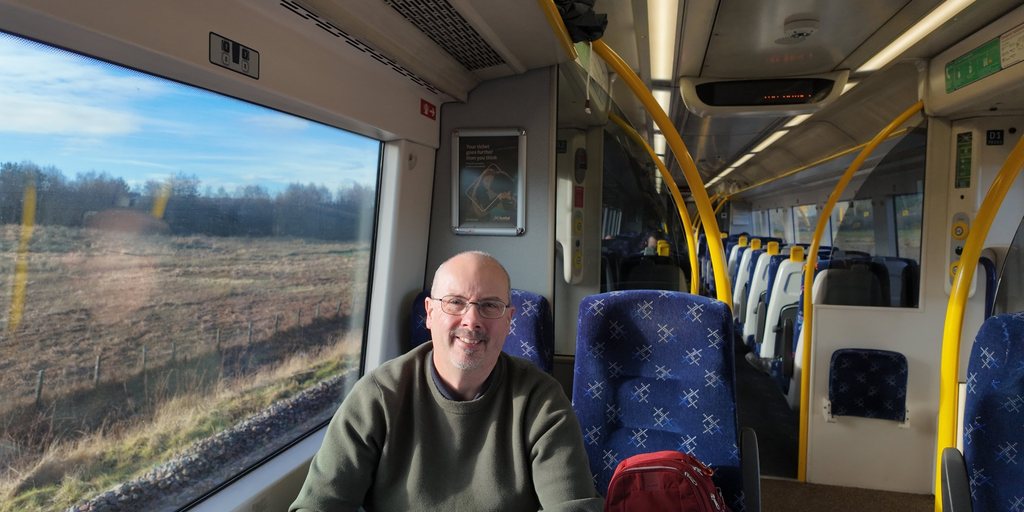
Doug spent more than 25 years working on the UK rail network and has travelled every UK train line at least once. In the winter of 2025 he did both routes as a loop, and a storm stranded him in Inverness halfway round.
By the end of this guide you’ll know which route suits your trip, which side of the train to sit on, how to do both in a single day, which ticket covers it, and what to do if the weather turns.
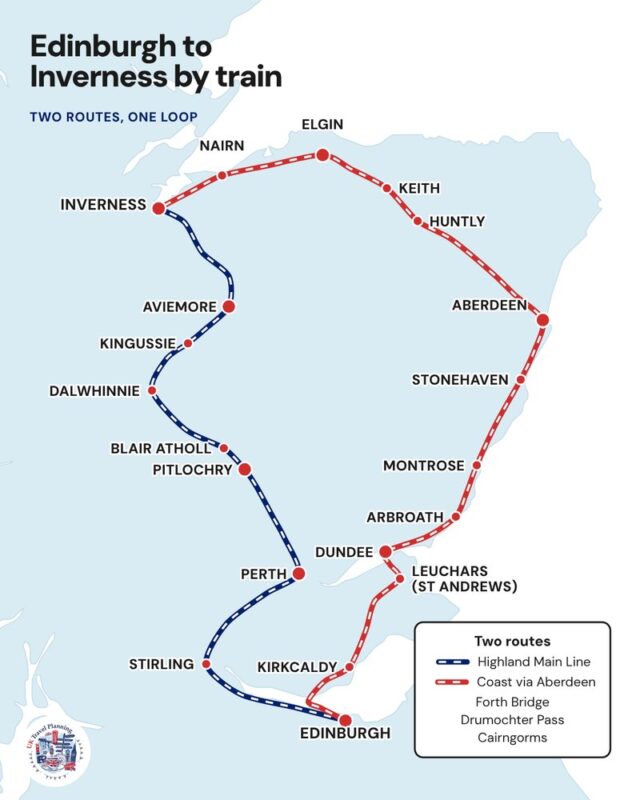
Good to know: the Highland Main Line via Perth and Aviemore is the fast route, about three and a half hours direct. The east coast route via Aberdeen takes about five hours with a change. Going up one and back down the other makes a loop, and with an early start it fits into a single day.
TIP: for getting yourselves and your cases straight to Inverness, an Advance ticket on a direct train is the cheapest option. For a loop or a stop-off, Doug’s tip is a flexible walk-up ticket instead. The button below compares both for your dates.
Prices and times last checked: 31 October 2026
The Edinburgh to Inverness train: the quick answer
- Journey time: about three and a half hours direct via Perth, or about 4 hours 40 minutes at best via Aberdeen, with a change.
- Direct trains: six a day Monday to Saturday and four on Sundays. On weekdays, the first leaves Edinburgh Waverley at 08:38 and arrives just after midday.
- Who runs them: ScotRail, except for one LNER train a day each way, the Highland Chieftain, to and from London King’s Cross. Northbound, it leaves Edinburgh in the late afternoon and reaches Inverness at around 8 pm.
- Cost and booking: Advance singles from about £15 on the dates we checked. Walk-up fares cost more and vary by train. ScotRail, LNER and Trainline all sell tickets online, and stations sell them on the day.
Edinburgh to Inverness train times and tickets
With full-size cases, after a long flight or in midwinter, the direct train is the better choice. When the journey is the day out, the coast route or the loop is worth the extra hours. The Highland Main Line isn’t the West Highland Line, by the way, which runs from Glasgow to Fort William and Mallaig.
The two routes side by side
| Route | Highland Main Line | East coast route via Aberdeen |
|---|---|---|
| Journey time | About 3.5 hours | About 4 hours 40 minutes at best, often nearer 5 |
| Changes | None on direct trains; others change at Perth or Stirling | One, at Aberdeen |
| Who runs it | ScotRail, plus one LNER train a day | ScotRail and LNER to Aberdeen, then ScotRail only |
| Scenery | Mountains, forest and the Drumochter pass | The Forth and Tay bridges and the sea as far as Aberdeen, then mostly inland |
| Best side heading north | Right for Killiecrankie and Aviemore, left for Ben Wyvis and Inverness | Right, though Montrose Basin is on the left |
| Best for | Getting to Inverness quickly with luggage | Making the journey the day out |
Which is more scenic? Doug calls it “a hard question”. The Cairngorms are beautiful, “but I also like the sea views” on the east side. So he does both: “Think of it like a circular route.”
The Highland Main Line, station by station
Edinburgh to Perth
Trains reach Perth either via Stirling or over the Forth Bridge through Fife. The direct Inverness trains we checked all go via Stirling, so for the bridge you’d take an hourly Fife train and change at Perth (Kirkcaldy in the calling points is the giveaway). Beyond Perth the line is largely single track, with trains roughly every two hours.
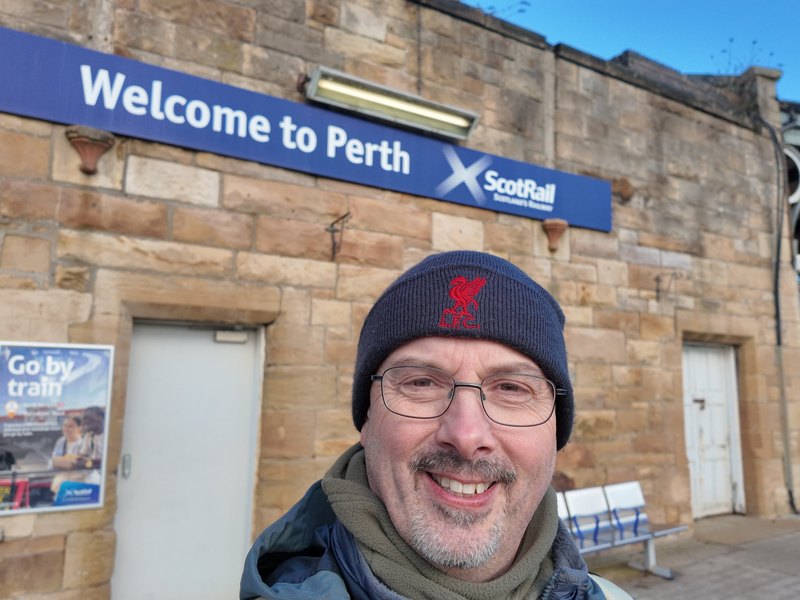
Perth makes a good stop on the way. On his way home after the storm, Doug stopped to see the Stone of Destiny at the new Perth Museum.
Pitlochry and Blair Atholl
Not every train stops at Blair Atholl, so Doug’s tip is to check the times before planning a stop. Pitlochry is a good place to break the journey, and I remember going to see the salmon ladder there. Blair Atholl is the station for Blair Castle, and between the two the Pass of Killiecrankie is on the right as you head north.
Drumochter, Aviemore and into Inverness
North of Blair Atholl the train climbs to Drumochter Summit, 452 metres (1,484ft) up and the highest point on the line. Near Aviemore, Cairn Gorm and the Rothiemurchus forest are on the right. After Carrbridge comes Slochd Summit at 401 metres (1,315ft), and from there the left-hand side is better, for Ben Wyvis and then the Culloden Viaduct as you come into Inverness.
Coming south the views swap sides, which is why Doug likes to sit on one side going up and the other coming back.
I did this line southbound in January 2025, after taking the Caledonian Sleeper up to Inverness just so I could wake up and enjoy the view. The sleeper’s Highlander runs from London Euston six nights a week, every night but Saturday. There’s more in our Caledonian Sleeper guide and in Episode 141 of the podcast.
Book the Caledonian Sleeper
The east coast route via Aberdeen, station by station
The east coast route follows the coast from Edinburgh to Aberdeen, then a second train heads inland to Inverness. Doug did it in January 2025, stopping in Leuchars and Aberdeen, and it took him just over six hours.
Edinburgh and the Forth Bridge
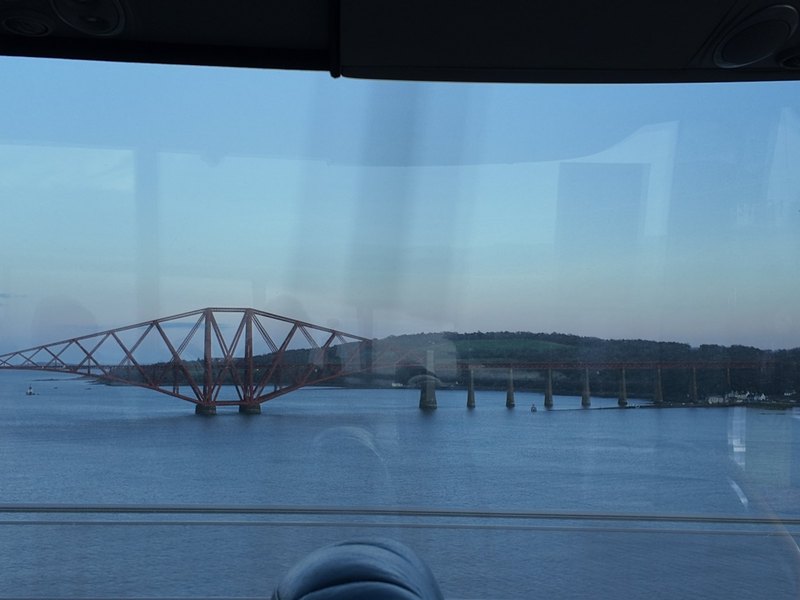
Trains to Aberdeen run about hourly and take around two and a half hours. The scenery starts almost as soon as you leave Edinburgh, and crossing the Forth Bridge is, in Doug’s words, “fantastic in itself”. The bridge opened in 1890 and has been a UNESCO World Heritage Site since 2015.
Doug sits on the right for the whole coast trip north, for the Forth Bridge, the Tay Bridge and the sea. You can see quite a lot from the left too, and Montrose Basin is best on that side.
Leuchars for St Andrews
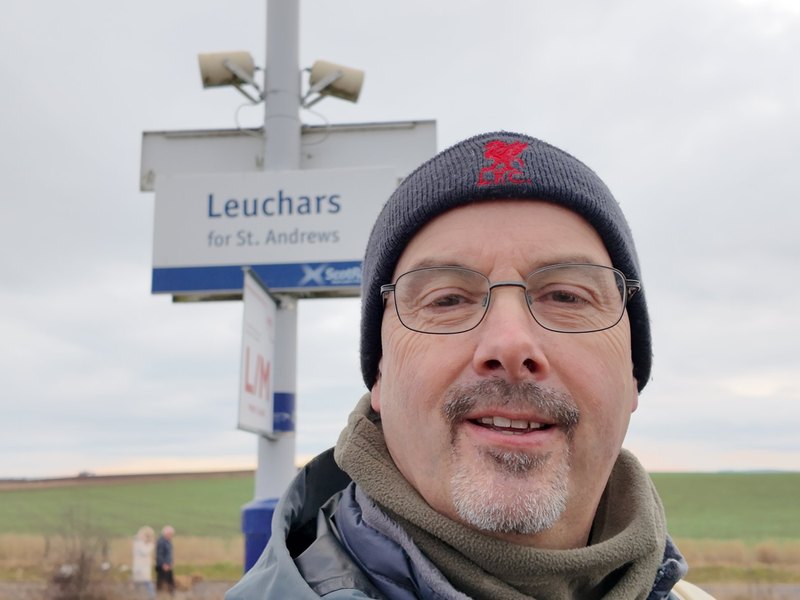
Leuchars is the station for St Andrews and was Doug’s first stop-off. It’s a quick bus ride from the station to St Andrews bus station, and he found a day ticket cost a couple of pounds less than a return. Our St Andrews travel guide has more on the town, and our guide to day trips from Edinburgh by train has more ideas from the capital.

The Tay Bridge, Dundee and the coast to Aberdeen
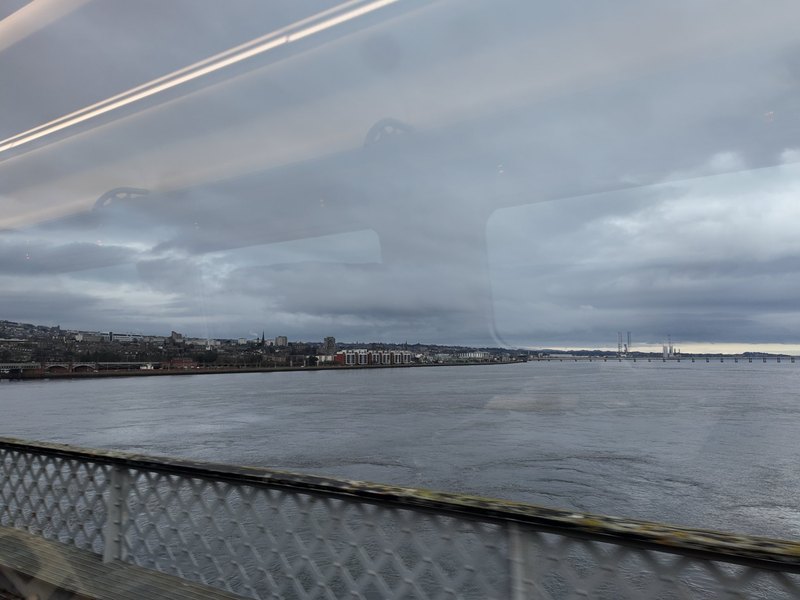
From Leuchars the train crosses the Tay Bridge into Dundee, and Doug had great views of the bridge and then the coast all the way to Aberdeen. North of Dundee, the line runs beside the sea to Arbroath, past Montrose Basin, and along the clifftops beyond Stonehaven.
Aberdeen
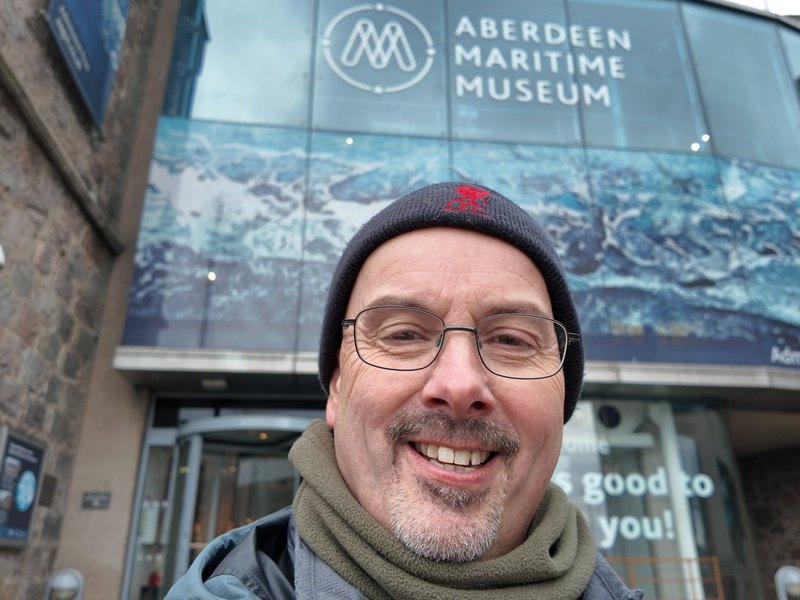
Aberdeen is where you change, and it was Doug’s second stop. The Aberdeen Maritime Museum is free and about a six-minute walk from the station, with local maritime history and a section on North Sea oil. Our Aberdeen travel guide has more for a longer stop.
Aberdeen to Inverness, via Keith
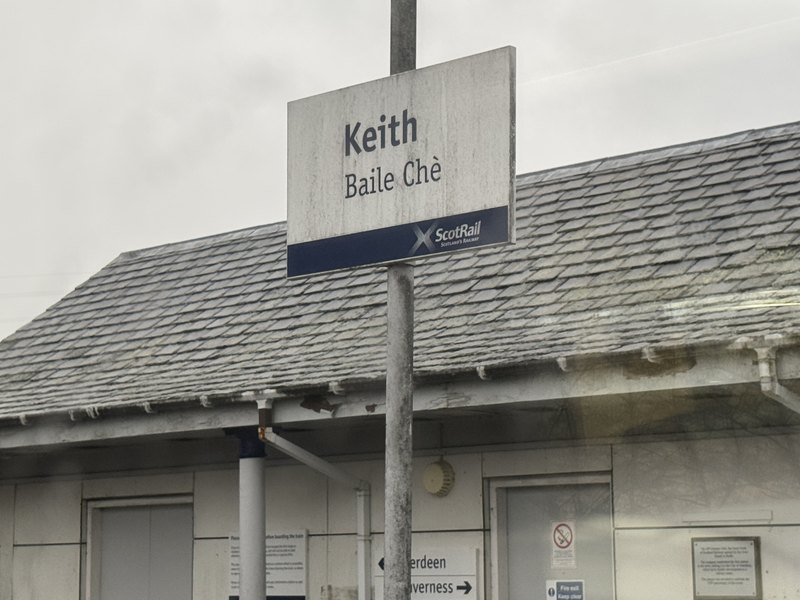
From Aberdeen it’s ScotRail only, about 108 miles in roughly two and a quarter hours, with a train about every two hours. Keith is the stop-off for the Speyside whisky line. This stretch mostly runs inland, with the coast only there “on and off”, as Doug puts it, as far as Elgin. The big sea views are south of Aberdeen.
The loop: up the coast, back through the Cairngorms
When Doug goes from A to B, he likes to come back a different way if the time and cost allow. “I do like circular train journeys.” He talks through this whole trip in Episode 145 of the podcast, and Episode 73 has more from him on Scotland by train.
Which way round
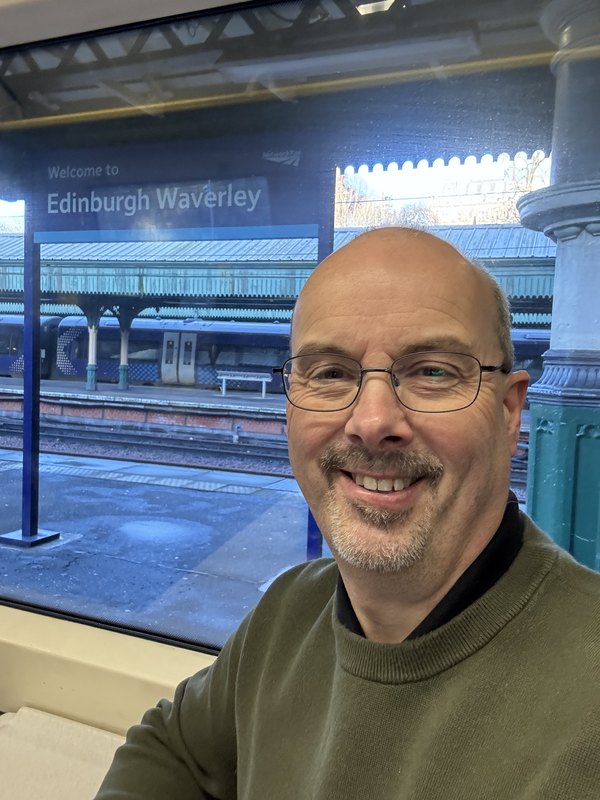
Doug’s way is to start first thing in the morning, go north on the coast route via Leuchars, Dundee and Aberdeen into Inverness, then come back on the Highland Main Line. “It’s the slowest way up and then the fastest way back.” It also works the other way round.
A sample day, with times
These are Monday-to-Friday times from the autumn 2026 timetable. Times change, so check National Rail for your own date and for any engineering work.
| Time | What happens |
|---|---|
| 06:30 | Leave Edinburgh Waverley for Aberdeen, over the Forth Bridge and via Leuchars and Dundee |
| 08:56 | Arrive Aberdeen, with just over an hour before the next train |
| 10:08 | Leave Aberdeen for Inverness, via Keith, Elgin and Nairn |
| 12:24 | Arrive in Inverness, with six and a half hours in Inverness |
| 18:52 | Leave Inverness on the direct train to Edinburgh, via Aviemore, Pitlochry and Perth |
| 22:15 | Arrive in Edinburgh Waverley |
That’s about eight hours on the train in all, close to the eight-and-a-half hours I worked out. The time of year matters on the way home. In June it stays light until well after 10 pm, so the 18:52 runs through the Cairngorms in daylight. From late October to late March that run is in the dark, so a night in Inverness and a morning train south, such as the 10:50 direct to Edinburgh, gives you the views.
The ticket that covers the loop
Doug’s advice is an Anytime walk-up ticket, which covers any permitted route between two places. His one tip: “Have as flexible a train ticket as you possibly can.”
Walk-up tickets marked “Any Permitted” can be used via Aberdeen. A walk-up return doesn’t always allow one way out and the other back, and you may owe an excess fare, so two walk-up singles are the simplest way to be sure. The Spirit of Scotland pass covers the loop too.
If you’d like Doug to look over your own Scotland rail plans, he offers a UK Train Travel 1:1 Consultation.
Need help with your UK train travel? Ask Doug
Doug spent over 25 years working on the UK rail network. Book a 30-minute Zoom call, and he’ll answer your questions on tickets, railcards, passes, seat reservations, routes and connections. You can send him your questions beforehand. $97 USD
Tickets and passes for the Edinburgh to Inverness train
Since 1 September 2025 ScotRail has charged the same fare at any time of day, and it announced a 12-month fares freeze in February 2026. Example fares from Edinburgh to Inverness, checked on 31 October 2026: LNER Advance standard singles from £17.20 (Tuesday 5 January 2027), LNER first class from £39.60 (Wednesday 25 November 2026), and Advance fares on Trainline from £15.30. Walk-up fares cost more and vary by train, so it’s worth comparing them for your date.
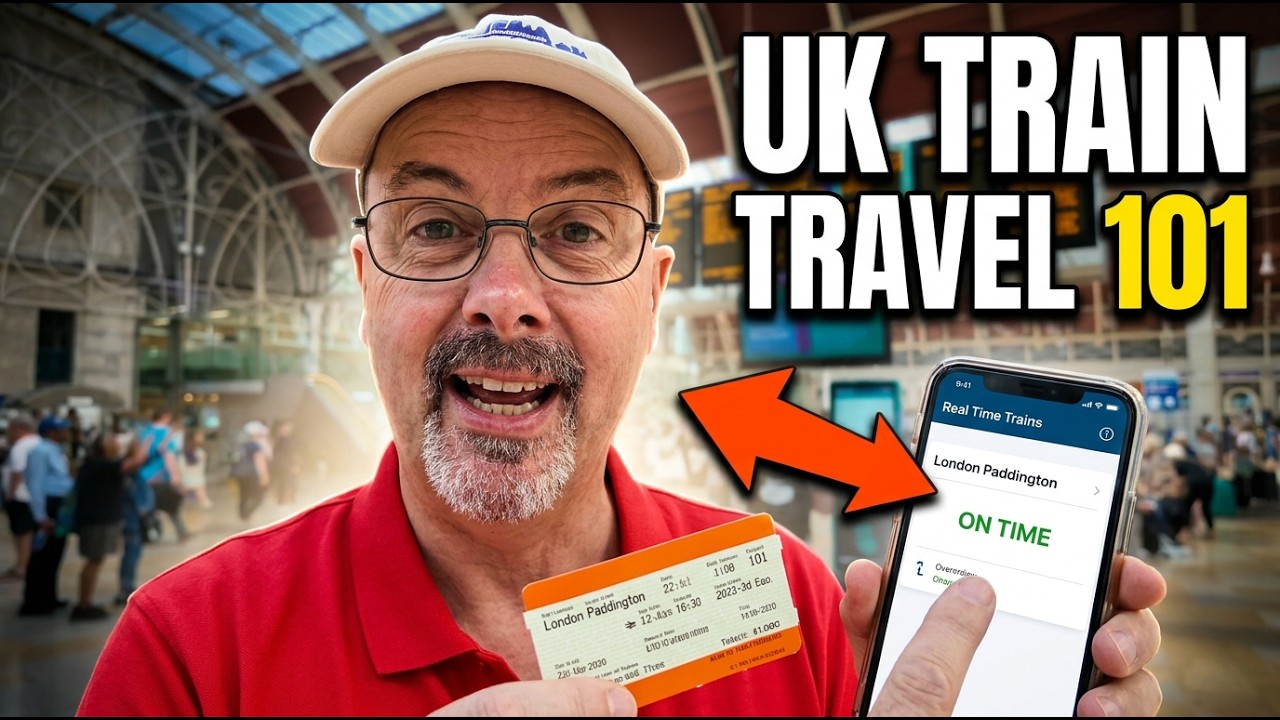
New to British tickets? Doug’s video explains how UK trains work, and Episode 157 of the podcast covers 15 UK train travel mistakes first-time travellers make.
Railcards
A railcard takes a third off most fares, and visitors can buy them too, such as the Two Together Railcard for two named adults travelling together, or the Senior Railcard for anyone 60 or over. The Two Together isn’t valid before 09:30 on weekdays, so it won’t cover a 06:30 start.
The Spirit of Scotland pass
The Spirit of Scotland pass covers the whole loop: ScotRail, LNER and CrossCountry trains in Scotland and the Leuchars to St Andrews bus, in standard class, but not ferries or the Caledonian Sleeper. It’s only valid after 09:15 on weekdays, so the 06:30 start needs a Saturday. On 31 October 2026 it cost £155 for 4 days’ travel in 8, or £196 for 8 days in 15, so it suits a trip with several train days in Scotland.
If you live outside the UK, there’s also the BritRail Spirit of Scotland pass, from US$231 when we checked. Our BritRail vs Interrail guide explains how the passes compare. The Highland Rover doesn’t cover Edinburgh to Perth or Edinburgh to Aberdeen, so it won’t work for this loop from Edinburgh.
Where to book
Edinburgh to Inverness train tickets
Railcards
ScotRail Spirit of Scotland pass (ACP Rail)
BritRail Spirit of Scotland pass, for visitors from outside the UK (ACP Rail)
On board: luggage, seats, first class and food
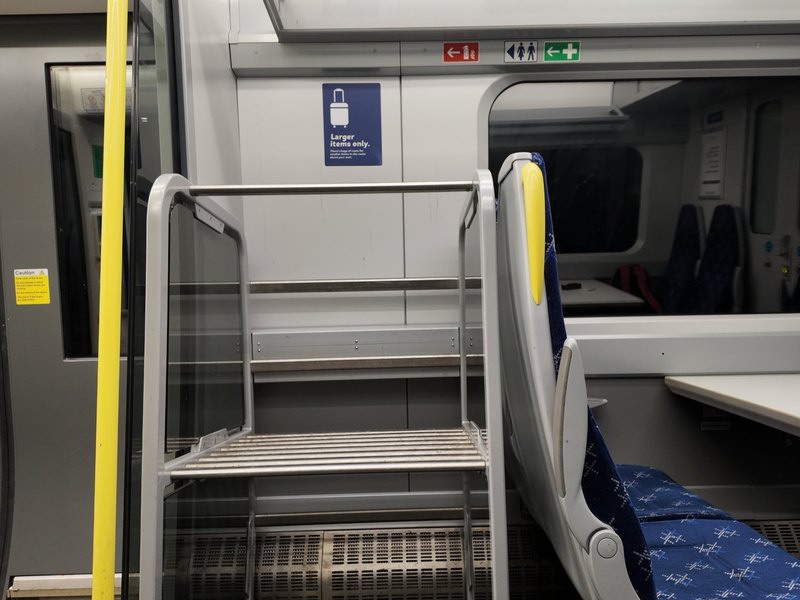
Luggage. Doug says luggage is “not a problem”, and we’ve both travelled with cases on both routes. His advice is to take only what you can lift and keep valuables in a small separate bag. You can book Free Passenger Assist ahead if steps are a worry.
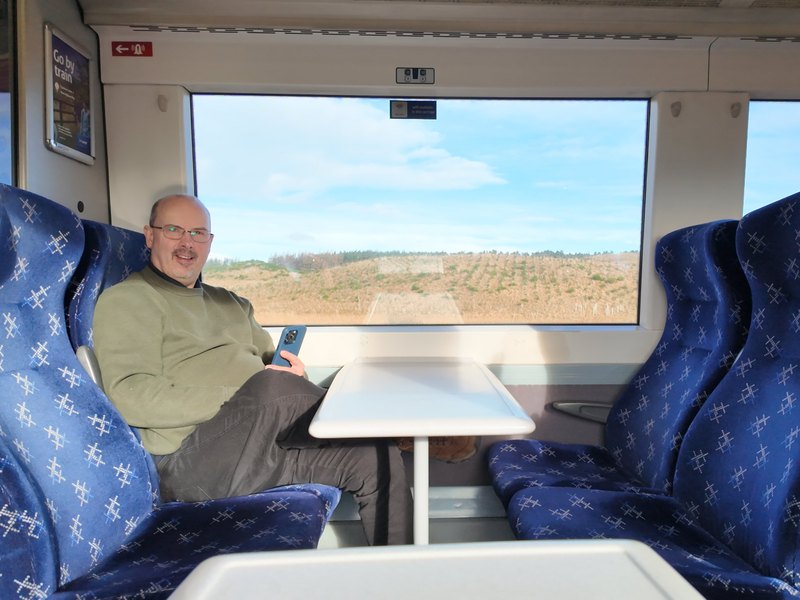
Seats. On walk-up tickets, a reservation is optional, and not every ScotRail train can be reserved, so on a busy day a reserved seat is the best way to sit together.
First class. Is it worth it? “To be honest with you, probably not,” says Doug, and not all ScotRail services have it. LNER first class has wider seats, free food and drink and the First Class lounge at Edinburgh Waverley.
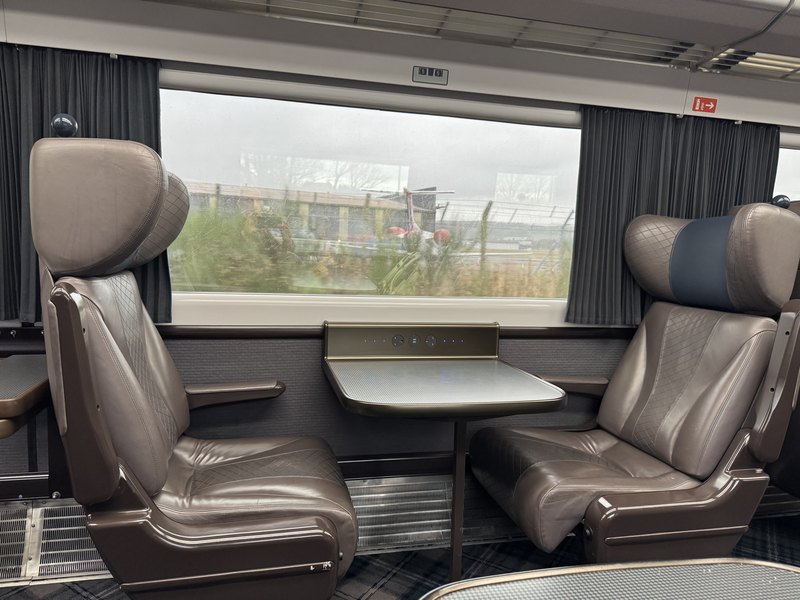
Food and wifi. Some trains have a trolley and some don’t, so we’d bring drinks and snacks. Train wifi can’t be relied on, so a phone with its own data is a good back-up.
Winter, storms and disruption: Doug’s plan B
Doug’s own loop didn’t go to plan. He meant to come back the same day, but a big storm rolled through Scotland, and as he left Aberdeen, the announcements said ScotRail would run no trains after the end of that day. The crew were, in his words, “absolutely incredible”. Back in Edinburgh, I was watching the storm come in.
He stayed at the Blackfriars Hotel near Inverness station, where the staff were so kind and accommodating, and the Scottish breakfast was great. Knowing the railway, he booked an extra night straight away, because services don’t recover overnight. Trains and staff are in the wrong places, and the line has to be checked.
The next morning there were no trains out of Inverness before midday, until one or two were reinstated. With no reservations, it was “every man for themselves”, and the train was freezing at first, but then came snow through the Cairngorms and Pitlochry and beautiful scenery. Further south, trains from Dundee were cancelled, so he took the bus from Dundee to Edinburgh, about 2 hours 20 minutes. Debris on the line meant no trains north from Waverley either, so he went back to Perth by train the next morning to complete the journey.
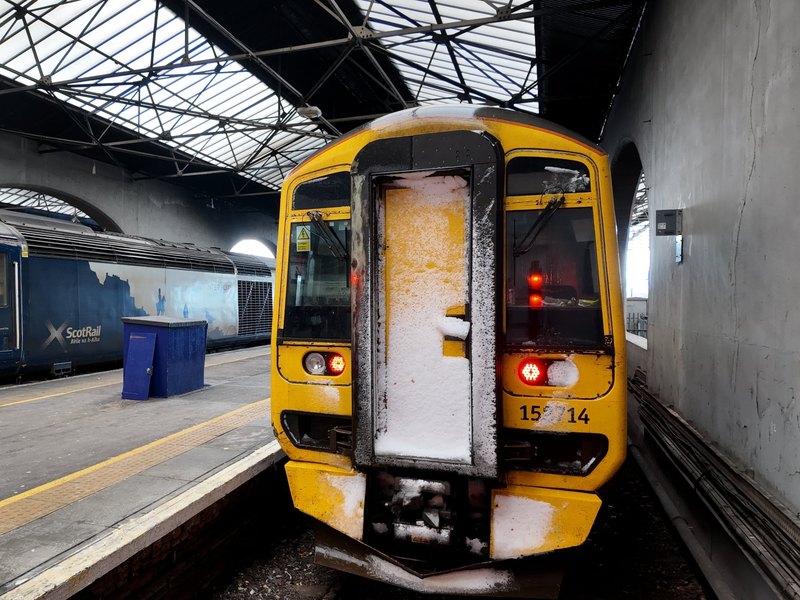
About ten years ago, a storm stopped our own sleeper and West Highland Line plans, so a trip this far north in January or February needs a storm plan. Doug’s looks like this:
- An overnight bag, even on a day trip.
- A word with the crew or station staff before taking a different route, because penalty fares are steep.
- A working phone with the National Rail Enquiries app, which is the most up-to-date.
- A rough idea of the geography so you can find another way round, and a flexible ticket.
- No assumptions about summer, because delays happen then too.
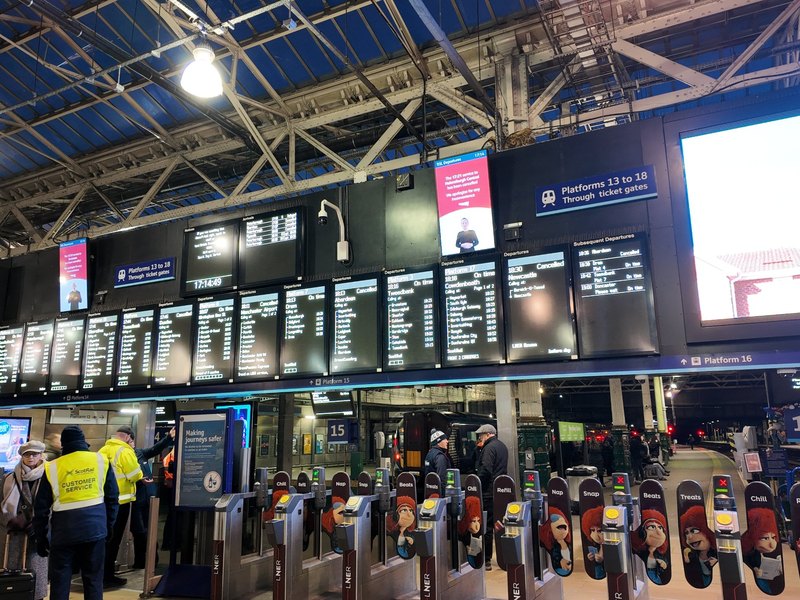
Our guide to Scotland in winter has more on travelling at this time of year.
Changes for 2026 and 2027
- Network Rail is renewing the track and signals at Dalwhinnie, with full closures from 30 October to 2 November and 6 to 9 November 2026, and night and weekend work to the end of the year. When the line is shut, the coast route via Aberdeen is the fallback, and in late 2024 even the Caledonian Sleeper went that way.
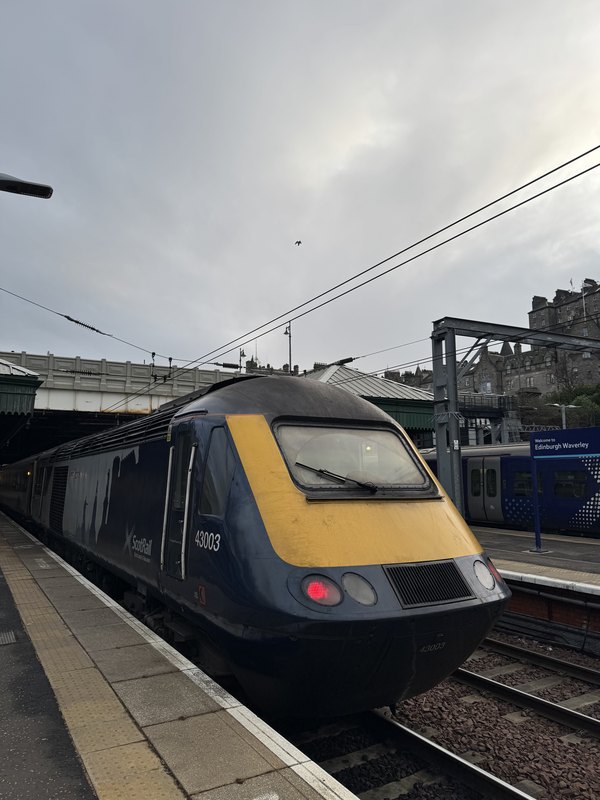
- ScotRail’s Inter7City trains, refurbished InterCity 125s, run on both routes alongside shorter trains. From late 2027 to the end of 2028 they’re being replaced by refurbished Class 222s, with more luggage space and power at every seat.
Arriving in Inverness
Inverness is a city we visit very often, and it’s a good base without a car. The Blackfriars Hotel, where Doug sat out the storm, is close to the station, and our guide to where to stay in Inverness has more options. The Inverness travel guide covers what to see.
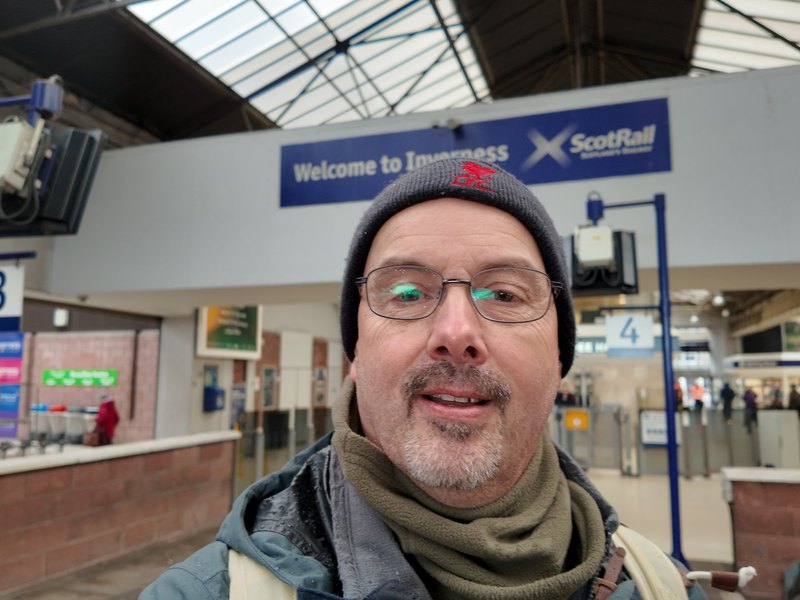
From Inverness, the Kyle of Lochalsh line runs west to the coast opposite Skye, and the Far North Line heads up to Wick and Thurso. Our guide to rail journeys from Inverness covers them all, and our Scotland by train itinerary puts together a longer trip.
For the basics of travelling by train here, Doug’s free guide, 12 Essential Things to Know About Train Travel in the UK, is on our UK train travel hub.
Recommended UK Train Resources