27 Things to Do in Edinburgh + 1 to 4 Day Itineraries
Planning a trip to Edinburgh and wondering how to fit it all in? This guide gives you four ready-made itineraries covering one, two, three and four days in the city, 27 places worth your time grouped by area so you are not criss-crossing the city, current prices and opening hours checked (August 2026).
Edinburgh is a city you can walk. That single fact shapes everything about planning a visit, because the Castle, the Royal Mile, Holyroodhouse and the whole of the Old Town sit within about a mile of each other, mostly downhill if you start at the top.
I have been visiting since I was a child, and the mistake I see most often is people booking attractions in the order they found them rather than the order they sit on the map. Half a day disappears walking back and forth across the same hill.
So this guide starts with the itineraries rather than ending with them. Pick the one that matches your trip length, then use the 27 entries underneath as your reference for opening hours, prices and what each place is actually like.
Tip – If Edinburgh Castle, Holyroodhouse and the Royal Yacht Britannia are all on your list, the Royal Edinburgh Ticket covers all three plus 48 hours on the hop-on hop-off sightseeing buses, which works out cheaper than buying the three separately.
What to book before you go
Three things sell out in Edinburgh, and the rest you can decide on the day. Edinburgh Castle regularly sells its online allocation weeks ahead in summer, and once it has gone there are no tickets at the gate. The Real Mary King’s Close runs on timed entry with small groups. Holyroodhouse closes at short notice when the King is in residence.
Everything else on this list you can generally book the night before, or simply walk into.
- Edinburgh Castle – Guided tour with a live guide and fast-track entry

Edinburgh Itineraries: 1,2,3 and 4 days
Each of these builds on the one before it, so if you have three days you follow day one, then day two, then day three. Every stop is numbered to match the entries further down the page, where you will find the current prices and opening hours.
The walking is real but manageable. Day one covers about two miles, almost all of it downhill, on cobbles that are slippery in the wet. Comfortable shoes with some grip make more difference here than in most cities.
One day in Edinburgh: the Old Town, top to bottom
The whole day runs downhill from the Castle to the Palace, which is why it works. You never double back.
- 9.30 am – Edinburgh Castle (1) at opening. The queues build from about 10.30, and the early slot also gives you the view before the haze sets in. Allow two hours, or nearer three if the National War Museum interests you.
- 11.30 am – Out of the Castle and straight onto the Royal Mile (2), heading downhill. Camera Obscura (5) is immediately on your right if you have children with you, and The Scotch Whisky Experience (6) is next door if you do not.
- 12.45 pm – St Giles’ Cathedral (3), about ten minutes further down. Free to enter, and the Thistle Chapel ceiling is worth the few minutes it takes to find it.
- 1.15 pm – Lunch at Makars Gourmet Mash Bar, just off the Royal Mile. The haggis, neeps and tatties is what we order every time.
- 2.30 pm – The Real Mary King’s Close (4), back up the hill a few minutes on the High Street. An hour underground, and book this one ahead.
- 4 pm – Continue down the Royal Mile past John Knox House (7) to the Palace of Holyroodhouse (14) at the bottom. Last admission is 4.30pm in summer, so this is tight. If you would rather not rush it, swap in Victoria Street (9) and Greyfriars Kirkyard (10) instead and save the Palace for another trip.
- Evening – Walk back up or catch a bus to Princes Street (17) for dinner, with the Castle lit up above the gardens.
The One O’Clock Gun fires from the Castle ramparts every day except Sunday, Good Friday and Christmas Day. If seeing it matters to you, being at the Castle at 1 pm rather than at lunch is the way to do it, and the rest of the day shifts along easily enough.

Two days in Edinburgh: add Leith and the volcano
Day two gets you out of the Old Town and gives your legs a different kind of workout.
- Morning – Royal Yacht Britannia (22) at Ocean Terminal in Leith. The Lothian 11, 22 or 35 buses run there from the city centre in about 25 minutes. Allow two to three hours, because the audio guide is detailed and the Royal Deck Tea Room is a nice place to stop.
- Early afternoon – Back into town, then Arthur’s Seat (15) from the Holyrood Park entrance. Around an hour up at a steady pace, less if you take the shorter route from Dunsapie Loch. The view from the top takes in the whole city, the Firth of Forth and, on a clear day, Fife.
- Late afternoon – If you have anything left, Holyrood Distillery (16) sits at the foot of the park and does whisky and gin tours.
- Evening – A ghost tour (25). The Underground Vaults in the dark are a different proposition to a graveyard at lunchtime.
Three days in Edinburgh: the New Town and the Water of Leith
Day three crosses to the other side of Princes Street. It is all Georgian symmetry after two days of medieval closes.
- Morning – Dean Village (21), about fifteen minutes’ walk from the west end of Princes Street. Then pick up the Water of Leith Walkway and follow it to Stockbridge, which takes another twenty minutes or so and is the prettiest short walk in the city.
- Midday – Coffee in Stockbridge, then on to the Royal Botanic Garden (23), which is a ten minute walk from there and free to enter.
- Afternoon – Back down to the Scottish National Gallery (19) on The Mound, also free, and the Scottish galleries that opened in 2023 are the best rooms in it.
- Late afternoon – Calton Hill (20) at the east end of Princes Street for sunset. Ten minutes up, and the view back along Princes Street to the Castle is the photograph everyone comes home with.
- Rainy day swap – The National Museum of Scotland (13) instead. Free, enormous, and the roof terrace is a good view for no money at all.
- Travelling with children – Edinburgh Zoo (24) takes most of a day and works better as a swap for this whole itinerary than as an add-on.
Four days in Edinburgh: take a day trip
By day four you have seen the city properly, and Edinburgh’s real advantage is what sits within reach of it. Stirling and Glasgow are under an hour by train from Waverley. The Highlands are a long but rewarding day by coach.
The day trip options are further down this page, and we have a fuller guide to 21 day trips from Edinburgh if you would like more choice.
If you would rather stay in the city, day four is when the smaller places come into their own. Greyfriars Kirkyard (10) without the crowds, Scott Monument (18) if you fancy the climb, The Elephant House (12) now that it has reopened, or an evening at The Stand (26) or the Festival Theatre (27).
27 best things to do in Edinburgh
These are grouped by area rather than ranked, so that anything you pick sits near the things around it. Prices and opening hours were checked in August 2026, and I have linked to each attraction’s own site where the details change often.
Old Town: the Royal Mile and around (1 to 13)
1. Edinburgh Castle
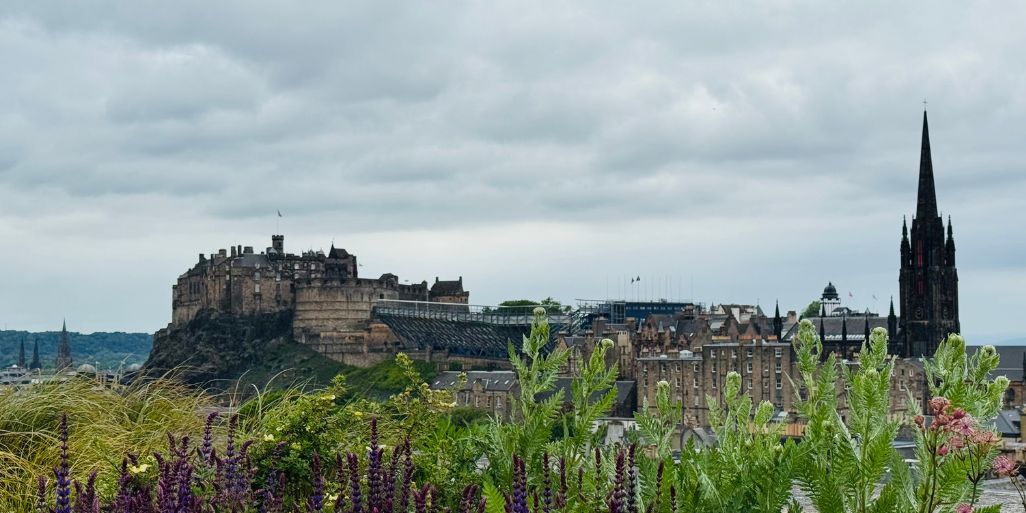
Edinburgh Castle sits on the plug of an extinct volcano at the top of the Royal Mile, which is why it dominates every view of the city. It is Scotland’s most visited paid attraction.
Start with St Margaret’s Chapel, which dates from around 1130 and is the oldest surviving building in Edinburgh. The Great Hall and the Royal Apartments cover the messier parts of Scottish royal history, including the small room where Mary, Queen of Scots gave birth to the future James VI.
Also inside the walls are the Prisons of War exhibition, the National War Museum and the Scottish National War Memorial. Two hours covers the highlights comfortably. Three if you are the kind of visitor who reads every panel.
The One O’Clock Gun fires at 1pm daily except Sundays, Good Friday and Christmas Day, a tradition dating from 1861 when it gave ships in the Firth of Forth a time signal.
Edinburgh Castle – need to know
Adult tickets £23.50 booked online, £26.00 at the gate. Children 7 to 15 from £14.00. The audio guide is £4.00 extra.
Opening hours 9.30am to 6pm from 1 April to 30 September, last entry 5pm. 9.30am to 5pm from 1 October to 31 March, last entry 4pm.
Booking Historic Environment Scotland notes that tickets often sell out well in advance over the summer, and once the online allocation has gone none are sold at the gate. Booking ahead also saves £2.50 a head.
The Castle is at the top of Castle Rock at the western end of the Royal Mile. If walking up the hill does not appeal, the hop-on hop-off sightseeing bus stops right outside, and you can then walk the Royal Mile downhill.
You can book a castle entry ticket here, or a skip-the-line guided tour, which is the option I would choose for a first visit because the castle makes far more sense with someone explaining it.
2. Walk the Royal Mile
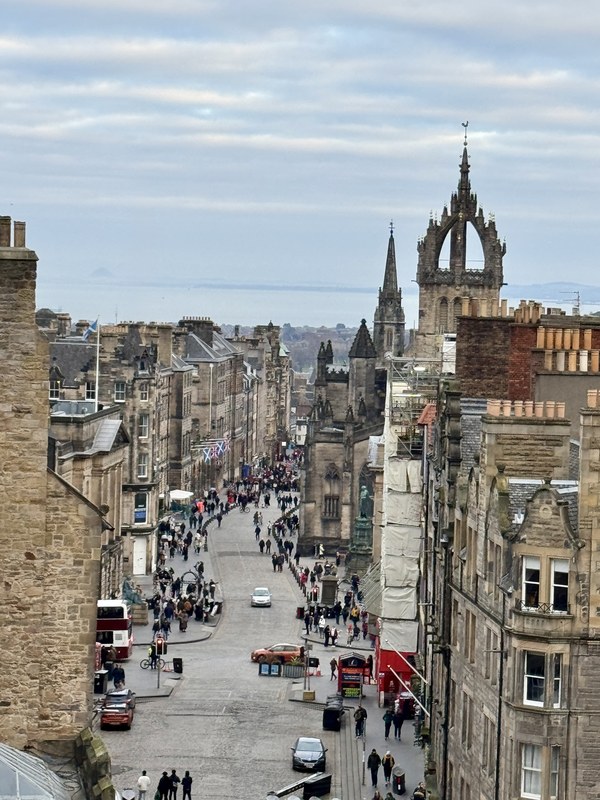
The Royal Mile is not one street but five running end to end, from Castlehill down through the Lawnmarket, High Street and Canongate to Abbey Strand. It is a Scots mile, which is slightly longer than an English one, and it drops around 100 metres from top to bottom.
The closes are the reason to slow down, the narrow alleyways running off both sides. Duck into a few and you get the Old Town as it actually was, tall tenements pressing in on either side of a passage barely wide enough for two people.
There is a lot of tartan and shortbread along the way, much of it aimed squarely at visitors. The shops in the closes and on Victoria Street tend to be better.
Going downhill from the Castle is much easier on the legs than climbing up from the Palace, and the cobbles get slippery when wet.

3. St Giles’ Cathedral
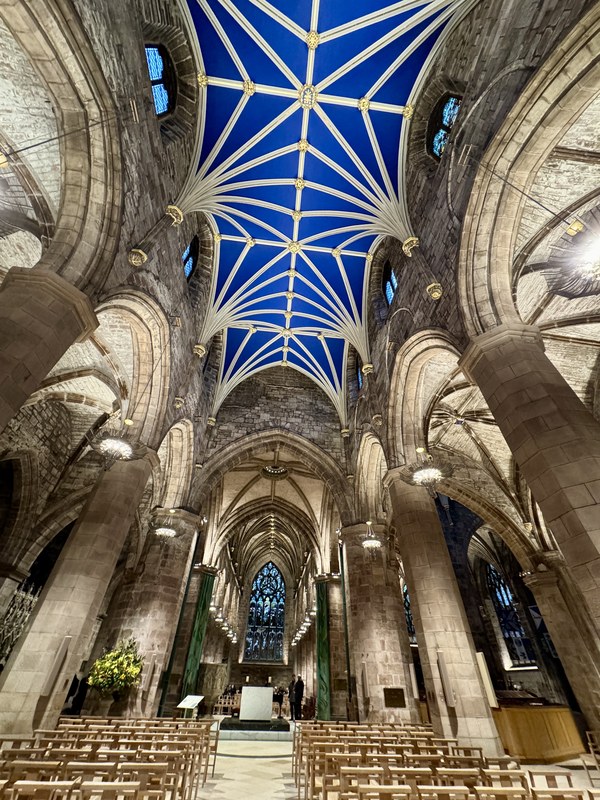
Roughly halfway down the Royal Mile, St Giles’ is where the Scottish Reformation played out, with John Knox as its minister from 1559. The crown steeple has been on the skyline since the fifteenth century.
The Thistle Chapel was added in 1911 for the Order of the Thistle, Scotland’s senior order of chivalry. Every surface of it is carved, and there is an angel playing the bagpipes tucked into the roof if you look hard enough for it.
Entry is free, with a suggested donation, and photography permits are a small extra charge. It takes twenty minutes unless you are the sort to sit for a while, in which case it is a good place to do that.
4. The Real Mary King’s Close
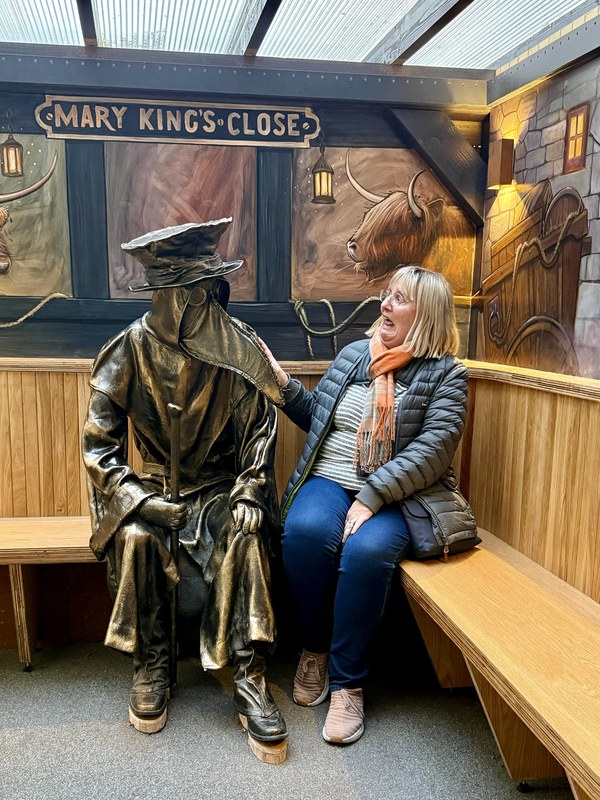
When the City Chambers were built in the 1750s, the streets underneath them were not demolished. They were built over. Mary King’s Close and the closes around it are still down there, and you walk through them on a guided tour.
Guides in character take you through around 400 years of Old Town life, including the plague years, which is where the tour turns grim. It is well done rather than gimmicky, and the history holds up.
The tour lasts an hour and involves narrow passages, uneven floors and low ceilings, so it suits some visitors better than others. Standard adult entry is £28.50, and tours run on timed entry.
Check tour times and prices for The Real Mary King’s Close
5. Camera Obscura and World of Illusions
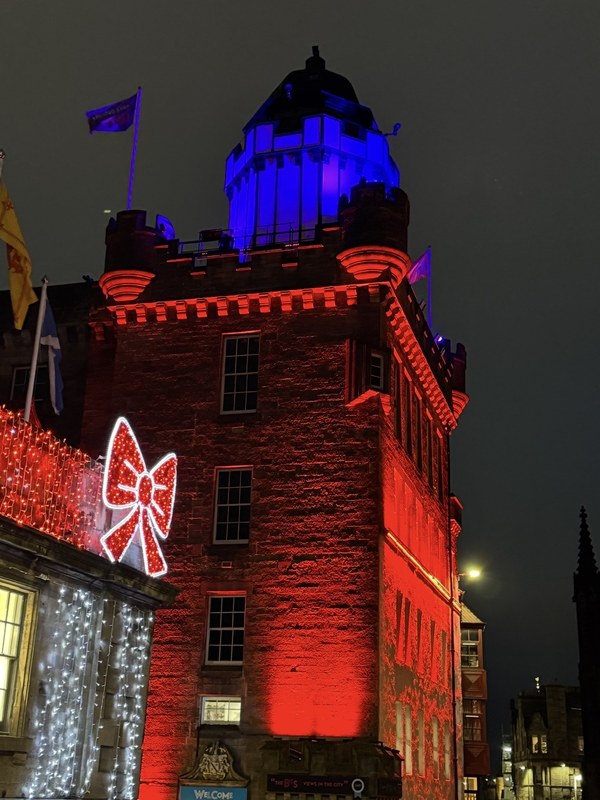
Maria Short opened her Popular Observatory in 1835, moved the business to this building on Castlehill in 1853, and the camera obscura itself has been showing live projected views of Edinburgh ever since. It is the oldest purpose-built attraction in the city.
Around the original camera there are now five floors of optical illusions, mirror mazes, a vortex tunnel and a plasma dome, over 100 hands-on exhibits in total. It works for adults as much as children, which is not true of every family attraction.
The rooftop terrace at the top is free with your ticket and gives one of the best Castle views in the city. Allow at least two hours, and note there are just under 100 steps up to the roof.
Practical information – open daily 9 am to 10 pm, closed 25 December. Adult tickets £24.95, with an early-bird discount for pre-9 am entry on selected dates. One ticket gives all-day access, so you can go back in.
6. The Scotch Whisky Experience

Next door to Camera Obscura at the top of the Royal Mile, this is an introduction to Scotland’s national drink that starts with a barrel ride through the whisky-making process and ends with a tasting.
The Diageo Claive Vidiz Collection is the world’s largest collection of Scotch whisky, nearly 3,500 bottles filling a room. Even if whisky is not your thing, the sight of it is something.
The Silver Tour is £25 for adults, lasts 50 minutes and is family friendly. The Gold Tour is £39.75, runs 75 minutes, adds a tasting of four regional single malts and is over-18s only. A Taste of Scotland at £95 pairs the Gold Tour with a three-course meal in the Amber restaurant.
If you would rather taste your way around the Old Town with someone who lives there, a private three-hour Scottish whisky experience covers several bars and a lot of conversation about the city alongside the drams.
7. John Knox House
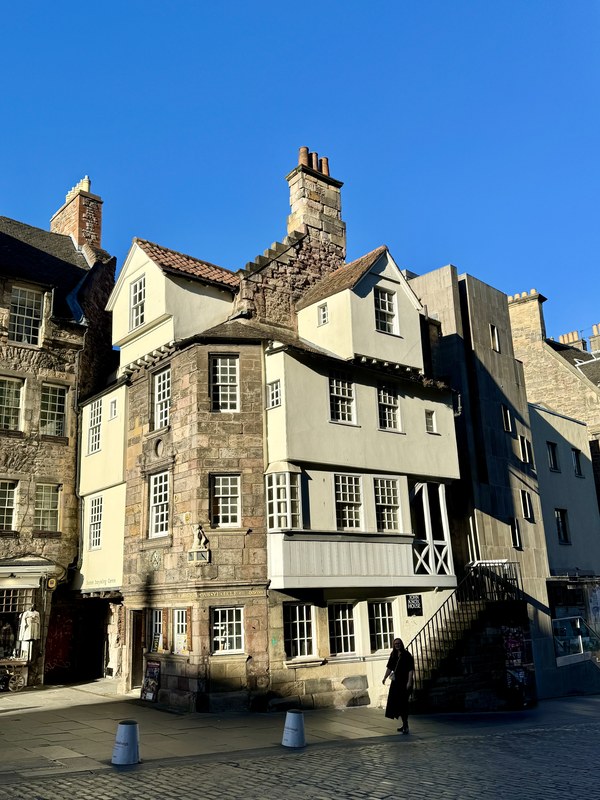
Built around 1470, this is one of the oldest surviving buildings on the Royal Mile, and its jettied upper floors leaning out over the street show you how the whole Old Town once looked.
The house is more associated with James Mossman, goldsmith to Mary, Queen of Scots, who was hanged for his loyalty to her, than with John Knox himself, though Knox is thought to have spent his final months here. The Reformation story is told well either way.
The Oak Room on the top floor is the reason to come. Its painted ceiling dates from around 1600 and is one of the finest of its kind left in Scotland.
Practical information – open daily 10 am to 6 pm, last admission 5pm. Adult £7, concessions £5.50, children over 7 £1.50, under 7s free. No booking needed, though capacity is capped at 30 visitors an hour. It is run by the Scottish Storytelling Centre, which is in the same building.
You can also book John Knox House entry in advance here.
8. The Edinburgh Dungeon
A walk-through experience with live actors, theatrical sets, special effects and a lot of shouting, covering Burke and Hare, the plague, cannibalism and the darker corners of Scottish history.
It is entertainment first and history second, and it works best for older children and teenagers. Younger children find parts of it genuinely frightening, so it is one to weigh up before booking.
Practical information – standard adult entry £23, anytime entry £28, both on timed entry and booked in advance. Opening hours vary by date, and the Dungeon’s own site carries the current times. The drop ride is closed until further notice.
If you are planning several paid attractions, the Edinburgh City Pass covers 20 attractions and tours including the Dungeon, and can work out cheaper.
9. Victoria Street and the Grassmarket
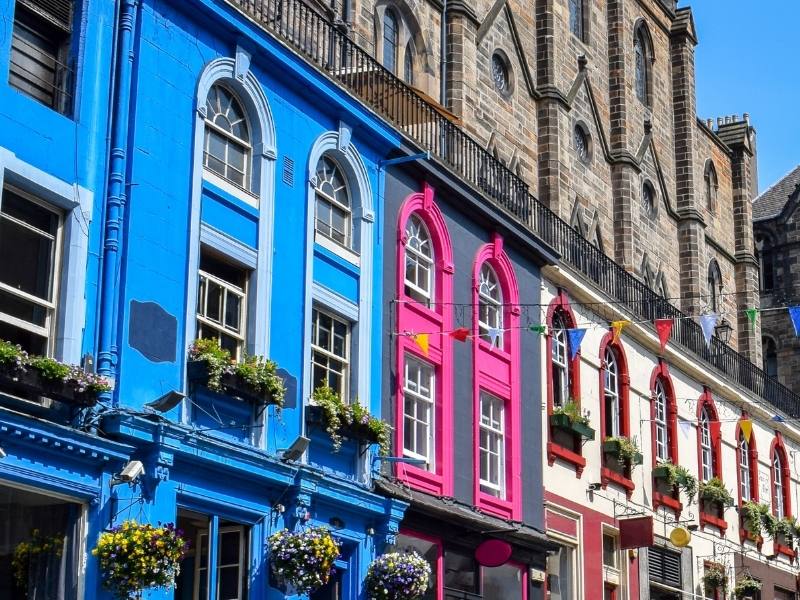
Victoria Street curves down from George IV Bridge to the Grassmarket in a run of coloured shopfronts under a raised terrace. It was built in the 1830s as part of the Old Town improvements, and it is the single most photographed street in Edinburgh.
It is also frequently claimed as the inspiration for Diagon Alley. J.K. Rowling has never confirmed that, and the shops selling wands along it have an obvious interest in the story, so treat it as a nice coincidence rather than a fact.
The shops themselves are good, a cheesemonger, a brush shop that has been there since 1866, booksellers and independent clothing. Walk the upper terrace as well as the street, because the two levels give completely different views.
At the bottom, the Grassmarket was the city’s execution site until 1784 and is now a wide open square of pubs and restaurants sitting directly beneath the Castle rock. It is the best place in the Old Town to sit outside with a drink and look up.

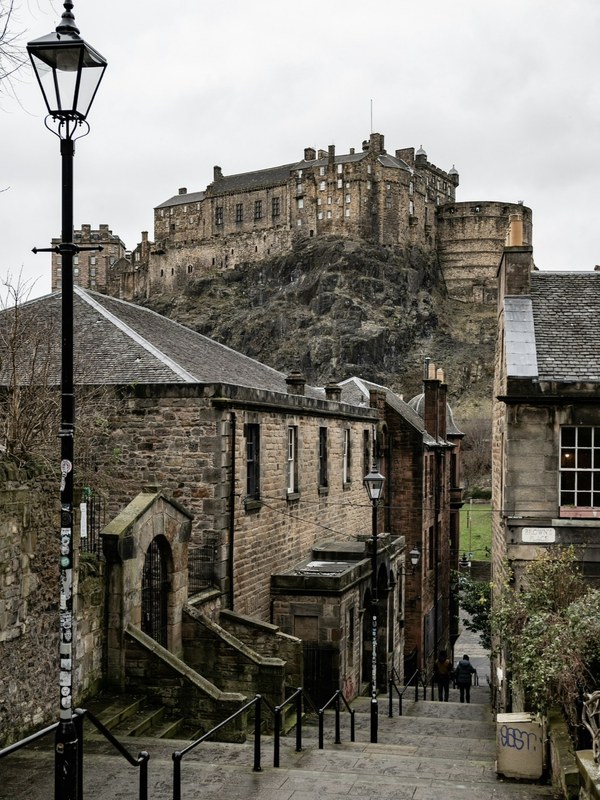
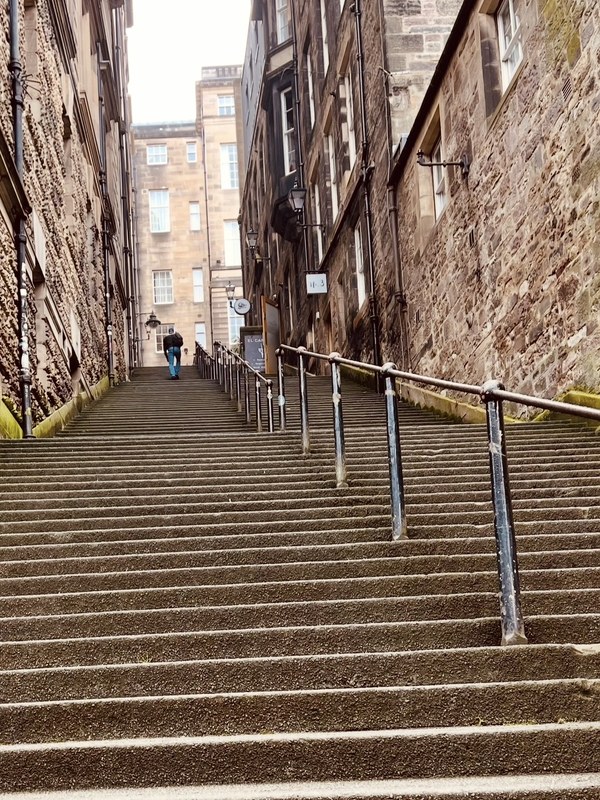
The Grassmarket also hides the best Castle photograph in the city. The Vennel is a flight of stone steps climbing from the square’s southwest corner up towards Heriot Place, and from near the top the Castle appears framed between the buildings on either side. It is the shot you will have seen all over Instagram, and it is quieter than almost anywhere else with a view this good.
The photograph does mean climbing most of the flight, as the view only opens up on the top section of steps. The wall running beside you as you climb is worth a look too. It is one of the best surviving stretches of the Flodden Wall, built to defend the city after the disaster at Flodden in 1513, complete with a tower partway up.
There is a handrail on the steps, and coming down from Heriot Place instead means a short descent rather than the full climb up from the square. Early morning is the time to have it to yourself, because by mid-afternoon there is usually a small queue of people waiting their turn on the same step.
10. Greyfriars Kirkyard
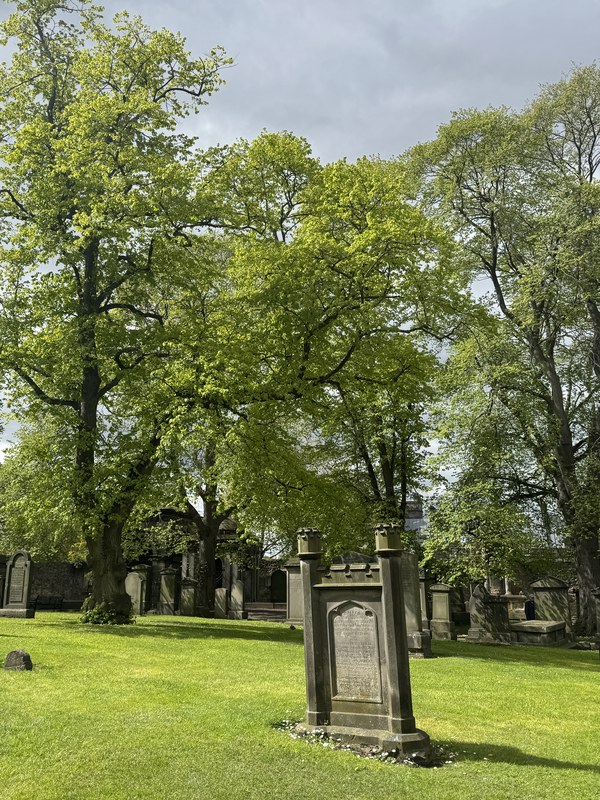
Opened as a burial ground in 1561, Greyfriars sits just off Candlemaker Row and is free to walk into. The National Covenant was signed here in 1638, and the Covenanters’ Prison at the back held over a thousand prisoners in the winter of 1679.
That corner is where the Mackenzie Poltergeist stories come from, and the enclosure is locked except on guided tours. Edinburgh takes its reputation as a haunted city seriously, and this is where a lot of it starts.
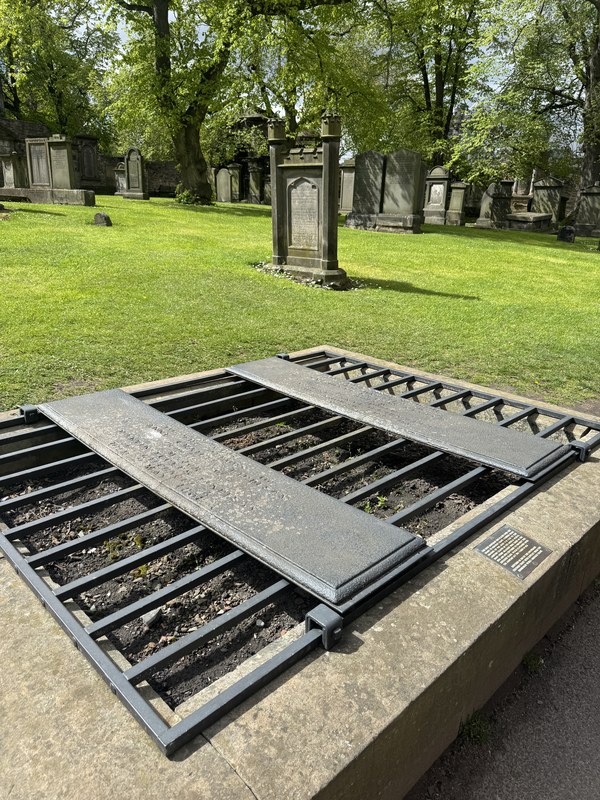
The iron mortsafes sit over some of the graves. They were fitted to stop body snatchers, which in early nineteenth-century Edinburgh was a real and profitable trade.
Harry Potter readers come looking for the grave of Thomas Riddell, near the back wall. The headstone spells it Riddell with two Ls, and belongs to Thomas Riddell Esq. of Bessborough, who died on 24 November 1806 aged 72. J.K. Rowling has never said it inspired the character.
11. Greyfriars Bobby
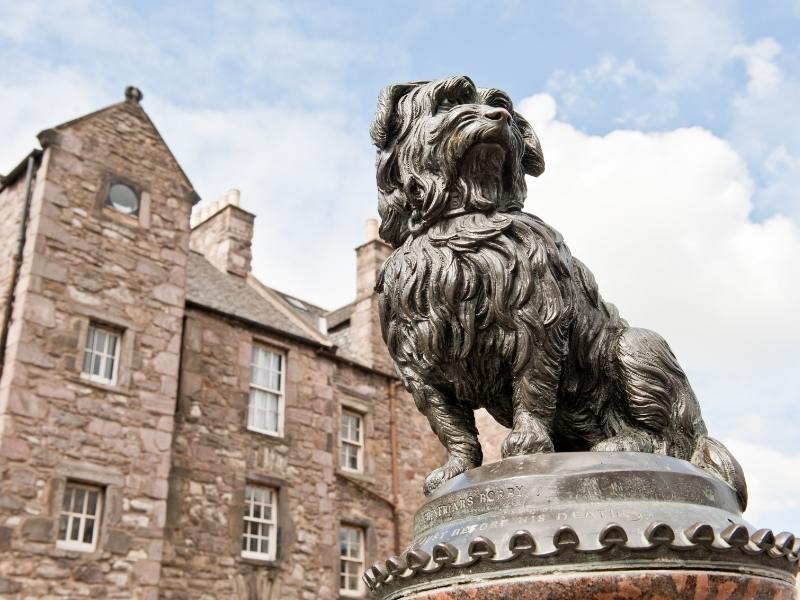
Bobby belonged to John Gray, a night watchman with Edinburgh City Police who died in February 1858 and was buried in Greyfriars. The story goes that the dog kept watch over the grave for the next fourteen years, until his own death on 14 January 1872 at the age of sixteen.
He is traditionally described as a Skye terrier, though there is a reasonable argument that he was a Dandie Dinmont, a breed far more common in Edinburgh at the time. Historians have also questioned how much of the fourteen-year vigil was loyalty and how much was a stray being fed by kind visitors.
The statue and drinking fountain were paid for by Baroness Angela Burdett-Coutts and sculpted by William Brodie in 1873. It is the smallest listed structure in Edinburgh. Bobby’s own grave is inside the kirkyard, near the entrance.
His nose, incidentally, has been rubbed back to bare metal so often by visitors that the council has had to repaint it more than once.
12. The Elephant House
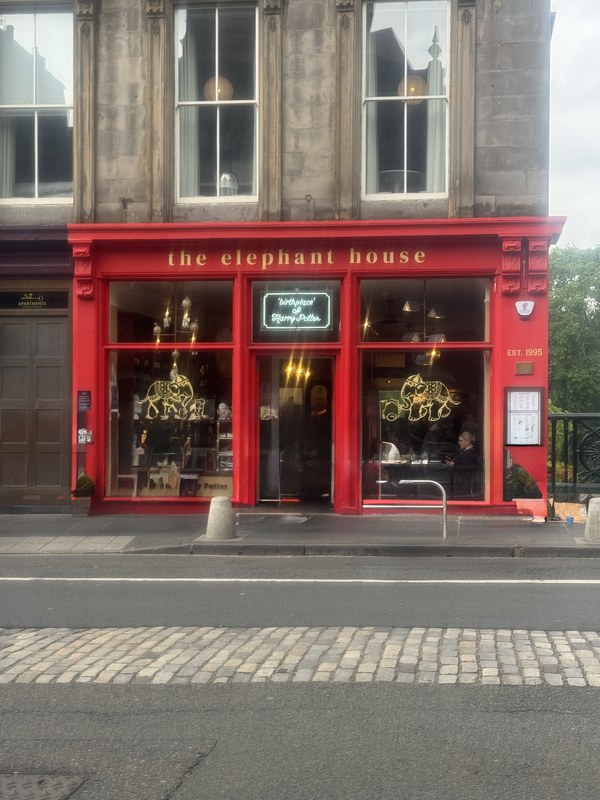
The Elephant House on George IV Bridge reopened on 29 December 2025, four years after the fire that tore through the building above it in August 2021.
The photograph above is mine, taken walking past after it reopened. I have not been back inside yet, so I cannot tell you how the rebuild compares to the old room, only that the doors are open again.
It trades on being where J.K. Rowling wrote parts of the early Harry Potter books in the back room looking out at the Castle, and the rebuild has added a room named for that. Rowling herself has said she had been writing Potter for several years before she ever set foot in the place, so the “birthplace” framing is a little generous.
There is a second site, The Elephant House Magical Cafe, at 30 Victoria Street, which opened while the original was closed and holds the table Rowling is said to have written at, rescued from the fire. Both are trading, so check which one you are heading for.
Greyfriars Kirkyard is directly across the road, which makes the two an easy pairing.
Edinburgh has more Harry Potter connections than this one, and if that is why you are here, the Harry Potter magical guided walking tour takes in the locations across the Old Town along with a Hogwarts house sorting and the Riddell grave.
13. National Museum of Scotland
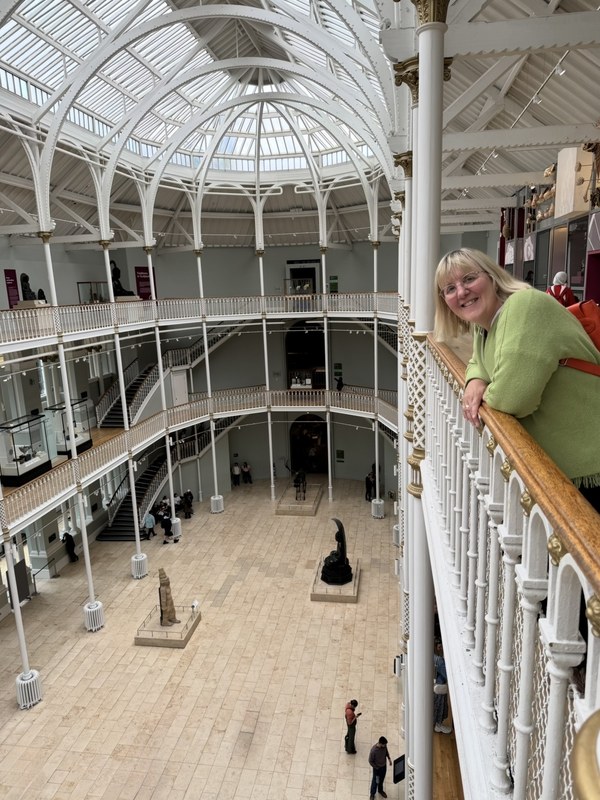
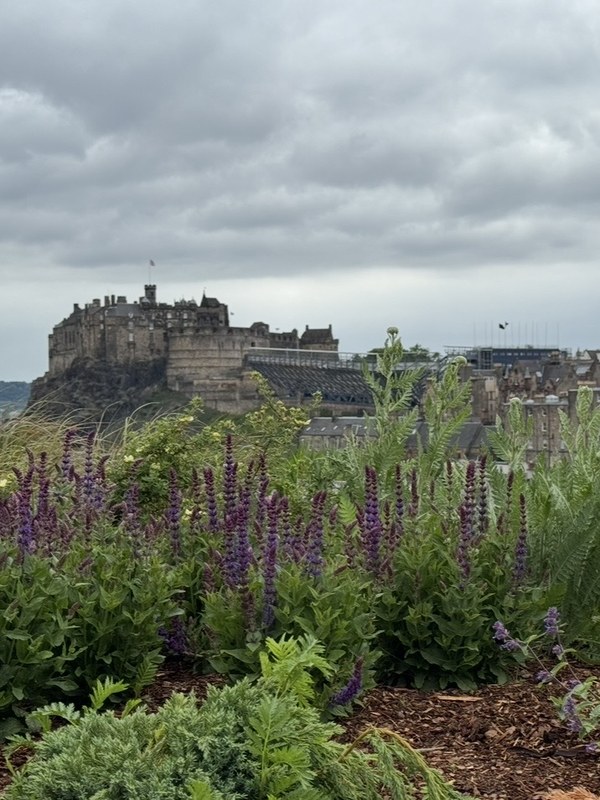
On Chambers Street, five minutes from Greyfriars, this is the answer to a wet afternoon in Edinburgh and it is free.
Two connected buildings hold Scottish history, archaeology, science and technology, world cultures, natural history and design. The Victorian Grand Gallery, all glass and cast iron, is free to walk into even if you go no further.
Among the things people come specifically to see are Dolly the sheep, the Lewis Chessmen, and the Millennium Clock which performs on the hour. The roof terrace gives a Castle and Old Town view that costs nothing.
Practical information – open daily 10am to 5pm, free entry, with some special exhibitions ticketed separately. Two to three hours covers the main galleries, and you could easily spend a day.
Holyrood: palace, park and distillery (14 to 16)
14. Palace of Holyroodhouse
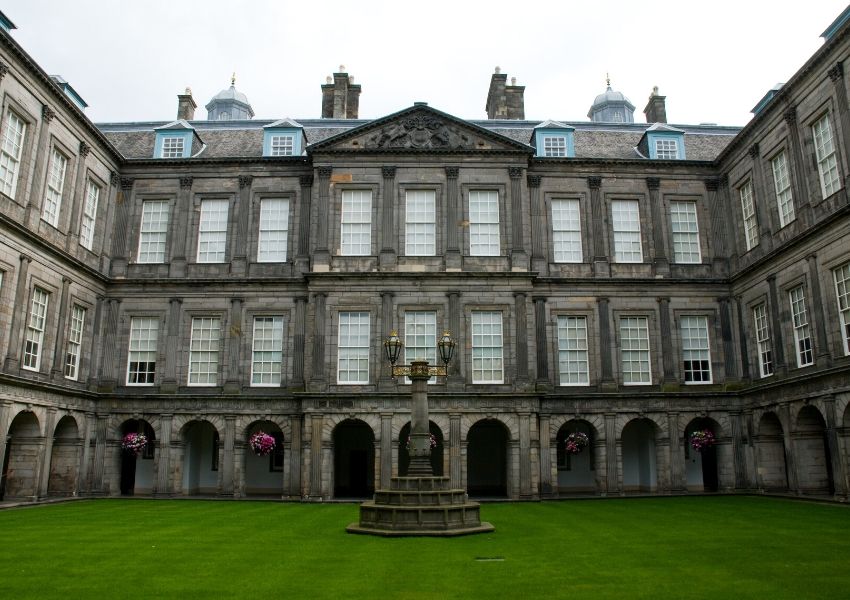
Holyroodhouse is the King’s official residence in Scotland and has been at the centre of the country’s royal history since the sixteenth century. It sits at the bottom of the Royal Mile, directly opposite the Scottish Parliament.
The rooms that hold people longest are Mary, Queen of Scots’ chambers in the oldest part of the palace, where her secretary David Rizzio was murdered in front of her in 1566. The State Apartments, the Great Gallery with its 96 portraits of Scottish kings, and the ruined thirteenth-century abbey in the grounds fill out the visit.
The multimedia guide is included in the ticket and runs about an hour. The gardens are open with the same ticket and give a good view up to Arthur’s Seat.
Practical information – adult tickets £22 booked in advance, £26 on the day. Summer hours 9.30am to 6pm with last admission 4.30pm. Winter hours 9.30am to 4.30pm with last admission 3.15pm. The palace opens seven days a week only from late May to early September, and runs Thursday to Monday for much of the rest of the year.
Holyroodhouse also closes at short notice for royal and ceremonial use, including Royal Week in the summer, so checking the Royal Collection Trust closure list before you travel saves a wasted journey.
You can book Holyroodhouse tickets here.
15. Arthur’s Seat and Holyrood Park
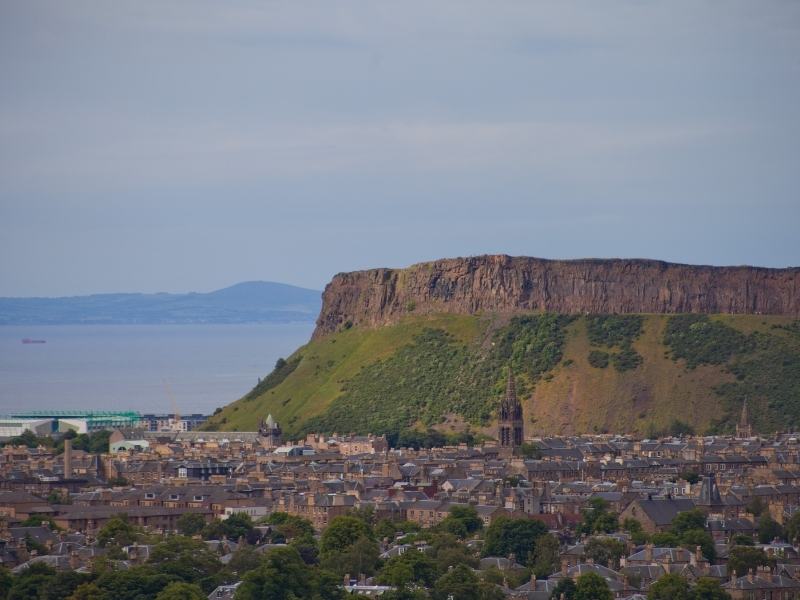
Arthur’s Seat is the remains of a volcano that last erupted around 340 million years ago, and it rises to 251 metres, or 823 feet, in the middle of Holyrood Park a few minutes from the Palace.
There are several routes up. The gentlest starts from Dunsapie Loch on the eastern side and takes around 30 minutes. The most common, from the Holyrood entrance past St Margaret’s Loch, takes closer to an hour. The Radical Road along the base of Salisbury Crags is a flatter alternative with a fine view, though sections have been closed for rockfall risk in recent years.
The path is rough underfoot near the summit and gets slippery in the wet, so proper shoes matter more than fitness here. From the top you can see the whole city, the Firth of Forth, the bridges and, on a clear day, Fife.
If climbing is not on the cards, Queen’s Drive circles the park by car in about fifteen minutes and passes the best of the views. Part of the road is closed to traffic on Sundays.
16. Holyrood Distillery
Opened in 2019 in a converted railway building at the foot of Holyrood Park, this was the first single malt distillery in central Edinburgh for almost a century.
Because it is small and new, the tour goes into more detail than most, and they are unusually open about experimenting with different yeasts and grains. They make gin as well as whisky, so there is something here whichever you prefer.
Practical information – open Sunday to Friday 11.30am to 5.30pm, Saturday 11.30am to 6.30pm. The standard distillery tour is £25 for an hour, the Journey to Whisky tour £30, and the gin tasting experience £28 for over-18s. Book through the distillery’s own site.
New Town and the west (17 to 21)
17. Princes Street and Princes Street Gardens
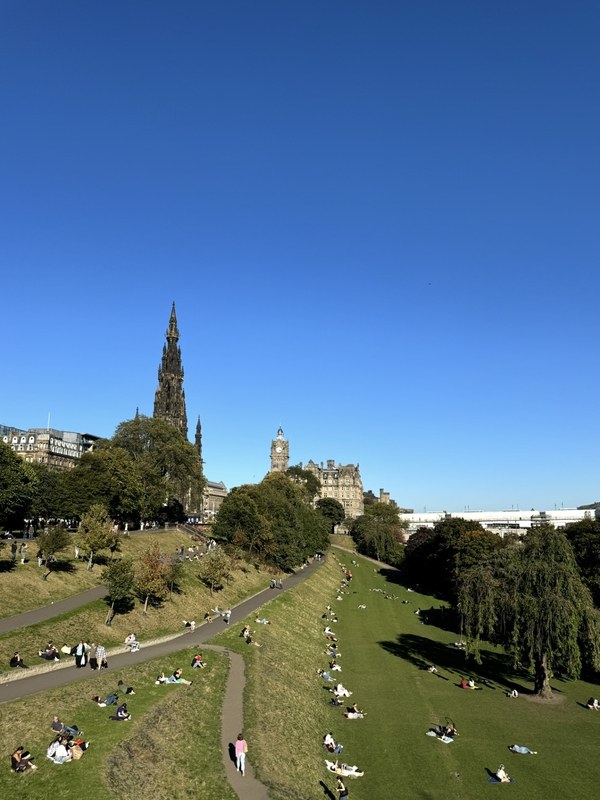
Princes Street is the New Town’s main thoroughfare and about a mile long, with shops on one side and nothing but gardens on the other. That asymmetry was deliberate, protected by an Act of Parliament so the view to the Old Town would never be built on.
The shopping is mostly high street chains, and the gardens are the better half of the street. They sit in the valley that was once the Nor Loch, drained in the 1760s, and they give you the view of the Castle rock that puts the whole city in context.
The Ross Fountain at the western end was restored in 2018, and the floral clock near the Scott Monument has been planted afresh each year since 1903. In December the gardens fill with the Christmas market and the big wheel.
The better shopping is on George Street one block north, and Multrees Walk for the higher-end names.
18. Scott Monument
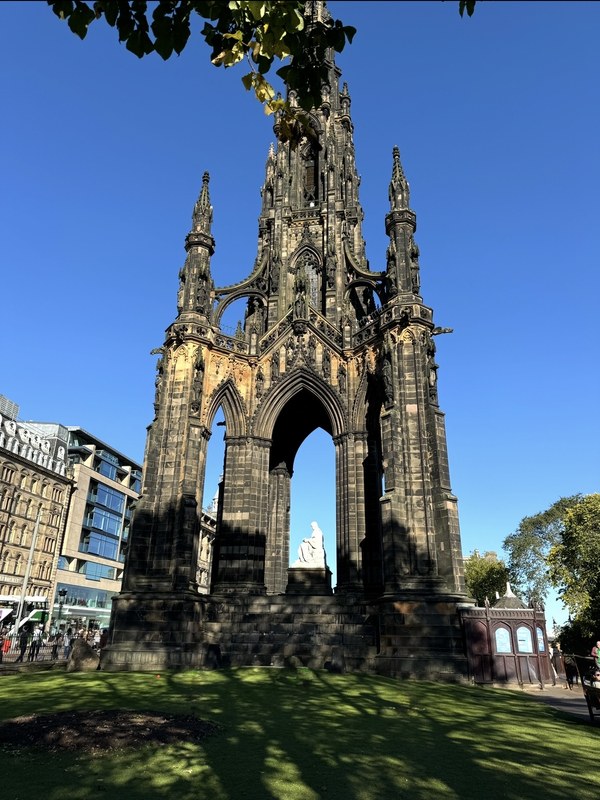
Completed in 1846 and standing just over 200 feet, the Scott Monument is the largest monument to a writer anywhere in the world. Sir Walter Scott sits under it in white Carrara marble with his dog Maida, and 64 characters from his novels are carved into the structure around him.
You can climb it. The official count is 221 steps to the upper viewing platform, though you will often see 287 quoted, which includes every internal stair. The spiral staircase narrows considerably near the top, which catches some people out.
Numbers are limited and tickets are sold at the kiosk at the base rather than online. It is equally satisfying from a bench in the gardens if the climb does not appeal, and the Victorian Gothic detail is easier to appreciate from the ground.
Practical information – opening hours and the admission charge are set by the City of Edinburgh Council and are not published consistently online, so the Culture Edinburgh page or a call to 0131 529 4068 on the day is the safest bet.
19. Scottish National Gallery
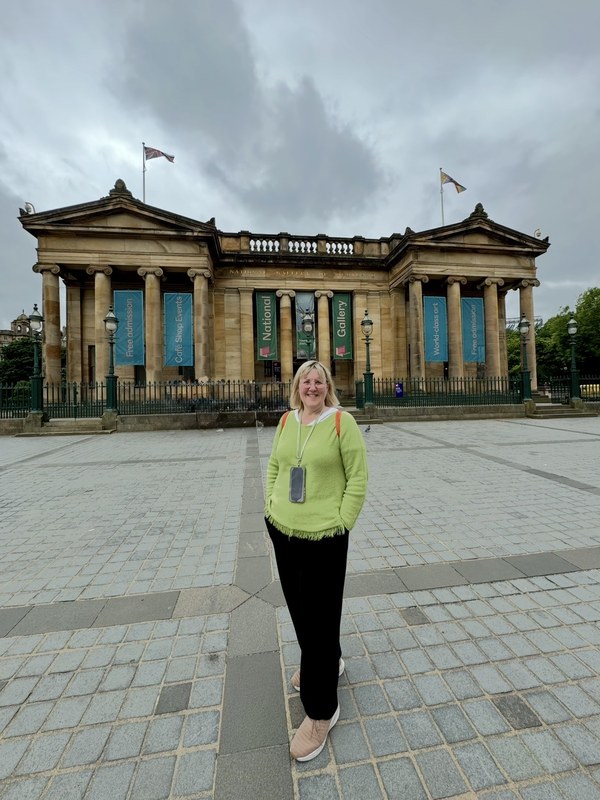
The gallery sits on The Mound, the artificial hill built from the earth dug out of the New Town foundations, connecting Princes Street to the Old Town. William Henry Playfair’s neoclassical building opened in 1859 and is a landmark in its own right. It is now branded National Galleries of Scotland: National, though almost everyone still calls it the Scottish National Gallery.
The collection runs from Botticelli, Raphael, Titian and Rembrandt through to Turner, Monet, Van Gogh and Gauguin. For a free gallery it is a remarkable holding.
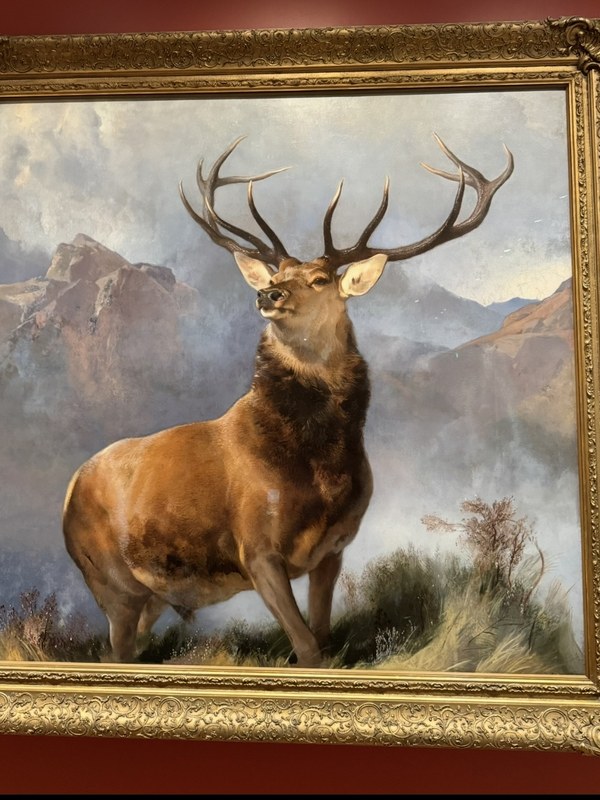
Landseer’s The Monarch of the Glen hangs here as well, the 1851 stag that has since ended up on every shortbread tin and whisky label going. It was secured for the nation in 2017 after a public campaign, and it has a permanent home in the gallery now.
The suite of Scottish galleries opened in 2023 after a long redevelopment. Raeburn, McTaggart, the Glasgow Boys and Anne Redpath finally have the space they deserve.
Practical information – open daily 10am to 5pm, free entry, with some temporary exhibitions ticketed. The Scottish National Portrait Gallery on Queen Street and Modern One and Modern Two out at Belford Road are also free.
20. Calton Hill
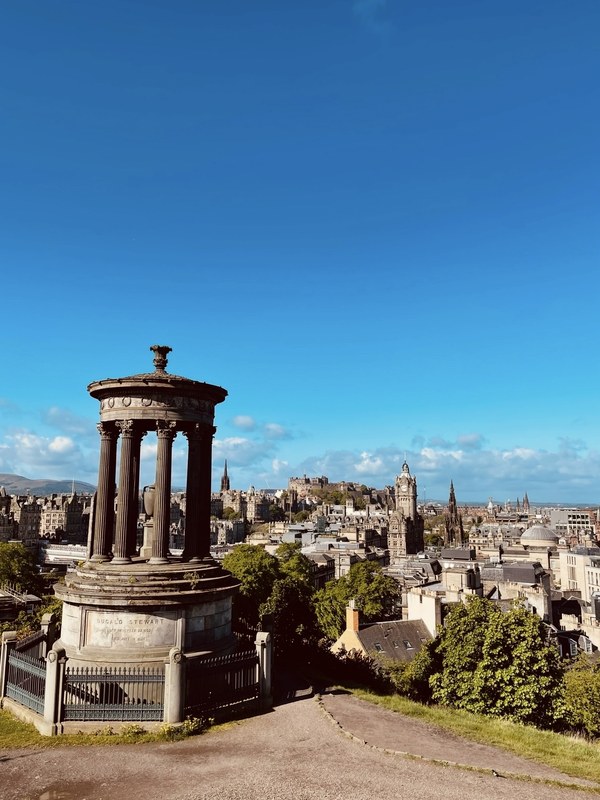
Calton Hill gives you almost the same view as Arthur’s Seat for about a tenth of the effort. Ten minutes up a flight of steps from the east end of Princes Street and you are there.
The collection of monuments on top is what gave Edinburgh the name Athens of the North. The National Monument, a half-finished Parthenon begun in 1826 and abandoned when the money ran out, is known locally as Edinburgh’s Disgrace. The Nelson Monument next to it is shaped like an upturned telescope and drops a time ball at 1pm to match the Castle gun.
The Dugald Stewart Monument, a small circular colonnade built in 1831, is the one that turns up in most photographs of the city. William Henry Playfair designed it, as he did the Scottish National Gallery down on The Mound.
The hill itself is free and open at all hours. Sunset is when the light along Princes Street towards the Castle is at its best, and it is busy then for exactly that reason.
21. Dean Village and the Water of Leith
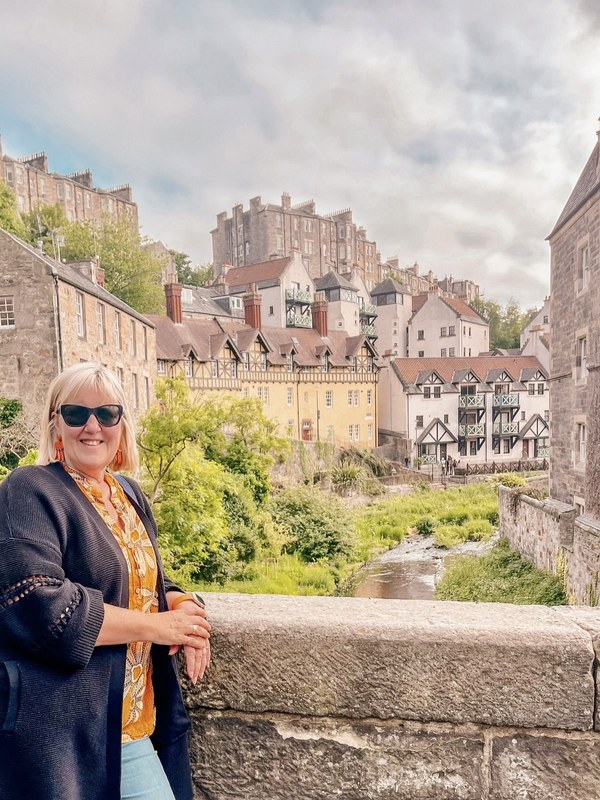
A few minutes’ walk from the west end of Princes Street, the city drops away into a hollow by the Water of Leith and you find yourself somewhere that feels nothing like the rest of Edinburgh.
Grain was milled here for centuries before the city grew around it. The building everyone photographs is Well Court, built in 1886 by Sydney Mitchell for Sir John Findlay of The Scotsman as model housing for local workers, with a communal hall and a clock tower around a courtyard. It was fully restored in 2007.
These are private homes, and residents ask visitors not to photograph in through the windows, which seems fair enough.
It takes ten minutes to walk through. The Water of Leith Walkway runs straight past, so you can carry on to Stockbridge in one direction or up to Modern One and Modern Two in the other and make a morning of it.
Please note – The Georgian House at 7 Charlotte Square, a restored 1790s New Town townhouse and long a favourite in this part of the city, is currently closed for conservation work with no reopening date announced. The National Trust for Scotland will post updates when it reopens.
Leith and further out (22 to 24)
22. Royal Yacht Britannia
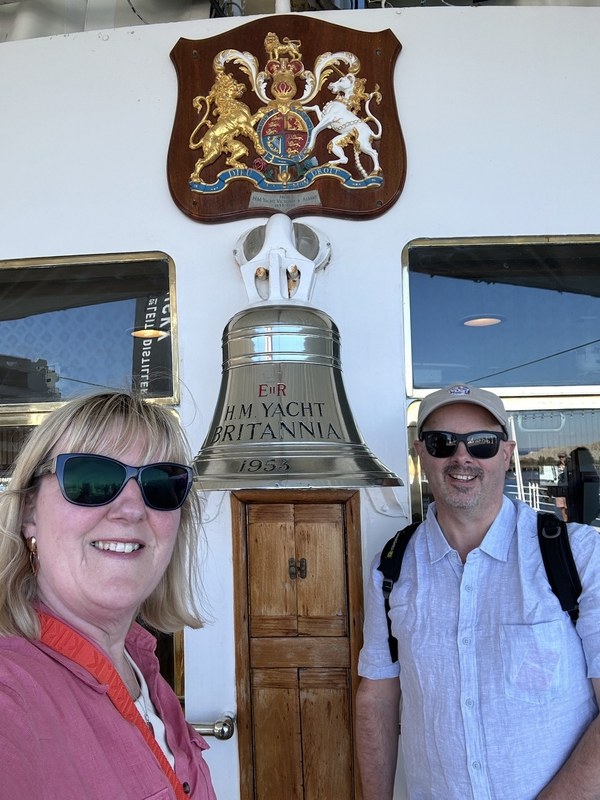
Britannia served the Royal Family from 1954 until she was decommissioned in 1997, covering more than a million nautical miles and 968 official voyages. She is now moored at Ocean Terminal in Leith and open to visitors.
The audio guide takes you across five decks, from the state apartments where heads of state were entertained to the crew’s quarters and the engine room. The private rooms are far more modest than anyone expects, single beds in the Queen’s cabin and a lot of chintz.
The Royal Deck Tea Room is on the top deck, with a view over the water.
Practical information – adult tickets £23 booked online for April to October, £25 on the day. Open from 9.30am with last entry at 4pm in summer, and from 10am with last entry at 3pm in winter. Allow two to three hours. Buses 11, 22 and 35 run to Ocean Terminal from the city centre in around 25 minutes.
You can book Royal Yacht Britannia tickets here.
23. Royal Botanic Garden Edinburgh
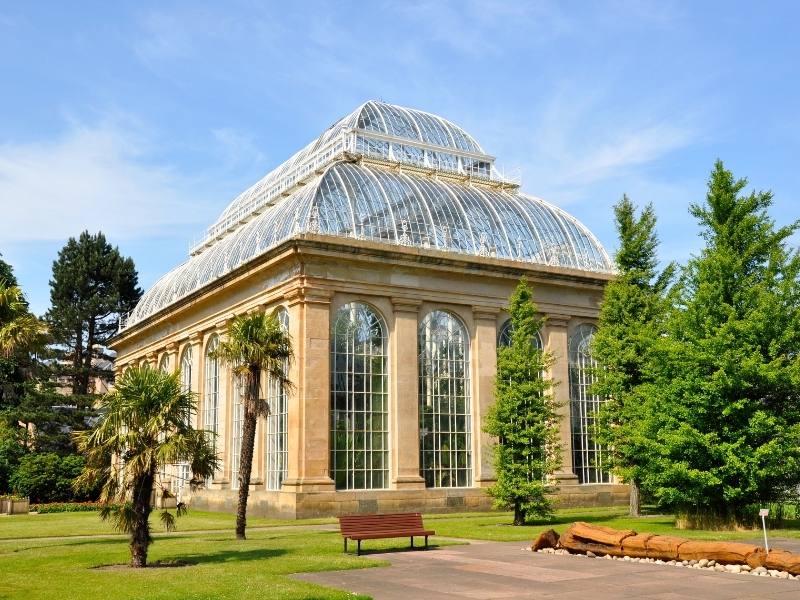
Known locally as the Botanics, the garden was founded in 1670 as a physic garden and moved to its current 72-acre site at Inverleith in the 1820s. It is the second oldest botanic garden in Britain after Oxford.
The rock garden, the Chinese hillside and the herbaceous border are the highlights outdoors, and the view back across the city to the Castle and Arthur’s Seat from the top of the lawn is one of the best in Edinburgh, particularly at the end of the day.
Please note – the Glasshouses are closed while the Edinburgh Biomes restoration continues. The Palm Houses are due to reopen on 2 October 2026 with timed entry, £4.95 for adults or £5.50 including a voluntary donation, and children under 15 free with a paying adult. The Front Range glasshouses remain closed after that date. Check the RBGE site for the latest.
Entry to the garden itself is free and always has been. It is about a twenty-minute walk from Princes Street, or a short bus ride on the 8, 23 or 27.
24. Edinburgh Zoo
Edinburgh Zoo covers 82 acres on the side of a hill, which I remember very clearly from pushing my daughter around it in a pushchair. It is a steep site, so the free hill shuttle bus helps if anyone in your group would find that hard going.
The giant pandas Tian Tian and Yang Guang returned to China in December 2023 after twelve years, so the zoo no longer has pandas. The headline residents now are the Queensland koalas, the only ones in the UK, and the gentoo penguins, whose Penguin Parade has been running since the 1950s. There are also tigers, giraffes, lemurs and pygmy hippos.
Keeper talks run throughout the day and are the best part of a visit with children, because the conservation work the zoo does is explained properly rather than glossed over.
Practical information – adult tickets £30 online including the voluntary donation, or £27.25 without. Open 10 am to 6 pm April to September, 10 am to 5 pm in March and October, and 10 am to 4 pm November to February, with last entry an hour before closing. Around four miles west of the centre on the Corstorphine Road, with frequent buses from Princes Street.
Edinburgh in the evening (25 to 27)
25. Take a ghost tour
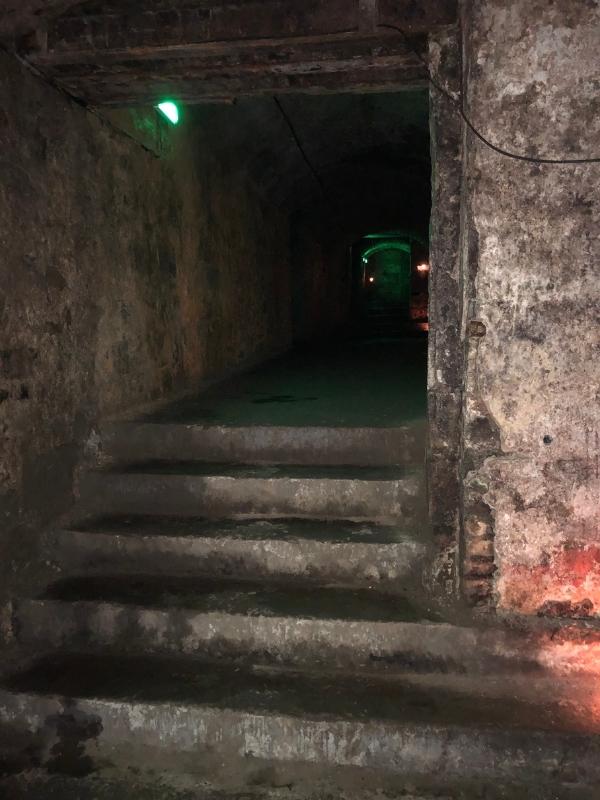
Edinburgh has a fair claim to being the most haunted city in Europe, and it has the graveyards, closes and vaults to back it up.
The Underground Vaults beneath South Bridge are the ones worth doing. Built into the bridge arches in the 1780s as storage, they became slum housing and then were sealed and forgotten for over a century. They are pitch dark, cold and completely silent, and they do not need any theatrical help to be unsettling.
Tours vary in tone, from history-led walks to full jump-scare theatre with actors. Reading the description carefully means you get the one you actually want, particularly if you have children along.
Read more – Our guide to 9 of Edinburgh’s best and spookiest ghost tours
26. The Stand Comedy Club
The Stand is a small basement room at 5 York Place, running comedy seven nights a week since 1995, and it is where names now filling arenas worked out their material.
Monday’s Red Raw new material night is the cheapest ticket and often the most interesting. Friday and Saturday shows are the polished ones. The room holds around 150 people, so nobody is far from the stage.
During August the year-round programme thins out as the club moves into the Fringe brochure, so booking through The Stand’s own site is the way to see what is actually on.
27. An evening at the Festival Theatre or The Cameo
The Festival Theatre on Nicolson Street has Scotland’s largest stage behind a Victorian auditorium and a modern glass front, and it is where Scottish Ballet, Scottish Opera and the big touring productions play. Even if theatre is not usually your thing, the programme is a good excuse to get inside the building.
For something quieter, The Cameo in Tollcross has been showing films since 1914, when it ran silent pictures with an orchestra. It became an art-house cinema after a refurbishment in the 1940s, the main auditorium was restored in the 1980s, and it now shows a mix of independent and mainstream films with a good café bar attached. Listings are on the Picturehouse site.
Both are a change of pace after several days of walking uphill, which by day three or four tends to be welcome.
Best day trips from Edinburgh
Edinburgh makes a good base, and a fair amount is reachable without hiring a car.
By train from Waverley, Falkirk for the Kelpies and the Falkirk Wheel takes about 30 minutes, North Berwick about 35, and both Glasgow and Stirling about 50. Book those the day before and you have a day trip for the price of a return ticket. We went through the options in Episode #73 Easy Day Trips from Edinburgh by Train.
The Highlands are a different matter. The distances are long, the driving is tiring on single-track roads, and a tour means you can look out of the window instead of at the road.
Why we recommend Rabbie’s
We partner with Rabbie’s because they run the kind of tour we would book ourselves. Sixteen-seat mini coaches rather than fifty-seat coaches, driver-guides who know the ground, and small enough groups that you are not waiting twenty minutes for everyone to get back on board at each stop.
They started in Edinburgh in 1993 with one second-hand van, they are a certified B Corp, and they won a King’s Award for Enterprise in 2025. Tours leave from the bus station at St Andrew Square, which is a five minute walk from Princes Street.
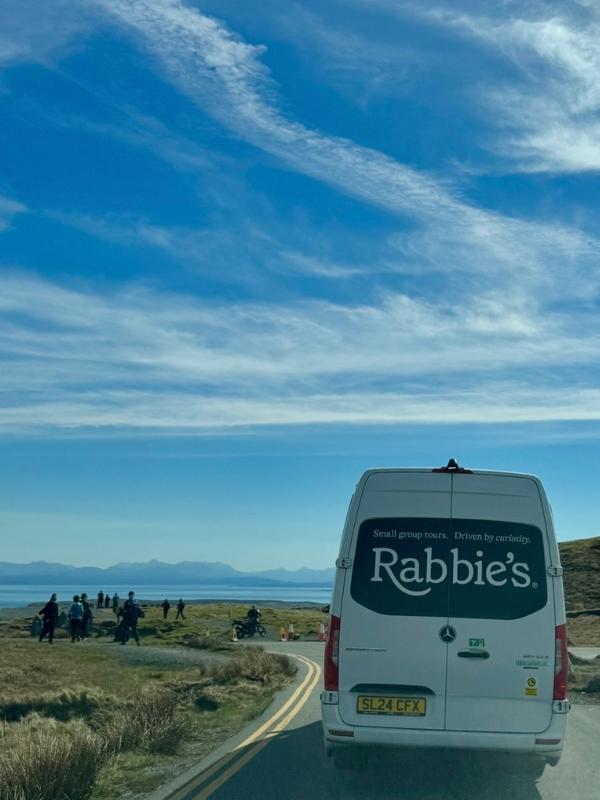
We had them on the podcast to talk about how the small-group tours actually work, so if you would rather hear it from them than from us, that is Episode #213 Small Group Tours of Scotland with Rabbie’s.
| Day tour | Length | From | Best for |
|---|---|---|---|
| Loch Ness, Glencoe and the Highlands | 12 hrs | £78 | The one most people want. Glencoe, Loch Ness, Urquhart Castle |
| Loch Lomond, Stirling Castle and the Kelpies | 9 hrs | £64 | Three big sights in one day without going too far north |
| Outlander Adventure | 8 hrs | £72 | Midhope as Lallybroch, Doune as Castle Leoch, Culross as Cranesmuir |
| St Andrews and the fishing villages of Fife | 8.5 hrs | £57 | Golf, cathedral ruins and the East Neuk harbours |
| Alnwick Castle and the Northumberland coast | 9.5 hrs | £68 | Harry Potter and Downton filming locations, and a look at England |
| Rosslyn Chapel and the Scottish Borders | 7 hrs | £52 | The shortest and cheapest, good if you want your evening back |
Prices are Rabbie’s “from” prices for adults, checked August 2026, before the UKTP10 discount.
Where to stay in Edinburgh
Staying in the Old Town or the New Town puts you within walking distance of nearly everything in this guide, and the two feel quite different. The Old Town is atmospheric and noisy. The New Town is calmer and a five minute walk away.
We have stayed in Edinburgh many times over the years, so the first three below are places we have actually stayed at. The rest are ones we rate on location and reviews.
There are more accommodation options in Edinburgh to suit every budget, and you can find hotels, castles and more for a special stay in our Scotland Accommodation Guide.
One thing to check before you book, particularly if you are driving. Most central Edinburgh hotels have no parking at all, and those that do charge for it, so confirming before you arrive rather than after saves a scramble.
⭐️ Where we have stayed
Virgin Hotels Edinburgh – we stayed here and the location could not be much better, right on Victoria Street in the Old Town, in the converted India Buildings, about eight minutes’ walk from Waverley. The room was beautiful.
Rooms are called Chambers and are split into a bedroom and a lounge area with a sliding door between them, which is more useful than it sounds if one of you is up before the other. There are two bars and the Commons Club restaurant downstairs.
Parking is valet at £45 a night, or a discounted rate at NCP Castle Terrace which is a 10 to 15 minute walk away.
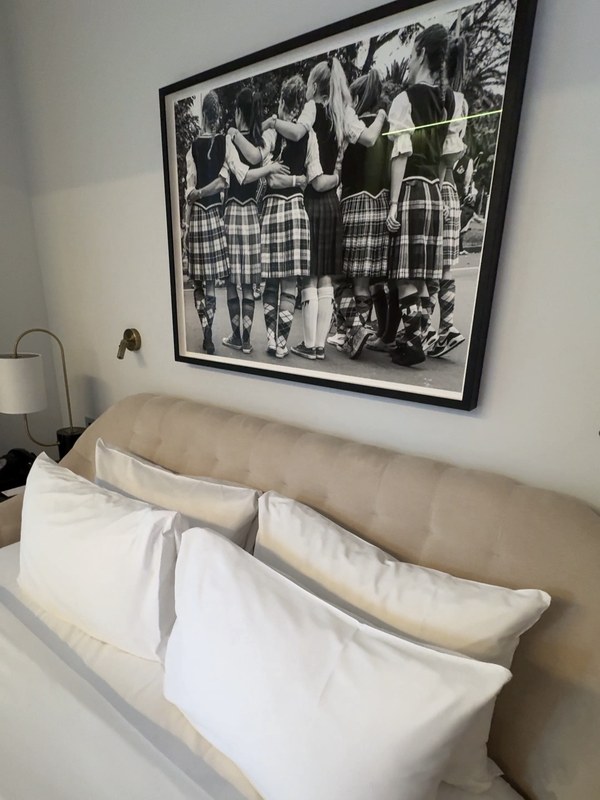
Elder York Guest House – this is where we usually stay. A few minutes’ walk from Princes Street, good breakfast, comfortable rooms and reasonable value for how central it is. No parking.
The thing to know before you book is the stairs. There is no lift and it is three flights up, so it suits you better if you travel light or do not mind the climb.
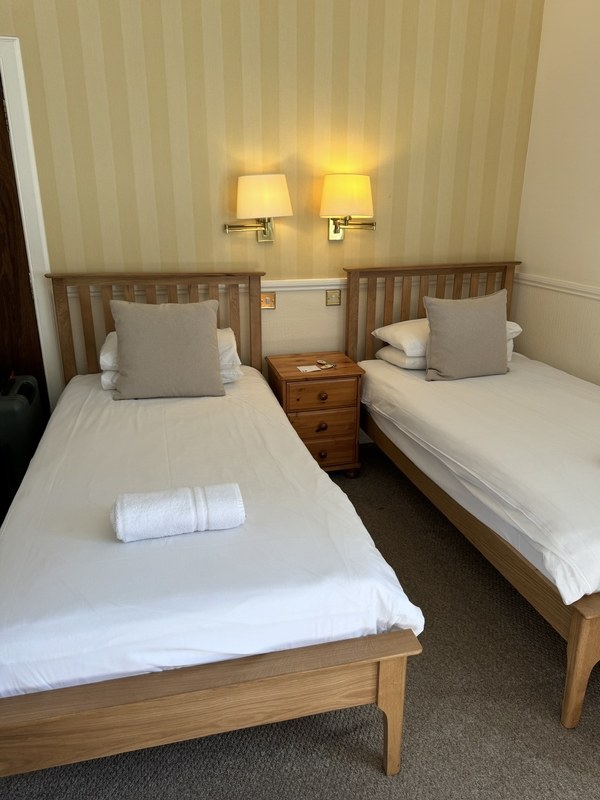
A Grassmarket apartment – we rented this one through VRBO in 2026. It is a two bedroom first floor flat in the Old Town sleeping four, a minute from the Grassmarket, two minutes from the Royal Mile and six from the Castle gates, which is about as central as Edinburgh gets.
One bedroom has a double and a double futon and the other has a double, so it works for a family of four as well as for two couples. There is a proper kitchen, a washing machine and a dryer, and on a longer trip that laundry is worth more than any hotel amenity. First floor also means one flight of stairs rather than three and the spiral staircase is something to behold!
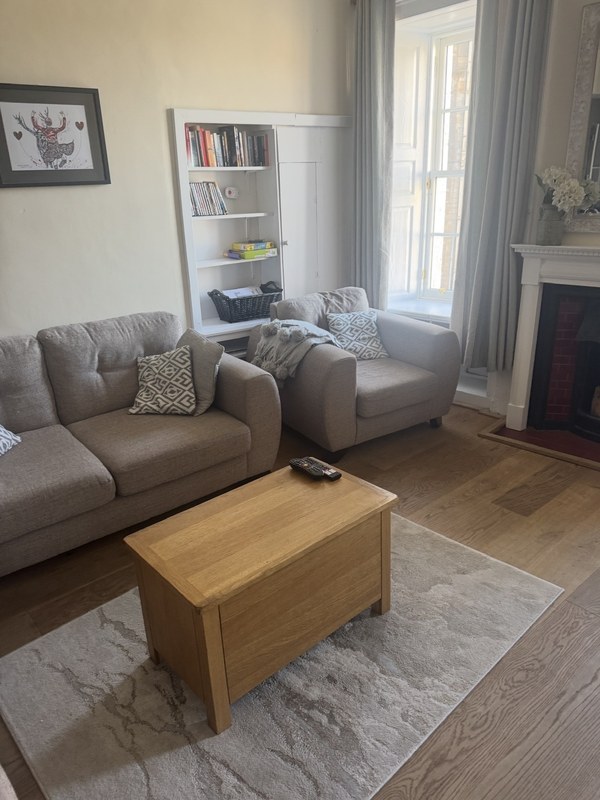
The living room is the sort of Old Town flat you hope for, high ceilings, a tall sash window, a fireplace and a shelf of books and board games for a wet afternoon.
⭐️ Places we rate
These are chosen on location and reviews rather than personal experience.
Luxury and boutique
- The Balmoral – five star, with a Michelin-starred restaurant, well-known afternoon teas, a spa, and a position right next to Waverley station that is hard to beat. Valet parking is £40 per night.
- The Witchery by the Castle – nine themed suites right beside the Castle gates, all four-poster beds and theatrical decoration. A choice for a special occasion rather than a base for a week. No parking.
- The Caledonian Edinburgh, Curio Collection by Hilton – five star at the west end of Princes Street, in the old Caledonian Railway station building, with a spa, indoor pool and some very good Castle views. It left the Waldorf Astoria brand in 2024, so you may still see it listed under the old name.
Mid-range
- Holiday Inn Express City Centre – a three star in the New Town with a decent breakfast, free WiFi and family rooms, which makes it a practical choice for anyone travelling with children. No parking.
- Radisson Blu Edinburgh City Centre – four star on the High Street, so you are on the Royal Mile itself. Spa and gym on site, and there is an on-site car park, though the guest rate is best confirmed when you book.
- Motel One Edinburgh Royal – central, affordable and better looking than the price suggests, on Market Street between Waverley and the Royal Mile. No on-site parking, though the hotel offers a discount at the nearby Q-Park.
Getting to and around Edinburgh
The Castle, the Royal Mile, Holyroodhouse, Greyfriars, the National Museum and Princes Street all sit within about a mile of each other so you can walk between them. It is a steep mile though, and the Old Town is cobbled almost throughout, so how walkable it really is depends a great deal on your mobility. Britannia, the Botanics and the Zoo need transport.
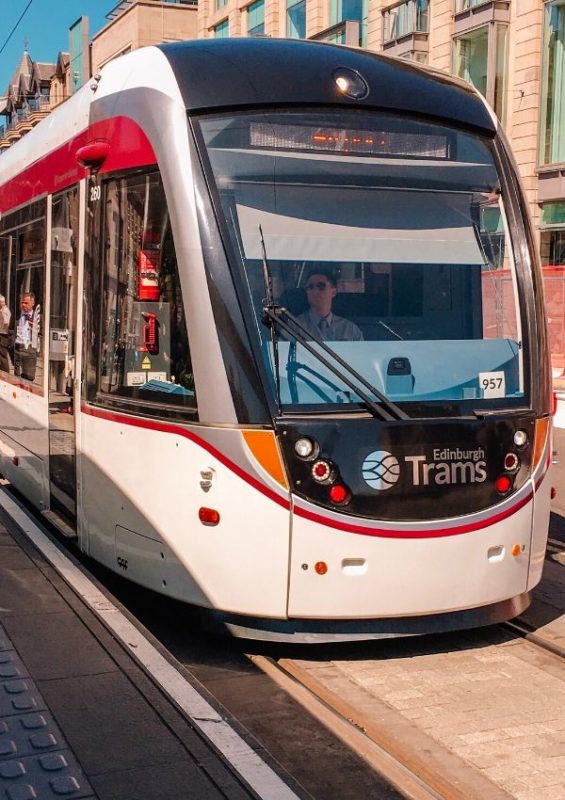
From the airport, eight miles west, the Airlink 100 bus runs 24 hours a day to Waverley Bridge in around 30 minutes, £6.00 single and £8.50 return. The tram takes the same time and costs £7.90 single. You can also book an Airlink transfer or a private car ahead, which helps after a long flight.
Around the city, a Lothian bus single is £2.40 and a day ticket £6.00, capped at £5.70 on contactless. Tram fares within the city are the same. Drivers give no change, so contactless is easier.
Please note, current as of August 2026 – following a building fire that closed Princes Street on 9 July 2026, trams are running between Edinburgh Airport and West End only. Lothian Buses is accepting tram tickets in the meantime. Check edinburghtrams.com before you travel.
If the hill puts you off, a hop-on hop-off bus stops outside the Castle and saves the climb. The 24-hour tour is the simplest. The Royal Edinburgh Ticket adds the Castle, Holyroodhouse and Britannia over 48 hours, and the Edinburgh City Pass covers 20 attractions over one to three days.
Arriving by train from London, the fastest LNER service reaches Waverley in 4 hours 8 minutes and booking ahead makes a large difference to the fare. Check fares here, or take the Caledonian Sleeper overnight from Euston. We have done that twice to Fort William and enjoyed both journeys.
A car is more trouble than help here. If Edinburgh is the start of a Scotland road trip, see the city first and collect the car on your way out.
Read more – How to get to Edinburgh from London · Practical tips for visiting Edinburgh · Guide to UK Train Travel
Accessible Edinburgh
Built on a ridge, with the Castle on the volcanic plug at the end of it the Old Town has cobblestones and steps. If you use a stick, a chair, or run out of steam on hills, it is helpful to know which of the 27 places in this article are accessible.
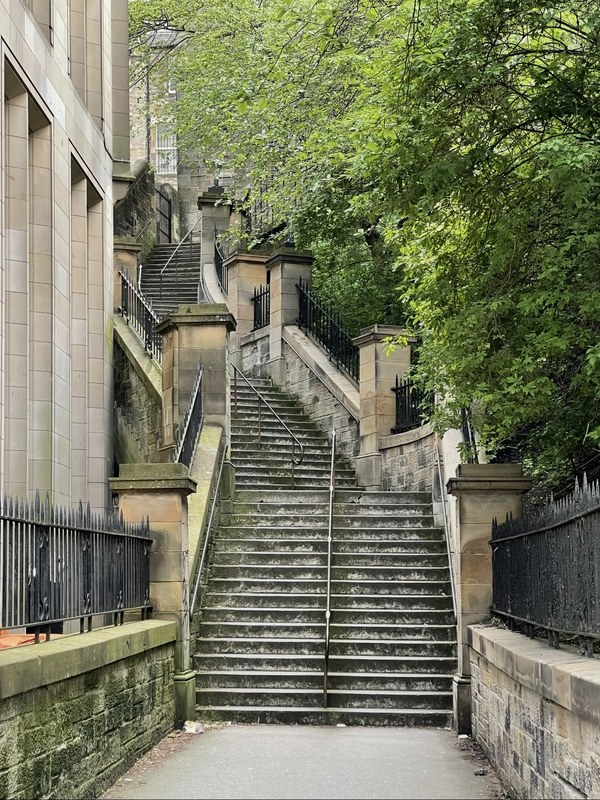
The closes running off the top of the Royal Mile look like shortcuts on a map. Many of them are stairs.
There is a way round, and it is not an accident. Cockburn Street was cut through these closes in 1856 for exactly this reason, to give a gentler and wider route up from Waverley than the steep lanes it replaced. It curves the whole way and it has no steps on it.
Be clear about what that means though. Gentler than a staircase is not the same as flat. Cockburn Street is still a climb, and because it curves it is longer than the stairs it avoids.
| Place | Access | Worth knowing |
|---|---|---|
| Edinburgh Castle | Good, with help | A mobility vehicle runs to Crown Square on request, ask at the entrance. Not available 12.15 to 1.15 because of the gun. Lift in Crown Square. Free wheelchair loan. Two carers free |
| Palace of Holyroodhouse | Mostly | Lift throughout, but Mary, Queen of Scots’ chambers are up 25 steep spiral steps with no alternative. Free companion ticket. Wheelchairs and rollators to borrow |
| Royal Yacht Britannia | Excellent | A central lift serves all five decks and it holds the highest wheelchair access rating. Free wheelchairs and free carer tickets at the desk |
| National Museum of Scotland | Excellent | Use the Tower Entrance for level access. Lifts to every floor, and a Changing Places toilet on Level 0 |
| Scottish National Gallery | Good | A gentle 200 metre path avoids the 29 steps at the Mound entrance. Lift works have made some upper rooms stairs-only, so ring 0131 624 6560 to check |
| Royal Botanic Garden | Excellent | Free wheelchair and mobility scooter loan, two hours, booking advised on 0131 248 2909. Seating throughout |
| St Giles’ Cathedral | Ramped entry | No lift, and the Thistle Chapel is up four steps. No toilet on site, the nearest accessible one is in the National Library across the road |
| Camera Obscura | Difficult | Five floors plus rooftop terrace, roughly 98 steps and no lift. The building is listed so one cannot be added. One carer free |
| The Real Mary King’s Close | Not accessible | 58 steps down and 38 up, and the site is listed so there is no lift. Support chairs can be arranged in advance. One carer free |
| Scott Monument | Not accessible | Spiral stairs only, no lift. Free ticket for a personal assistant |
| Arthur’s Seat, Calton Hill | Climbs | Calton Hill is ten minutes up a flight of steps. Queen’s Drive circles Holyrood Park by car if you would rather see it from a seat |
Getting about
Every Lothian bus has ramped boarding and at least one wheelchair space, and the trams are step-free with two spaces per tram and ramps or lifts at every stop. Central Taxis run a fleet of 465 and every one of them is wheelchair accessible, on 0131 229 2468.
The hop-on hop-off buses all have two wheelchair spaces and ramped access, and a carer travels free. Given the hills, that is a more useful ticket here than in most cities.
Where to look next
Edinburgh happens to be the home of Euan’s Guide, the disabled access review charity, so the local coverage is better than almost anywhere. Their Edinburgh Accessible Highlights Guide, written with the city tourist board, is the best single resource and it is free.
![Visiting Scotland in winter [Things to do + FAQs]](https://uktravelplanning.com/wp-content/uploads/2023/07/Scotland-in-winter-768x384.jpg)