
If you’re feeling overwhelmed about where to start, you’re not alone. We hear this all the time in our Facebook group, emails and in podcast listener messages.
But don’t worry this guide will walk you through the exact steps we recommend for planning a UK trip that’s enjoyable, realistic, and stress-free.
We’ve helped thousands of travellers do just that, and now it’s your turn.
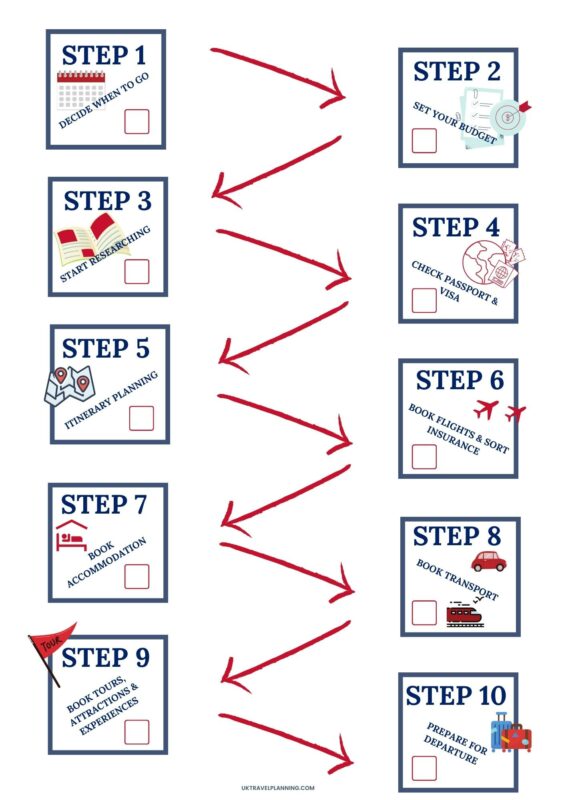
- 10 step guide to plan your UK vacation
- 📆 Step 1 – Decide when to visit the UK
- 💰 Step 2 – Decide on your budget
- 🔍 Step 3 – Start your research
- 🛂 Step 4 – Check your passport and any visa requirements
- 🗺️ Step 5: Where Should I Go?
- ✈️ Step 6: Book Your Flights and Travel Insurance
- 🏨 Step 7: Book Your Accommodation
- Step 8 – Book transport
- 🎟️ Step 9: Book Key Attractions in Advance
- 🧾 Step 10 – Prepare for Departure
10 step guide to plan your UK vacation
📆 Step 1 – Decide when to visit the UK

The UK is a year-round destination, but the time of year you visit can shape your experience. Each season has its charm and a few quirks!
- Summer (June–August):
The most popular (and busiest) time to visit. Expect long daylight hours, festivals, and crowds, especially in London and Edinburgh.
Book accommodation and transport early. Scotland’s midges can be pesky in warmer months, so pack insect repellent!
- Autumn (September–November):
Quieter after the school holidays end in early September. Autumn colours in the countryside are stunning. Daylight starts to fade by late October when the clocks go back.
- Winter (December–February):
Expect cold weather and short days, especially in Scotland and northern England. That said, Christmas markets, twinkling lights, and festive events make it a magical time, especially in London.
- Spring (March–May):
A beautiful time to visit. Flowers bloom, daylight increases, and crowds are lighter. Early spring can still be chilly, but by May, the weather improves, and the countryside comes alive.
💡 Tip: Weather varies by region. It’s colder up north, and rural areas can feel especially remote in winter. Always check the forecast, layer up, and carry a waterproof jacket!
For more seasonal insights, read our guide: When Is the Best Time to Visit the UK?
💰 Step 2 – Decide on your budget
Before you dive into booking, it’s important to have a clear idea of your travel budget. The UK can be expensive, especially in big cities like London, but there are ways to manage costs and still have an amazing experience.
Accommodation, transport, food, and entry fees all add up, so think about how much you’re comfortable spending per day. As a rough guide:
- Budget Travel: £70–£100 per person per day
- Suitable for hostel stays, budget meals, and public transport
- Mid-Range Travel: £150–£200 per person per day
- Covers 3-star hotels, dining at mid-range restaurants, and entry to popular attractions.
- Luxury Travel: £250–£350+ per person per day
- Includes 4- to 5-star accommodations, fine dining, private tours, and premium transportation.
These estimates exclude flights and accommodation, but they’ll give you a general idea.
Good to know:
✅ There are lots of free attractions in cities like London
✅ Public transport is usually cheaper than hiring a car
✅ Booking early can save you money on trains, tours and hotels
✅ Discount passes like the London Pass or English Heritage Overseas Visitor Pass might be worth it if you’re visiting lots of attractions
Need help working it all out? Check out our guide – How much does it cost to visit the UK?
🔍 Step 3 – Start your research

Now that you’ve figured out when you’re going and how much you want to spend, it’s time to start researching where to go and what to see.
This can feel like the most overwhelming part of planning, but it doesn’t have to be. Use our website to explore destinations, check out suggested itineraries, and gather inspiration from travellers who’ve done it all before.
Things to consider:
- What are your must-see places or experiences?
- Are there any events or festivals on while you’re there?
- Which airport will you fly into and out of?
- Do you prefer to move around frequently or stick to a few key locations?
🎧 Prefer to listen while planning?
Tune into the UK Travel Planning Podcast for itinerary tips, interviews, and real-life trip reports.
Need help narrowing things down?
Join our UK Travel Planning Facebook group where over 23,000+ members ask questions, share advice, and compare itineraries.
🛂 Step 4 – Check your passport and any visa requirements
Before booking anything, make sure your passport is valid for the full duration of your trip. Some nationalities require at least six months’ validity to enter the UK, so check this in advance.
Most visitors from the US, Canada, Australia and New Zealand can enter the UK as a tourist for up to six months without a visa. However, the UK has introduced an Electronic Travel Authorisation (ETA) requirement, so it’s important to check whether this applies to you.
👉 Find out if you need an ETA and apply online
If you’re from the EU, EEA, or Switzerland, or any other country, entry rules vary. Always check the latest guidance before travelling.
👉 View full UK visa and entry requirements
You can also check your own country’s travel advisory site for up-to-date advice:
🗺️ Step 5: Where Should I Go?
Feeling overwhelmed by all the choices? You’re not alone. Here’s how to keep it simple.
🎯 Pick 2 to 4 base destinations
Then build in day trips or nearby add-ons if you have time.
📍 Popular Bases for First-Time Visitors
| Destination | Why Go? |
|---|---|
| London | Iconic sights, museums, history, theatre, markets |
| Cotswolds | Countryside villages, cosy pubs, scenic walks |
| Bath | Roman Baths, spa culture, Georgian architecture |
| York | Medieval charm, York Minster, cobbled streets |
| Edinburgh | Castles, views, historic Old Town, bagpipes optional! |
| Lake District | Nature, lakes, walking trails, Beatrix Potter vibes |
| Scottish Highlands | Dramatic scenery, lochs, castles, wildlife |
| Wales | Castles, mountains, national parks, coastal beauty |
💡 Less is more. A few well-chosen destinations = a more relaxed, memorable trip.
🔗 Need inspiration?
- Browse our Destination Guides for itinerary ideas, travel tips, and local highlights.
- 🎧 Prefer to listen? Check out our podcast for real trip reports and expert tips.
📝 Want more help building your itinerary?
- Read our full guide: How to Plan Your UK Itinerary
✈️ Step 6: Book Your Flights and Travel Insurance

Now that you’ve got a rough itinerary in mind, it’s time to book two of the most important things — your flights and your travel insurance.
✈️ Booking Flights
Flights can take a big chunk of your budget, so it’s smart to book early for the best prices and availability.
- Consider flying into one city and out of another (e.g. arrive in London, depart from Edinburgh) if it suits your route
- Use tools like Google Flights or Skyscanner to track price changes
- Midweek flights often have better fares and fewer crowds
💡 Airports such as Heathrow, Gatwick, Manchester, and Edinburgh are the most common entry points for overseas travellers.
🧾 Don’t Skip Travel Insurance
Even if your trip is short, travel insurance can be a lifesaver, covering medical costs, trip cancellations, delays, and lost baggage.
For US-based travellers, we recommend Travel Insurance Master.
For Australian-based travellers, check out Cover-More.
Advice given in this article is general in nature and is not intended to influence readers’ decisions about investing or financial products. You should always seek your own professional advice that takes into account your personal circumstances before making any financial decisions. We always encourage our readers to compare options when it comes to financial products.
Read our full disclosure.
🏨 Step 7: Book Your Accommodation
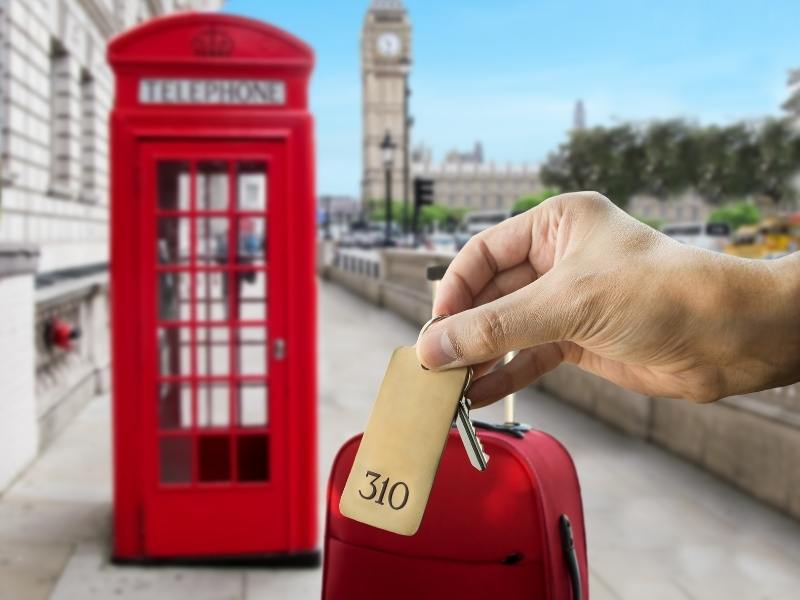
There’s a huge range of places to stay in the UK, from cosy B&Bs and boutique hotels to cottages, apartments, and even castles. Whatever your style or budget, you’ll find something that fits.
We recommend Booking.com for hotels and apartments across the UK. It’s what we use ourselves — the site is easy to use, and we always choose properties with free cancellation for peace of mind.
For self-catering stays like cottages in the Cotswolds, cabins in the Lake District, or apartments in London, VRBO is another great option.
💡 Prefer a B&B? Breakfast is included, and you’ll usually get fantastic local tips from your hosts.
🛏️ Accommodation Tips to Keep in Mind:
- Book early for popular destinations like Skye and Edinburgh during the Fringe
- Staying central in cities saves time and transport costs
- Check what’s important to you, air conditioning, lifts, or ground-floor rooms aren’t guaranteed in older buildings
- If you or someone in your group has accessibility needs, read our complete guide to accessible travel in the UK.
- Free cancellation can offer flexibility if plans change
Not sure where to start?
Step 8 – Book transport
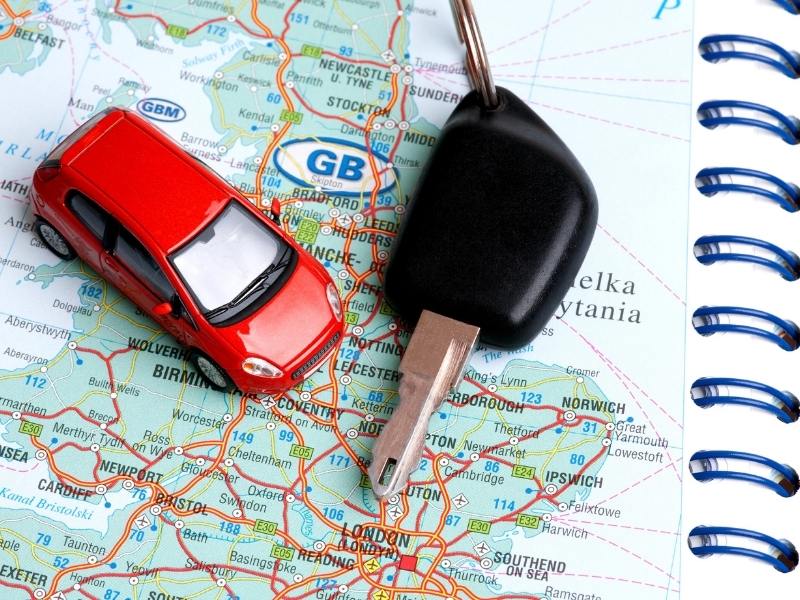
Whether you’re travelling by train, car, coach, or ferry – now’s the time to start booking your transport.
🚖 Getting Around London
If you’re flying into London, it’s essential to understand your transportation options from the start. We don’t recommend hiring a car in the city. London’s traffic and limited parking make it far easier to get around by Tube, bus, or black cab.
- Consider a Visitor Oyster Card or using a contactless card to pay for public transport.
- For airport transfers, we recommend:
Read our complete guide>> How to Get Around London Using Public Transport
🚗 Renting a Car in the UK
Hiring a car is a great way to explore the UK especially if you’re heading to rural areas like the Cotswolds, Cornwall, the Lake District, or the Scottish Highlands.
We recommend comparing prices with Discover Cars, which shows you deals from all major rental companies.
🚗 First time driving in the UK?
Tripiamo is brilliant for first-time UK drivers. Their visual driving guides are made for international travellers and walk you through everything step by step.
🚦 Key Things to Know About Driving in the UK
- Drive on the left-hand side of the road
- Most cars are manual (automatics cost more)
- Everyone must wear a seatbelt by law
- Fuel is petrol or diesel – double-check before filling up!
- Fuel is expensive, so plan your budget accordingly
- Roundabouts are common – give way to the right
- Mobile phones cannot be used while driving
- Speed cameras are everywhere – stick to the limit
- Children under 12 or under 135cm must use a car seat
🚗 Parking Tips
- Parking charges are common in cities, towns and tourist areas
- Park and Ride services can save time and hassle
🚗 🚙 Learn to Drive Confidently in the UK with Tripiamo
Tripiamo equips travellers with the essential knowledge needed to drive confidently in the UK.
Unlike a GPS, Tripiamo offers comprehensive driving guidance tailored specifically for the UK, crafted by travel experts and validated by local driving schools and instructors. This ensures you receive reliable and extensive information for driving in the UK.
Whether navigating city streets or rural roads, Tripiamo prepares you with the skills and confidence needed to drive safely and correctly.
🚆 Travelling by Train
Trains are a fantastic way to travel the UK, and it’s our favourite way to get around.
✅ Use National Rail Enquiries and the Trainline to compare prices and buy tickets.
Popular routes:
- London to Edinburgh – 4.5 hrs
- London to York – 2 hrs
- London to Cardiff – 2 hrs
🚆 Need help planning rail routes?
- 📘 Grab our UK Train Travel Guide — written by Doug, who worked in the rail industry for 25+ years.
- 🛌 Consider the Caledonian Sleeper if you want to travel overnight between London and Scotland.
🚌 Coaches & Buses
If you’re on a tight budget, coaches are a great option.
- 🚌 National Express serves over 1,200 destinations
- 🧾 Book via Trainline for coach vs. train comparisons
Expect longer journey times, but much lower prices.
✈️ Internal Flights
Flying is sometimes worth it if you’re covering a lot of ground. But do factor in:
- Airport transfers and wait times
- Baggage fees
- Airport distance from city centres
⛴️ Taking Ferries
Ferries are essential if you plan to visit:
- Scottish Islands – CalMac & Northlink Ferries
- Isle of Wight, Isle of Man, Scilly Isles
- Ireland – from England, Wales, or Scotland
🎫 Book at Direct Ferries
🧭 Learn more: Complete Guide to UK Transportation
🎟️ Step 9: Book Key Attractions in Advance
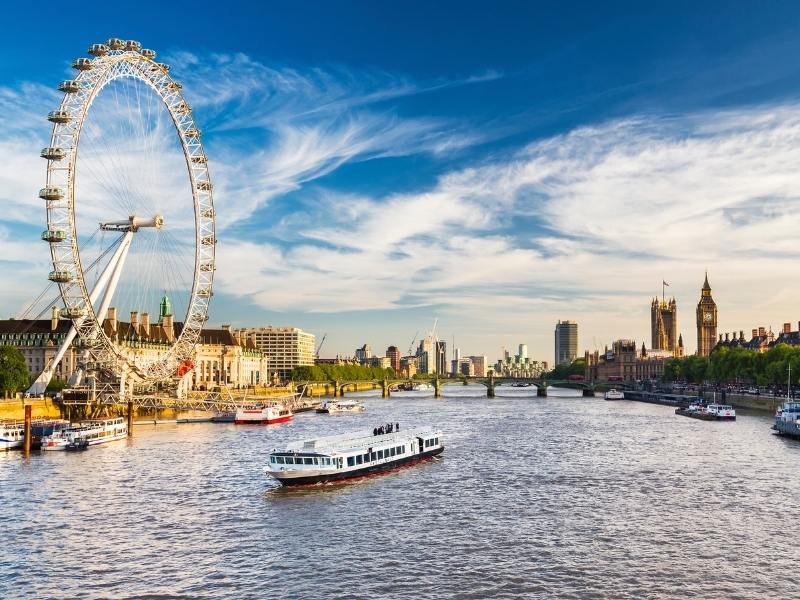
Some of the UK’s most popular sights and experiences sell out fast, especially during summer, school holidays, and festivals.
We always recommend booking ahead for:
✅ Major London attractions
– Tower of London
– Westminster Abbey
– London Eye
– Harry Potter Studio Tour
– Ceremony of the Keys at the Tower of London
✅ Edinburgh highlights
– Edinburgh Castle
– The Royal Yacht Britannia
– Underground walking tours
– Royal Edinburgh Military Tattoo (during August)
✅ Stonehenge and Roman Baths
– Both offer timed-entry tickets and can sell out days in advance.
✅ Afternoon tea & dining experiences
– Popular restaurants, afternoon teas, and special food tours often require reservations (especially in London).
🎧 Want Help Choosing?
- We cover popular attractions, how to save money, and what’s worth it in our UK Travel Planning podcast.
💳 Tip: Look into Passes
Consider a multi-attraction pass like:
🎫 The London Pass — includes entry to 80+ attractions
🎫 The English Heritage Pass — great for castles and stately homes
🧾 Step 10 – Prepare for Departure

You’re nearly ready! These final steps will help ensure a smooth arrival and confident start to your UK adventure.
🚗 Book Your Airport Transfer
Avoid the stress of landing jet-lagged and figuring things out on the fly. Pre-booking your airport transfer is one of the best things you can do to start your trip calmly.
Estimated train times to central London:
- Heathrow – 45 minutes
- Gatwick – 45 minutes
- City Airport – 30 minutes
- Luton – 40 minutes
- Stansted – 50 minutes
✈️ How to Get to London from Heathrow
✈️ How to Get to London from Gatwick
✅ Prefer door-to-door service?
We recommend trusted private transfers with Riz and XFA Cars
📶 Plan How You’ll Stay Connected
- ✔️ Many hotels, cafés, and trains offer free WiFi, but don’t rely on it everywhere.
- ✔️Check your accommodation includes WiFi
- ✔️ Use an eSIM for easy mobile data without needing a physical SIM card (great for newer phones)
- ✔️ No eSIM? Bring a UK-compatible SIM or buy one at the airport
➡️ How to Access the Internet in the UK
➡️ Best UK Travel Apps to Download Before You Go
💷 Money Matters
The UK uses the Pound Sterling (£). Visa and Mastercard are widely accepted, but some rural areas and smaller vendors prefer cash.
✅ Let your bank know you’re travelling
✅ Contactless is accepted up to £100
✅ Always carry a small amount of cash
I recommend the Wise Mastercard* for managing currency with great exchange rates and fewer fees. I usually carry £50 in notes and coins as backup.
👉 How to Bring Money to the UK – Complete Guide
*Advice given in this article is general in nature and is not intended to influence readers’ decisions about investing or financial products. You should always seek your own professional advice that takes into account your personal circumstances before making any financial decisions. We always encourage our readers to compare options when it comes to financial products. Read our full disclosure.
💊 Medical Essentials
- Bring enough prescription meds for the full trip
- Keep them in your carry-on with a copy of your prescription
- Pack a small first aid kit with travel basics just in case
🧳 Start Packing Early
We always start packing a few days before flying. It gives time to buy any last-minute items and rethink what we truly need.
Travelling with large luggage on public transport can be difficult, so pack light if possible.
✅ UK Packing List – Essentials for All Seasons
✅ Travel Bags + Accessories We Recommend
📆 Planning Timeline
Here’s a general guide for what to book and when:
6–12 Months Before Travel
- Book international flights
- Book top accommodations for peak destinations
- Take out travel insurance
3–6 Months Before
- Book train travel or car hire
- Reserve key attractions and tours
- Buy travel insurance if you haven’t already
1 Month Before
- Purchase a travel eSIM and adapters
- Finalise your itinerary
- Book airport transfers
- Order a Visitor Oyster Card if using one
1 Day Before
- Email your itinerary to a family member or friend
- Start packing!