Do’s and Don’ts of Driving in the UK [What You Need To Know]
Are you considering driving in the UK? It’s a relatively small country so driving is a great option if you want to pack a lot of sights into a short stay or to get off the beaten track.
However, driving in the UK is not for the faint hearted and will be a very different experience to driving in the USA, Australia, New Zealand, Canada etc!
In this article we will share our key do’s and don’ts, common traveller mistakes, road differences, and what visitors should expect before hiring a car.

This post may contain compensated links. Please refer to my disclosure here for more information.
🚗 🚙 Learn to Drive Confidently in the UK with Tripiamo
Tripiamo equips travellers with the essential knowledge needed to drive confidently in the UK.
Unlike a GPS, Tripiamo offers comprehensive driving guidance tailored specifically for the UK, crafted by travel experts and validated by local driving schools and instructors. This ensures you receive reliable and extensive information for driving in the UK.
Whether navigating city streets or rural roads, Tripiamo prepares you with the skills and confidence needed to drive safely and correctly.
If you’re deciding between train travel and driving, see the different UK itinerary ideas for first-time visitors and how transport choices affect your route.
What to expect – your must DO list
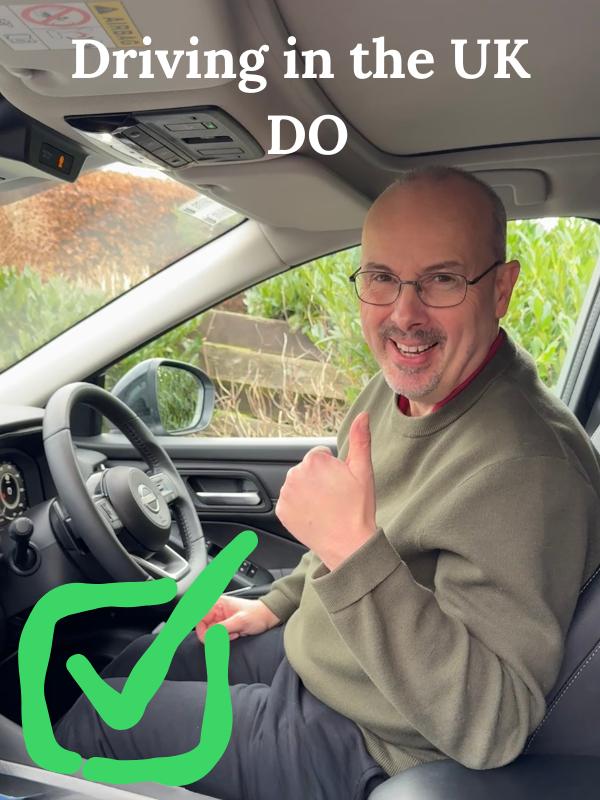
- Drive on the left – You’d be surprised how many visitors get caught out by this especially when arriving from the European continent. A useful trick is to stick a post it note onto your steering wheel whenever you park reminding you to drive on the left!
- Expect narrow roads – The UK will have narrower roads than you may be used to. Rural areas offer one lane country roads with blind hills and bends. Roads in towns and cities historic locations such as York or Bath will be narrow.
- UK speed limits are in mph – Learn how to convert quickly and know the speed limits before setting off on your trip. Distances on road signs are also in miles, not kilometres.
Good to know – 1 kph is 0.62 mph. The speed limit for cars in UK towns and cities (or any built up area) is generally 30 mph though Wales and some other UK locations have introduced limits of 20 mph. The speed limit for cars on a motorway is 70 mph whereas a single lane carriageway is 60 mph.
- Book your hire car early – Automatic cars are scarce in the UK so book as early as you can. Read our extensive guide to hiring a car in the UK.
- Choose a smaller car – Brits generally drive smaller cars than other countries. You may not be prepared to squash up with your luggage but we guarantee once you’ve experienced narrow roads and tight parking spots you’ll wish you had booked a smaller car.
- Pick up your hire car outside cities – Public transport is excellent in UK cities and some cities such as York or Cambridge can be covered on foot. Your car hire will be wasted. Save your car hire for when you are ready to leave the city.
- Factor parking costs into your trip budget – In some city car parks, a day’s parking could cost as much as £25. Some hotels in areas with limited parking also charge overnight parking fees. These can add up over the course of your trip so don’t forget to include them in your trip budget.
- Plan shorter driving days – The UK may look like a small country on the map but due to the road layout and sheer number of cars on the road (and seemingly endless roadworks) it can take a long time to get anywhere. Even if you are used to long driving days in the US or Australia, driving in the UK is very different. Plan shorter driving days to avoid stress, burnout and unsafe driving when tired.
- Learn how to use roundabouts – Roundabouts are everywhere in the UK. Learn how to use them properly before you reach one! Try this useful advice from the UK’s RAC organisation.
- Expect weekend traffic – Brits love a weekend getaway for visiting family, friends and the great British countryside. Peak travel times will be Friday and Sunday evening but you should also expect heavy traffic on Saturday mornings.
- Download offline maps – Don’t rely solely on WiFi for maps and navigation. Download offline maps and driving directions in advance of your trip.
- Download what3words before you set off – The free what3words app is widely used in the UK and can be a lifesaver on rural roads, in large car parks, or if you break down. It divides the world into 3 metre squares, each with a unique three word address.
- If you need help, open the app and wait for the blue dot to settle, then share your three words with breakdown or emergency services. You can also enter a what3words address and tap Navigate to send it to Google Maps, Apple Maps or Waze for precise directions. It can still be useful when signal is patchy, which is ideal for UK road trips.
- Use Tripiamo for essential pre-driving preparation – Tripiamo provides certified online driving guides specifically aimed at international travellers. If you plan on driving in the UK, this guide is a must-read.
- Only use a car if it adds value to your trip – If you are only visiting London, Bath, York or Edinburgh (or any city hopping itinerary) you do not need a car. You don’t need a car to explore any UK city or to travel directly between cities (take the train). Only use a car if you want to explore rural areas or to take meandering road trips.
- Do check out our driving focussed podcast and articles – Episode 155# – 15 Essential UK Road Trip Tips, our UK Road Trip Planner, and the 7 Best UK Road Trip Route Guide
What to expect – Your essential DON’T list!
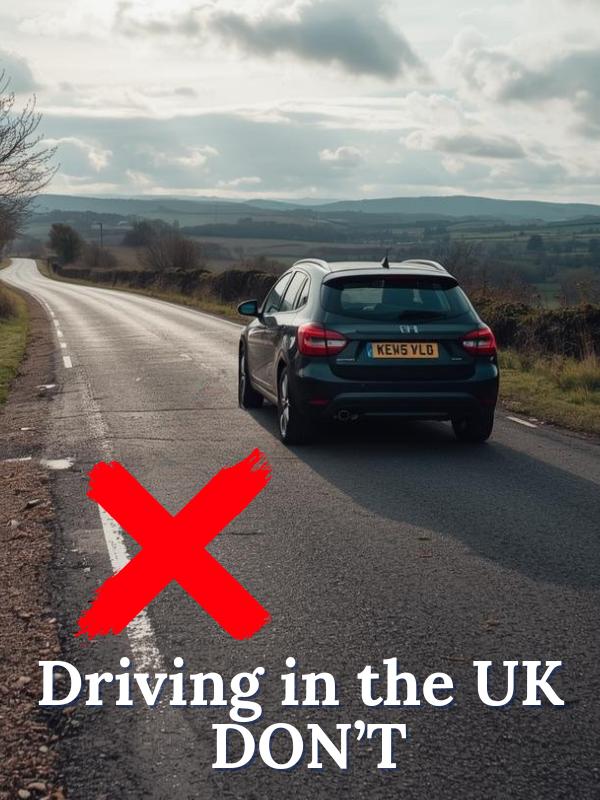
- Don’t assume UK driving will feel familiar – Signs, speed limits and driving signs are all different. Be informed and stay alert. Road construction is also different especially in rural areas – think endless dry stone walls and hedgerows!
- Don’t rent a car for London – London has an overground train network, the underground ‘tube’, buses, a light railway and boats! You don’t need to hire a car. In addition to the stress of driving and parking in London, you may also have to pay the ultra low emission zone charge of £12.50 per day.
- Don’t underestimate journey times – Whatever your SatNav or online journey planner says, always add extra time onto your journey. Traffic jams, roadworks, adverse weather and accident delays are common.
- Don’t plan a long road trip on arrival – Avoid picking up a hire car the moment you arrive after a long flight. You will be jet lagged and tired and this is not the time to navigate unfamiliar roads, rules and driving conditions. Give yourself time to recover before picking up your hire car.
- Don’t cram too many stops – Along with underestimating journey times, many travellers to the UK underestimate how long one stop takes. Navigating to the location and finding parking can take much longer than you think so don’t plan too many stops in one day.
- Don’t expect easy parking – You’ll find car parks in all towns and cities but public parking spaces are limited and you can expect to pay hefty fees for popular locations. Plus, you’ll encounter permit parking only zones, limited time parking or resident only parking areas. Use RingGo, NCP Parking or Just Park apps to find (and pay for) your nearest local parking spot.
- Don’t confuse petrol vs diesel – It’s an easy mistake to make but one which could be very costly. Make sure you know whether your hire car uses diesel or petrol and make sure you park at the right pump in a petrol station!
- Don’t assume there’ll be cheap fuel – Fuel is expensive in the UK and a road trip can prove costly. You’ll find the highest fuel prices at motorway service stations so always fill up at a local garage before joining a motorway. Large supermarkets and well known fuel chains often offer good deals on fuel.
- Don’t turn left on red – Unlike the United States and Canada you cannot turn left on red in the UK.
- Don’t plan long winter rural drives – If you’re visiting the UK in winter, be prepared for short, dark days and adverse weather. Rural roads will not be gritted as town and city roads generally are so you may encounter icy slippery roads. Not fun and very dangerous.
🚓 101 Non emergency police
🛣 Motorway help: Use the orange emergency roadside phones
Move to a safe place
Switch on hazard lights
Stand well away from traffic
Driving in the UK FAQ’s
Planning a UK road trip – essential podcast episodes
- Episode #79 – Planning Your Perfect UK Road Trip: Expert Tips and Itinerary Ideas
- Episode #44 – Coasting Around Cornwall: Tales and Tips from our 7-Day Road Trip Adventure
- Episode #30 – Scotland Road Trip Itinerary
- Episode #112 – Driving the UK Like a Local: Expert Tips from Tripiamo’s John Cortese
- Episode #140 Navigating the North Coast 500: Essential Tips for Your Scottish Adventure