10 Best Places to Visit in North East England (2027)
Planning a trip and wondering which places to visit in North East England are worth the drive, from the Northumberland coast to Hadrian’s Wall, Durham and Beamish?
The region is bigger than it looks. Holy Island is cut off by the sea twice a day, Hadrian’s Wall sits over an hour west of the coast, and parking in Durham’s old centre is tight, so an easy-looking day can end up spent in the car.
I was born in the North East and my grandad was a coal miner here.
These are our ten favourite places, with notes on tides, parking and trains. Our 10-day North East England itinerary joins them into one route, and our Northumberland and Durham travel guides go into more depth.
Good to know: the causeway to Holy Island floods twice a day. Northumberland County Council publishes the safe crossing times well ahead, so the rest of a coast day is easiest planned around them.
TIP: without a car, this day tour from Edinburgh takes in Holy Island, Bamburgh and Alnwick Castle in one go.
Last updated: November 2026
A little background information about the North East
The North East of England is made up of Northumberland, Tyne and Wear, County Durham and the Tees Valley, which takes in Middlesbrough, Stockton-on-Tees, Hartlepool, Darlington, Redcar and Cleveland.
You may have heard that everyone from the North East is a Geordie. Strictly, a Geordie comes from Tyneside, and Newcastle in particular. People from Sunderland are Mackems, and people from the wider county of Northumberland are Northumbrians.
The major cities in the North East are Newcastle upon Tyne, Sunderland and Durham.
Planning a visit to the North East? UKTP Podcasts
These episodes of the UK Travel Planning Podcast cover the region with guests who know it well.
- Episode 222: Beamish with Samantha Shotton, on how to plan a day at the living museum and what not to miss in each era.
- Episode 163: North East England with Alex Iles, an overview of the whole region, from the coast to the cities.
- Episode 117: County Durham with Michelle Gorman, on the county’s landscapes, castles and cultural sites.
- Episode 122: County Durham with Anna Unger, with more ideas for Durham city and the countryside around it.
Top 10 things to do in the North East of England
Take a drive along the Northumberland coast
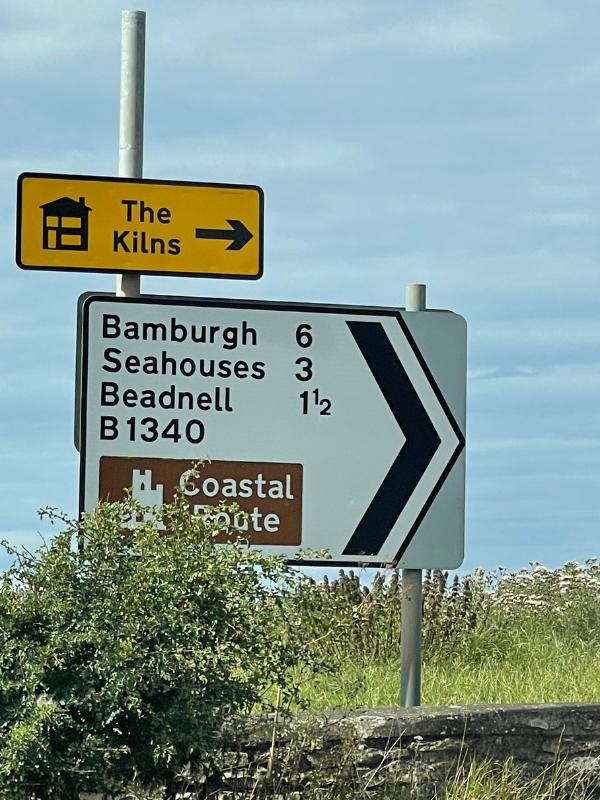
The signed Northumberland Coastal Route runs from Alnmouth north to the Holy Island of Lindisfarne, past sandy beaches, castles and pretty coastal villages, with Alnwick just 5 miles inland from the start.
In summer the long light evenings leave plenty of time for the castles and the beaches.
If you love history, and castles in particular, Northumberland has more castles than any other county in England. Two of my favourites are Bamburgh Castle and Alnwick Castle. Harry Potter fans will know Alnwick as Hogwarts School of Witchcraft and Wizardry from the first two films.
Many of the places in this guide sit on or just off the coastal route, so they work as stops on the drive or as day trips from a base on the coast.
The route passes through coastal villages and towns that are worth a few nights in their own right, and our guide to the best places to stay in Northumberland covers hotels, inns and coastal cottages.
Read more | Planning a drive along the Northumberland Coastal Route
Visit Hadrian’s Wall
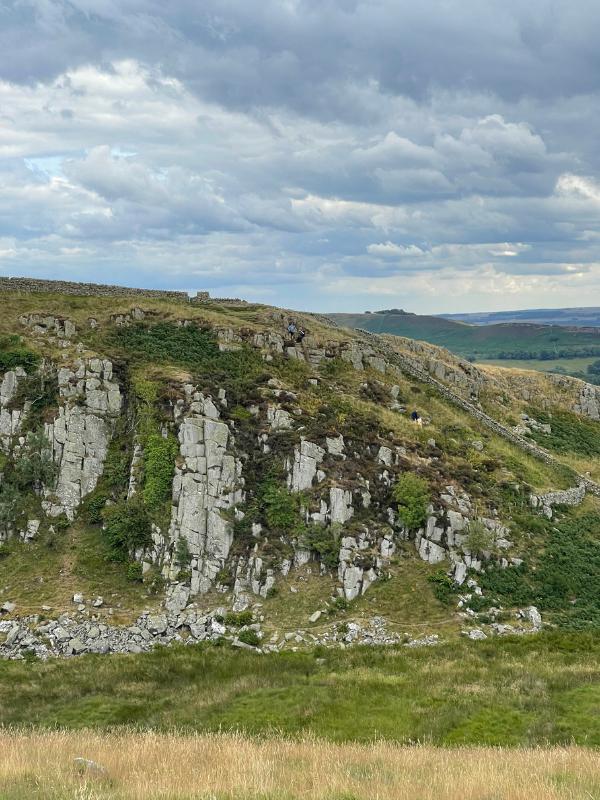

The history of Hadrian’s Wall
The Romans invaded Britain in AD 43 and ruled until around AD 410.
They changed life here in all sorts of ways. They built roads (many of which we still follow today), brought their religion, their language and their ways of counting, built towns and founded Londinium, among many other things. Place names ending in ‘chester’, ‘caster’ or ‘cester’ come from the Latin word for a fort.
The one thing they couldn’t manage was the Scots! (Or the Caledonians, as they were called then.) The northern tribes didn’t welcome the Romans, and in AD 122 Emperor Hadrian ordered a wall to be built to protect the Roman Empire from their attacks.
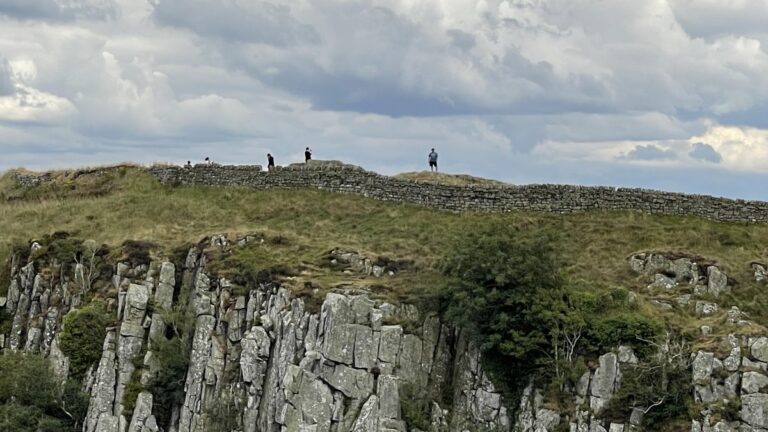
That wall was Hadrian’s Wall. It runs for about 73 miles (80 Roman miles) from Wallsend on the Tyne to Bowness-on-Solway in Cumbria, and it marked the north-west frontier of the Roman Empire.
The Romans built forts along the wall where soldiers were stationed to hold off the Caledonian tribes.
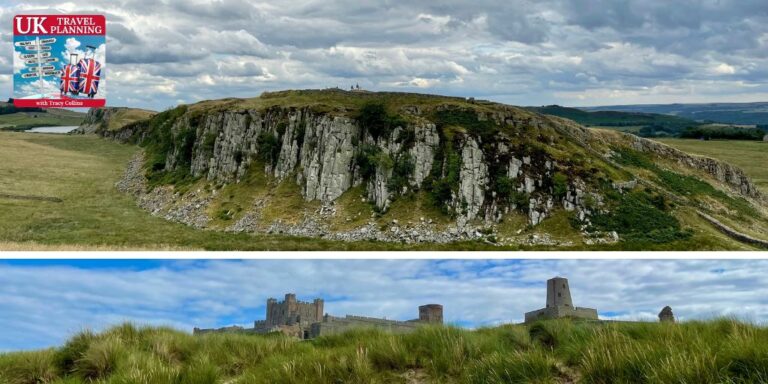
Today Hadrian’s Wall is one of the most popular attractions in the North East of England and a famous UK landmark. Housesteads and Vindolanda are the two forts to start with, and the walk from Steel Rigg follows the Wall over the crags towards Sycamore Gap. Our Hadrian’s Wall guide has the forts, walks and parking in more detail.
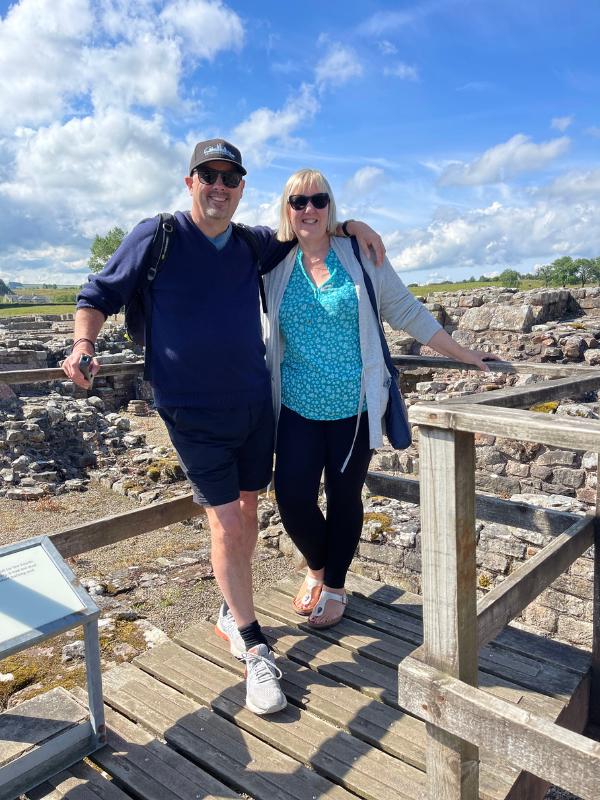
Ways to visit Hadrian’s Wall
There are several ways to see Hadrian’s Wall:
- Walk the route along the Hadrian’s Wall Path, which runs for 84 miles from coast to coast past Roman settlements and forts.
- Drive to the main sites along the route, including:
- Chesters Roman Fort and Museum
- Housesteads Roman Fort
- Birdoswald Roman Fort
- Corbridge Roman Town
- Roman Vindolanda and the Roman Army Museum
- Segedunum Roman Fort and Museum
- Cycle the route along Hadrian’s Cycleway.
- Take the bus. The Hadrian’s Wall Country Bus (now numbered 122, though many still call it the AD 122) runs daily all year, apart from Christmas Day, Boxing Day and New Year’s Day, and stops at Chesters, Housesteads, Vindolanda and the Roman Army Museum.
- Or take a virtual tour of Hadrian’s Wall before you go.

Visit Barter Books in Alnwick


Barter Books fills Alnwick’s old Victorian railway station and is one of the largest second-hand bookshops in Britain.
A model railway runs on an elevated track around the shop, and the murals are worth a look too. Our guide to things to do in Alnwick has more ideas for the town.
Visit Bamburgh and Alnwick Castles
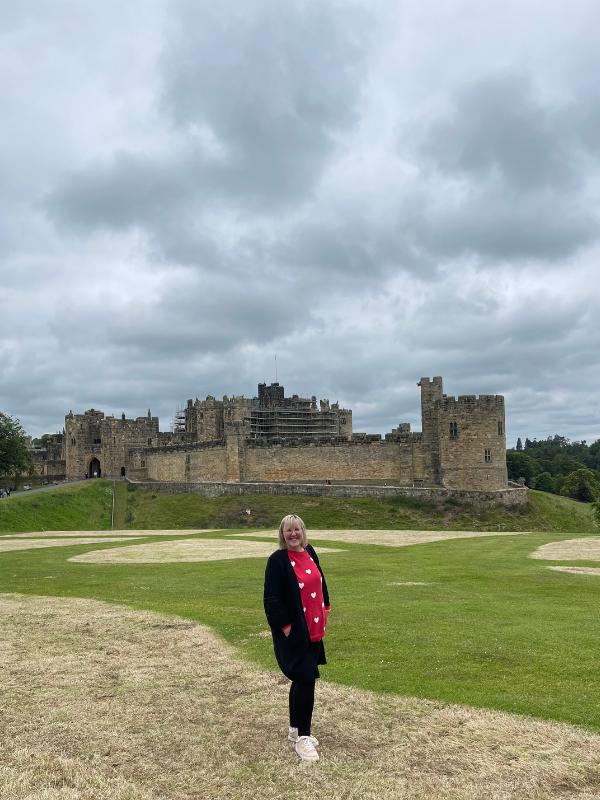
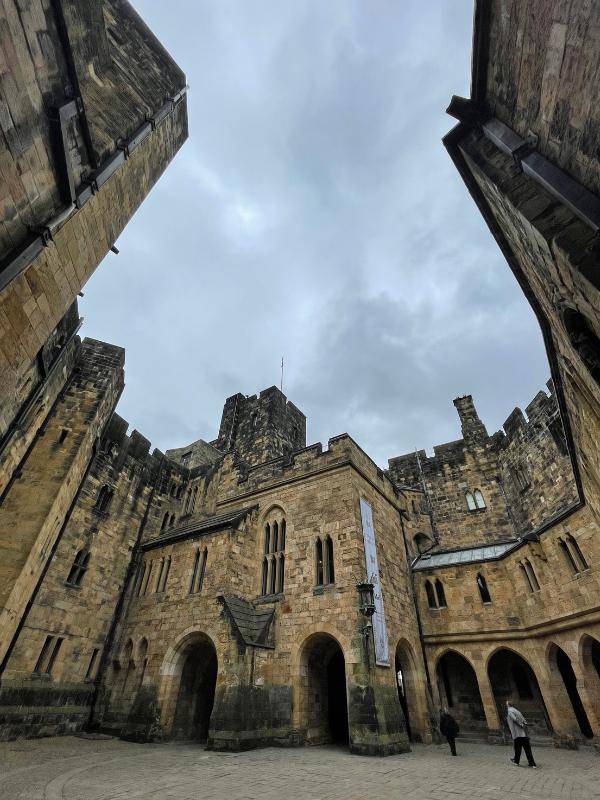


Of all Northumberland’s castles, Bamburgh and Alnwick are the two we’d put first.
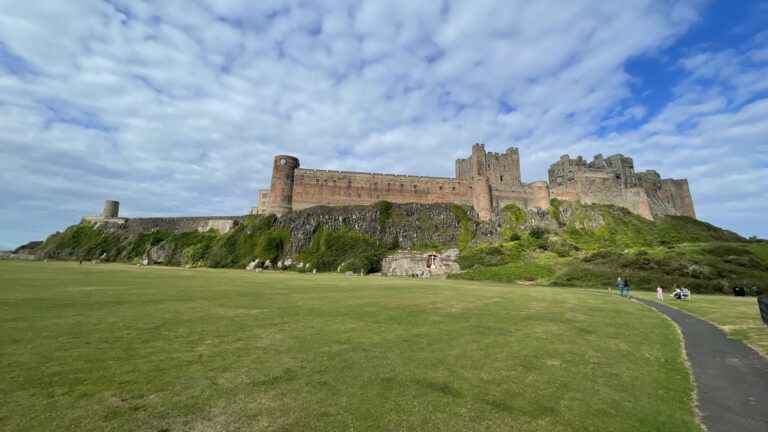
- Bamburgh Castle, which you’ll pass on the coastal route, was the royal capital of the Kings of Northumbria from the 6th century. It is one of the largest inhabited castles in the country and is still the Armstrong family’s home today.
The castle sits on a rocky plateau and can be seen for miles around (the view from Lindisfarne is particularly beautiful).
- Alnwick Castle may be more familiar to Harry Potter fans, as it stood in for Hogwarts in the first two films, Philosopher’s Stone and Chamber of Secrets. The castle also appears in Downton Abbey.
The first castle at Alnwick was built in the 11th century, after the Norman Conquest, and it is home to the 12th Duke of Northumberland.
The Alnwick Garden, the formal gardens next door, is a separate attraction with its own tickets.
Many visitors, Harry Potter fans especially, come on a day tour from Edinburgh. Doug’s review of Rabbie’s Alnwick Castle tour from Edinburgh explains how that day runs. The day tour below also takes in Holy Island and Bamburgh.
There are more castles across England in my guide to the top 21, and quite a few of them are in the North East.
Read more | Bamburgh Castle
Alnwick Castle tickets:
Spot puffins on the Farne Islands

A boat trip out to the Farne Islands is one of the highlights of the Northumberland coast.
There are 28 islands in all, though how many you see above the water depends on the tide. Boats leave from the harbour at Seahouses.
The largest is Inner Farne, where St Cuthbert spent years living alone as a hermit.
Today the islands are a nature reserve looked after by the National Trust. The National Trust counts around 43,000 breeding pairs of puffins here, and the colony is busiest from May to July, along with kittiwakes, guillemots, terns and eider ducks.
The islands also have England’s largest breeding colony of grey seals, and the pups are born between October and December.
Landing trips to Inner Farne run from April to September, weather permitting. At the time of writing Staple Island is closed to visitors, so the Staple landing trips aren’t running, and the National Trust’s Farne Islands page has the latest. Other boat trips sail around the islands without landing.
Visitors who aren’t National Trust members pay a landing fee at the harbour kiosk before boarding. Members land free.
Read more | Boat trips to the Farne Islands
Cross the causeway to the Holy Island of Lindisfarne
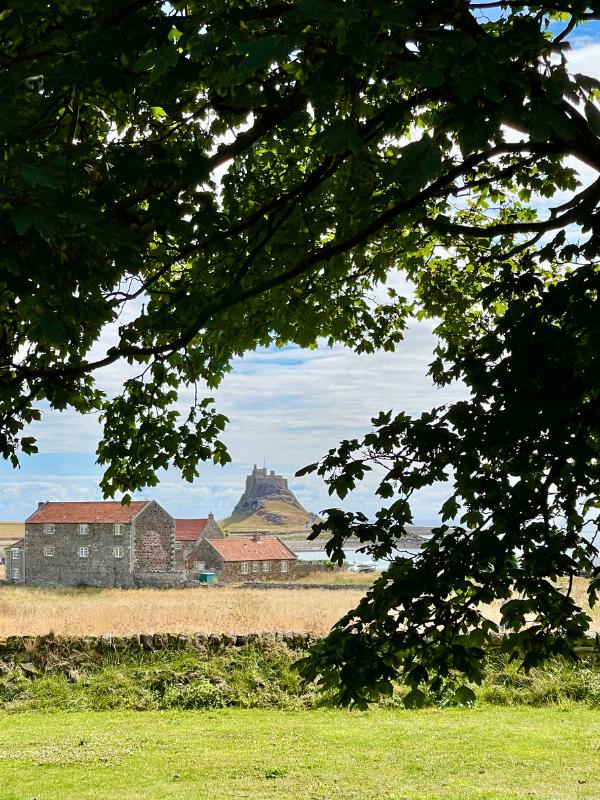
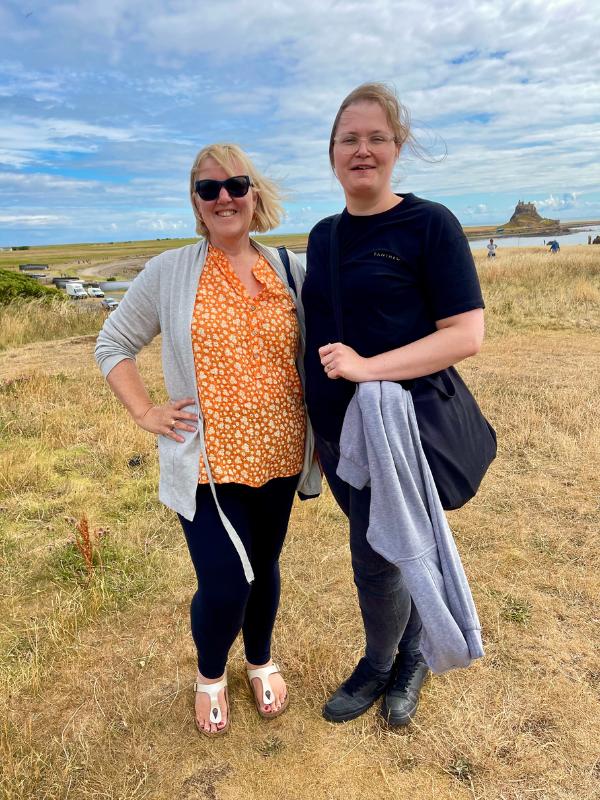
The Holy Island of Lindisfarne is a tidal island off the coast of Northumberland.
Just over 160 people live on the island, and it is busy with visitors, particularly in summer. A causeway links it to the mainland, and it can only be crossed safely at certain times, depending on the tides.
The island is called ‘Holy’ because it was one of the centres of early English Christianity. It was home to St Cuthbert, whose remains now lie in Durham Cathedral.
The Lindisfarne Gospels were made at the monastery here in the early 700s, and are traditionally credited to Eadfrith, Bishop of Lindisfarne. They are a copy of the four Gospels in the form of an illuminated manuscript (a text decorated with patterns and illustrations).
Today they are kept at the British Library in London, where they spend long spells on show in the Sir John Ritblat Treasures Gallery, with rest periods off display to protect the pages.
Northumberland County Council publishes the safe crossing times, and a visit to Holy Island works best planned around them.
Once you’re on the island, there’s Lindisfarne Priory, and a stroll out to the castle gives views across to Bamburgh and the Farne Islands.
Read more | A guide to visiting the Holy Island of Lindisfarne
Visit the historic city of Durham
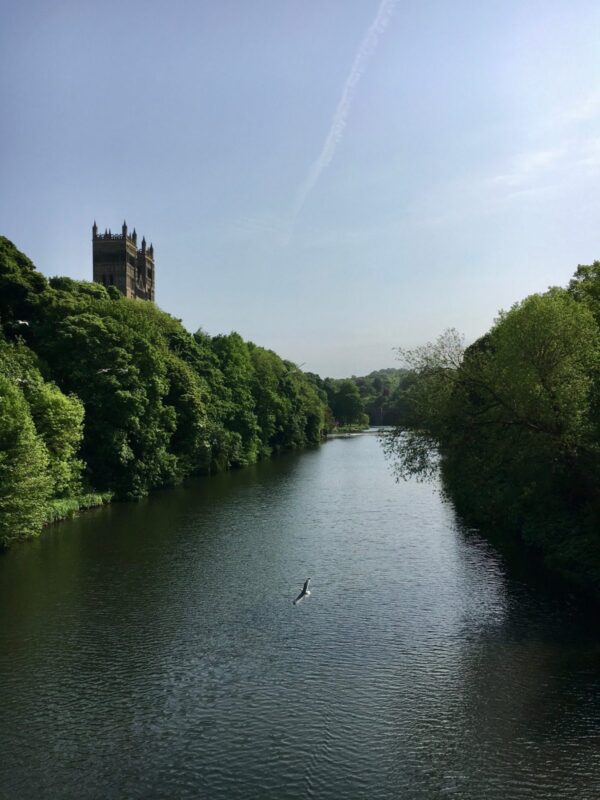
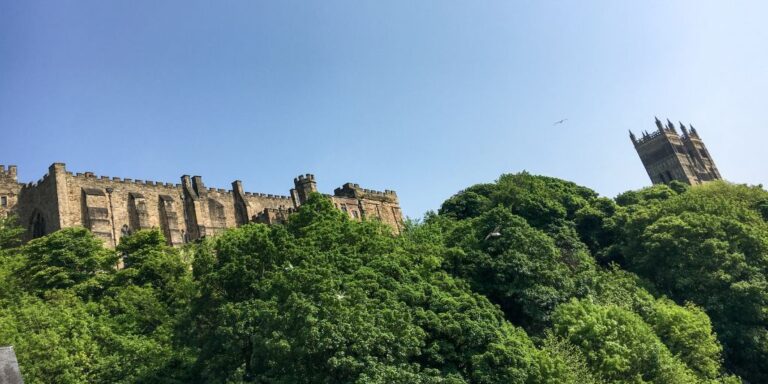
The historic city of Durham, with its Norman cathedral and 11th-century castle, is a UNESCO World Heritage Site.
The main sights are Durham Cathedral, Durham Castle (now home to University College, part of Durham University) and Durham University Botanic Garden.
If you’re driving, parking in the old centre is very difficult, and there’s a daily road user charge to drive onto the peninsula around the cathedral. The park and ride is the easiest way in. Belmont and Sniperley run seven days a week and Howlands runs Monday to Saturday, with buses every 15 minutes.
By train, Durham is about three hours from London King’s Cross on LNER. From the station it’s around 15 to 20 minutes’ walk, uphill, to the cathedral, or the Cathedral Bus links the two.
Read more | Durham Travel Guide
Spot the Angel of the North

This huge sculpture is hard to miss if you’re driving along the A1 towards Newcastle. You can see it from the train too, between Durham and Newcastle on the East Coast Main Line.
Antony Gormley’s Angel of the North was completed in 1998. It stands 20 metres tall, and its wings span 54 metres.
Gormley has talked about the coal mining that went on beneath the site, and for many of us in the North East that is part of what the Angel means.
Read more | Visiting the Angel of the North
Visit Beamish Living Museum
For a feel of everyday life in the North East over the last 200 years, there’s nowhere better than Beamish, the Living Museum of the North.
Beamish is probably the best open-air museum I have been to anywhere in the world. It tells the story of life in the North East during the 1820s, 1900s, 1940s and 1950s, with real buildings moved here from across the region and people in costume who are happy to chat.
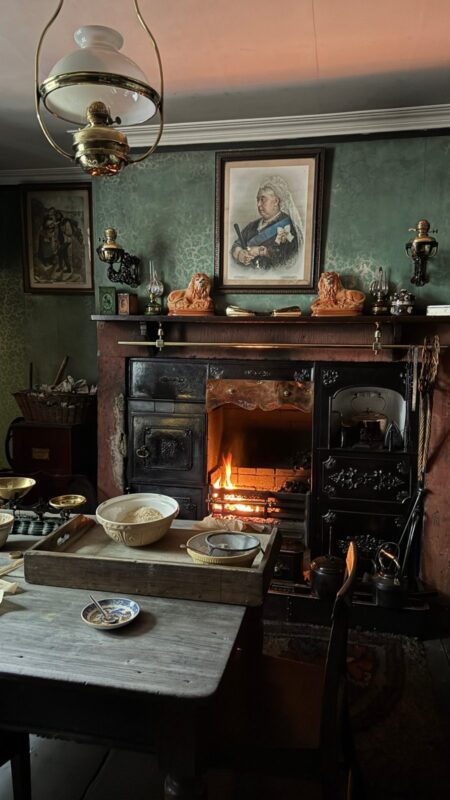
The site covers over 300 acres. There’s Pockerley Old Hall and the 1820s waggonway, the 1900s Town, the 1900s Pit Village and colliery, the 1940s Farm and the 1950s Town. The 1900s Town is a firm favourite, with its bakery, sweet shop, bank and garage among other shops.
Trams and vintage buses run on a circuit around the site, which saves a lot of walking between the eras. Tickets are an Unlimited Pass, valid for a year of repeat visits. Opening days are fewer in winter, for example weekends only for most of January 2027.
Before you go, our podcast episode on Beamish with Samantha Shotton covers how to plan the day.
Read more | Beamish Living Museum
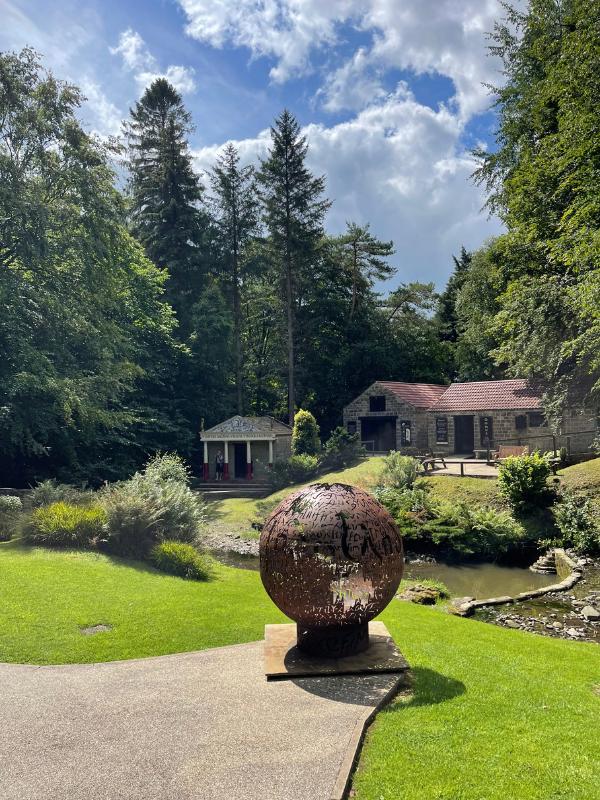
Cragside House and Gardens

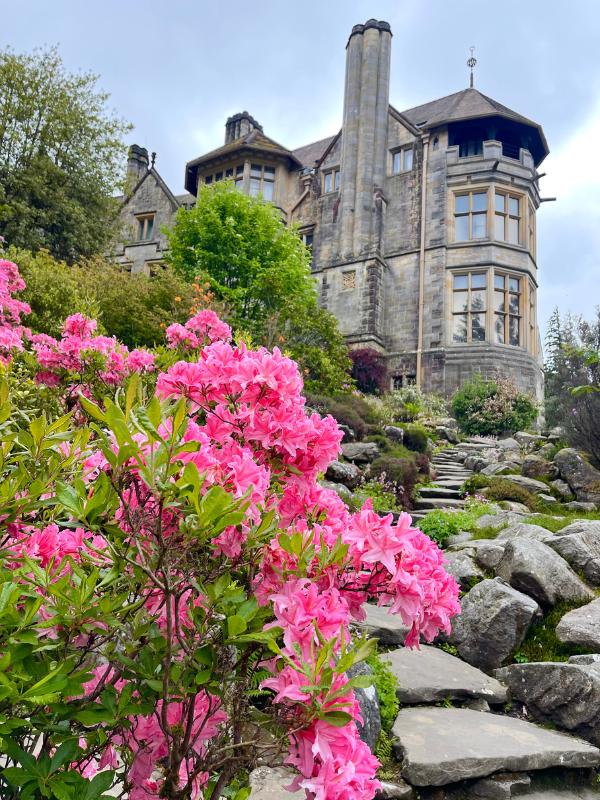
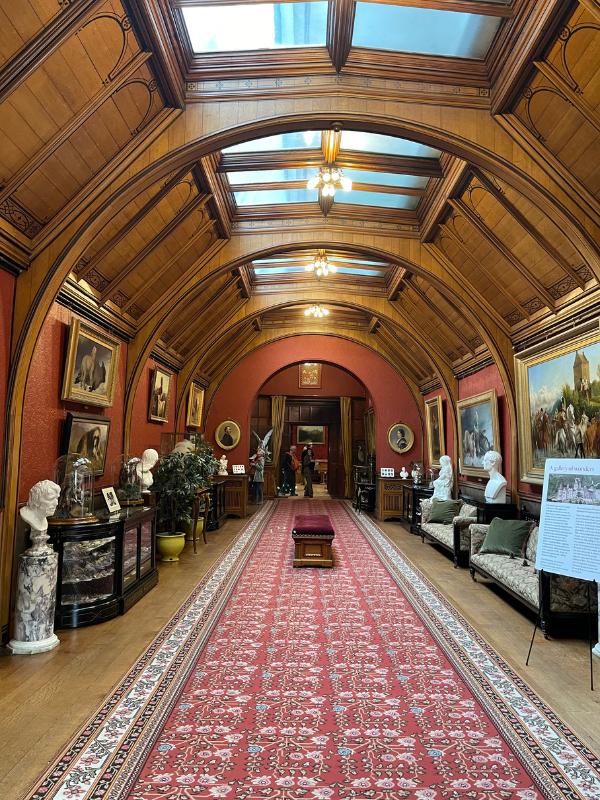
Cragside House is a Grade I listed National Trust property near Rothbury in Northumberland.
Often described as “the wonder of its age”, this Victorian house was the first in the world to be lit by hydroelectricity. The National Trust calls it Britain’s original smart home.
It was the home of William Armstrong, 1st Baron Armstrong, the engineer and inventor behind the hydraulic crane and the Armstrong gun, whose firm later became Armstrong Whitworth. He used the same engineering at home, with hydraulic machinery and electric light.
The gardens include the Formal Garden, the Pinetum and the Rock Garden. Cragside is one of my favourite gardens in North East England.
National Trust members get in free, and membership also covers the Farne Islands landing fee and Lindisfarne Castle.
Read more | Cragside House and Gardens
Quick guide to North East England
🏨 Where to stay: the best accommodation in Northumberland, from coastal villages to market towns. Our guide to the best places to stay in Northumberland has our picks by area.
🚐 Tours: recommended tours of the North East.
For a longer trip from Edinburgh, the 5-day Best of Northern England tour adds Hadrian’s Wall, York and the Lake District.
- 🍲 What to eat: stotties, pease pudding and Craster kippers.
- 🚅 Main train stations: Newcastle and Durham, plus Alnmouth and Berwick-upon-Tweed for the Northumberland coast. Our East Coast Main Line guide shows how they fit into a London to Edinburgh journey.
- 👚 What to wear: the weather on the coast can change quickly, even in summer, so a waterproof jacket earns its place in the suitcase (and I’d pack an umbrella ☂).
More for your North East trip
To fit these places into one trip, our 10-day North East England itinerary links them into a self-drive route with three bases, and our guide to the best places to stay in Northumberland has our picks for each base, including places with parking.
- Northumberland Travel Guide
- Durham Travel Guide
- Hadrian’s Wall guide
- Northumberland Coastal Route
- Things to do in Alnwick
- Things to do on Holy Island
Carrying on south? Our Northern England road trip episode covers Yorkshire and the Lake District for the next leg.